
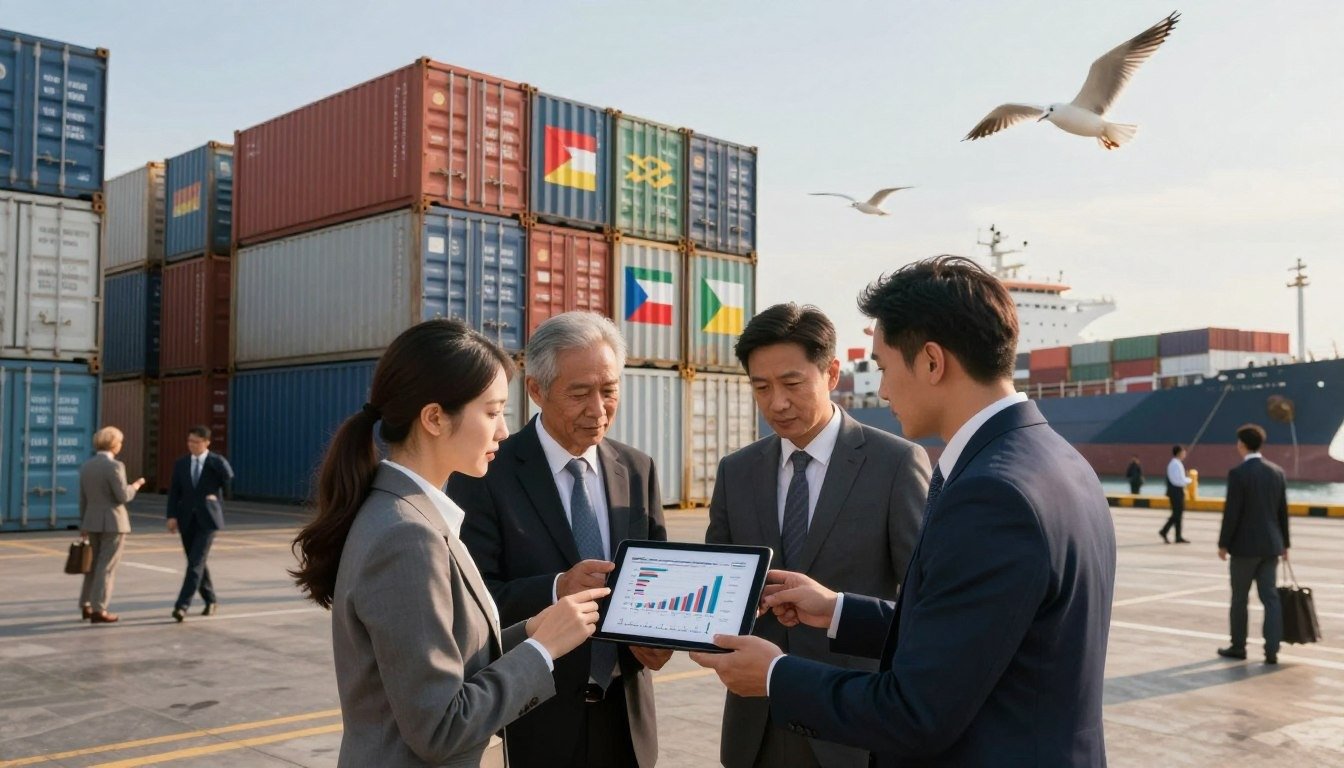
I often see how market rivalry is the heart of the global economy. When companies compete for customers worldwide, they push for new ideas and lower prices for all.
It’s key for business leaders to know what role does competition play in international trade? It’s a strong force for change and growth over time.
Competitive pressures push companies to get better at what they do. By facing these challenges, businesses can handle today’s markets with more confidence and success.
Key Takeaways
- Market rivalry is a main driver of global economic innovation.
- Competitive forces make prices lower and products better for consumers.
- Businesses must keep up with foreign rivals to stay ahead.
- Global market pressure helps companies work more efficiently.
- Understanding these dynamics is key for success in cross-border expansion.
The Current Landscape of Global Trade Rivalry
The modern economy is now a network of trade relationships, not separate markets. This change has made how businesses work worldwide very different. Today, international trade competition is about how well companies handle these complex relationships.
The Evolution of Market Interdependence
Nations used to be like separate economic units. But, the rise of supply chain integration has changed that. Now, multinational corporations depend on a fragile yet efficient web of suppliers and distributors across the world.
This deep integration means a problem in one area can affect the whole world. Companies must consider global politics and local laws in every market. This makes global market competition more fierce than ever.
Why Global Players Are Changing Strategies
Big companies are changing their strategies to stay ahead in a volatile market. They are moving from cost-focused models to more flexible, diverse ones. They focus on being agile to keep up with trade barriers or economic changes.
The table below shows the shift from old to new trade strategies:
| Strategy Focus | Traditional Approach | Modern Approach |
| Supply Chain | Single-source efficiency | Diversified resilience |
| Market Entry | Isolated expansion | Interconnected partnerships |
| Risk Management | Reactive adjustments | Proactive monitoring |
| Competitive Edge | Price leadership | Innovation and agility |
By adapting to these changes, businesses can handle the challenges of international trade competition better. Embracing this new environment is key for success in the global market competition. I think companies that focus on flexibility will lead in the future.
What Role Does Competition Play in International Trade?
The importance of competition in international commerce is huge. It’s the heart of the global economy. Rivalry pushes firms to improve their strategies.
It makes them look beyond their borders. They must constantly better their offerings to stay relevant.
Defining the Core Drivers of Global Commerce
Global trade is all about efficiency. Firms need to be lean and fast to compete. This relentless pursuit of efficiency keeps the global supply chain moving.
When firms face pressure from abroad, they innovate. They find better ways to source materials and reach new customers. This ensures only the best firms grow globally.
How Rivalry Shapes Consumer Pricing and Innovation
Competitive intensity affects prices. When firms compete, they often lower prices to attract buyers. This makes products more affordable for consumers.
Rivalry also drives innovation. Companies must innovate to stay ahead. They invest in research and development to create unique products.
The Link Between Competition and Product Quality
High competition leads to better products. Brands constantly upgrade to outperform others. Quality is no longer optional; it’s a must for survival.
Market Access and Regulatory Hurdles
Entering new markets is tough. Firms face complex regulatory barriers. These can include import tariffs and different safety standards.
Overcoming these requires resources and planning. The importance of competition in international commerce is tested here. Understanding competition helps firms prepare for these challenges.
Recent Shifts in Global Market Competition
Companies are competing on the world stage in new ways. The old barriers that kept small players out are falling. This change in international trade competition makes every business rethink its strategy.
The Rise of Digital Trade Platforms
Digital platforms have changed the game in commerce. They let small businesses reach global customers directly. This is a big change in international trade competition in the last decade.
“The digital economy is not just a new sector; it is a new way of doing business that empowers entrepreneurs to reach across borders with unprecedented ease.”
Using these platforms, companies get access to data that was once only for big corporations. This change lets small firms compete based on quality and service, not just volume. Here’s how digital trade compares to old models:
| Feature | Traditional Trade | Digital Trade Platforms |
| Market Entry | High Barriers | Low Barriers |
| Customer Reach | Regional/Local | Global/Instant |
| Data Access | Limited/Expensive | Real-time/Affordable |
Supply Chain Diversification as a Competitive Tool
Many firms are now diversifying their supply chains. Relying on one source for materials is risky. By using multiple sources, companies avoid sudden disruptions.
This strategy is not just about safety. It’s a strategic advantage. Companies that can quickly adjust their supply chains keep their services running smoothly. This flexibility is key to winning in international trade competition.
Impact of Competitive Forces on International Trade
National trade policies are changing how industries compete globally. These changes are big and affect companies of all sizes. Governments’ focus on national interests makes firms rethink their strategies.
Analyzing Recent Trade Policy Adjustments
Recently, there’s been a move towards more protectionist policies and subsidies for certain industries. Countries are using trade policy to protect their supply chains and boost domestic growth. This makes it harder for businesses to operate in a complex regulatory world.
These policy changes create a new reality for companies in international markets. They can’t just focus on being cheap to win. They must also align with the strategic goals of the countries they operate in.
The Ripple Effect on Domestic Industries
The impact of competitive forces on international trade hits domestic manufacturers hard. When governments impose new tariffs or controls, local businesses face higher costs. This makes it tough for them to keep thin profit margins.
But these challenges also push companies to innovate and source locally. Many are investing in domestic infrastructure to cut down on reliance on international supply chains. This shift is key for economic stability in a world that’s getting more fragmented.
Case Study: The Semiconductor Industry Conflict
The semiconductor industry shows how politics affects business strategy. Governments are spending billions to make chips at home, not relying on foreign suppliers. This race for tech supremacy changes how companies plan their global presence.
Case Study: Renewable Energy Technology Exports
The renewable energy sector is also seeing a lot of policy-driven competition. Countries are using subsidies to lead in solar panels and wind turbines. This makes the dynamic environment of global trade even more competitive, driven by government support.
In the end, the impact of competitive forces on international trade shapes modern business. I expect these trends to keep going as countries try to balance open markets with national security and industrial independence.
Trade Competitiveness Factors in the Modern Era
My study on trade competitiveness factors shows that technology and talent are key. In today’s world, where digital borders matter, being adaptable is critical. The importance of competition in international commerce has grown, as businesses must keep up with global demands.
Technological Infrastructure and Digital Readiness
Digital readiness is now a must for companies wanting to compete globally. A strong tech setup helps businesses run smoothly and reach customers worldwide. Without fast internet and data analysis tools, even the most creative companies can lag behind.
To stay ahead, companies should focus on these digital areas:
- Cloud computing for flexible global operations.
- Cybersecurity frameworks to safeguard international data.
- E-commerce platforms that handle different currencies and languages.
“Innovation distinguishes between a leader and a follower.”
Steve Jobs
Labor Productivity and Human Capital Investment
The human factor is the most critical asset for any nation. Investing in education and training is key for lasting growth. A skilled workforce can use new tech to boost efficiency and output.
High labor productivity is vital for importance of competition in international commerce. Countries that invest in learning and vocational skills often excel globally. By promoting innovation, nations can keep their trade competitiveness factors strong against new competitors.
The mix of digital tools and a skilled workforce is the main key to success today. Those who don’t invest in their people or digital infrastructure will find it hard to keep up with fast-changing global trade.
The Role of Rivalry in International Trade Policy
Looking at global trade, I see a constant battle. It’s between keeping borders open and protecting domestic industries. This battle has a big impact of competitive forces on international trade. Nations struggle to balance their economic security with the benefits of global integration.
Protectionism Versus Open Market Competition
Governments face a tough choice. They must decide between protecting local jobs and embracing global markets. Protectionist measures, like tariffs or quotas, give domestic firms a competitive edge by limiting foreign access. But, these policies can sometimes hinder innovation.
On the other hand, open market competition pushes companies to improve quality and lower prices. I believe the role of rivalry in international trade drives global economic growth. Open markets force businesses to adapt, which benefits consumers.
The Influence of International Trade Agreements
Trade agreements are like rulebooks for countries. They can either help or hinder trade. By setting standards, these agreements manage the impact of competitive forces on international trade in a predictable way.
Good agreements create a level playing field for all. They reduce uncertainty and let businesses plan with confidence. The table below shows how different policies affect competition:
| Policy Approach | Primary Goal | Market Effect |
| Protectionism | Domestic Security | Reduced Competition |
| Open Markets | Economic Efficiency | Increased Innovation |
| Trade Agreements | Standardization | Stable Rivalry |
The role of rivalry in international trade depends on today’s policy choices. Whether building walls or opening doors, these decisions shape the global economy’s future. The most successful nations balance protection with fair, open competition.
Competitive Advantage in Global Markets
Getting ahead in global markets takes strategy and vision. Companies that succeed today don’t just compete on price. They create unique value that speaks to people worldwide.
Leveraging Comparative Advantage in the 21st Century
The old idea of comparative advantage focused on natural resources or cheap labor. Now, global market competition is about intellectual property, digital tools, and specialized services. To win, firms must innovate and stay ahead.
Businesses should focus on these key areas:
- Digital Agility: Use data to guess what customers will want in new places.
- Human Capital: Invest in people who get local markets.
- Supply Chain Resilience: Create networks that can handle sudden changes.
“The essence of strategy is choosing what not to do.”
— Michael Porter
The Importance of Brand Positioning Abroad
Entering a foreign market is more than just setting up shop. It’s about building trust. Brand positioning is key to lasting success. A clear, consistent brand identity makes it easier for new customers to join.
The table below shows how companies can stand out in new markets:
| Strategy | Focus Area | Expected Outcome |
| Localization | Cultural Nuance | Higher Trust |
| Standardization | Brand Consistency | Operational Efficiency |
| Hybrid Model | Balanced Growth | Market Penetration |
To win in global markets, you need both flexibility and strength. By perfecting your brand, you stay relevant everywhere. Those who balance this will lead the next big wave in global market competition.
Emerging Markets and the New Competitive Dynamics
The global economic map is changing fast. Emerging markets are leading the way. They are not just players, but the main creators of today’s competitive dynamics in global trade.
Old powers must adjust to a new world. This world is all about innovation and production spread out across the globe.
The Growing Influence of Southeast Asian Economies
Countries in ASEAN have become big in manufacturing. They’ve invested in digital tech, giving them a big competitive advantage in global markets. This change makes big companies rethink their supply chains.
“The rise of Southeast Asia is not merely a trend; it is a structural realignment of the global supply chain that demands agility from every international player.”
These countries mix high-tech with low costs. This mix attracts a lot of global investment. It’s why money is flowing to these places like never before.
Latin American Trade Integration and Challenges
Latin America has its own story of growth. Regional trade groups aim to boost local trade. But, they face issues like bad infrastructure and political ups and downs.
To really shine in global markets, they need to get their rules in line. This is key to success.
Despite the problems, there’s a lot of room for growth. Here’s a table showing what’s driving these regions’ economies.
| Region | Primary Driver | Main Challenge | Growth Outlook |
| Southeast Asia | Digital Manufacturing | Geopolitical Tensions | High |
| Latin America | Commodity Exports | Infrastructure Gaps | Moderate |
| Global Average | Service Integration | Policy Uncertainty | Stable |
The competitive dynamics in global trade will keep changing. Those who connect local talent with global standards will do well. As these areas grow, they’ll challenge the old trade leaders even more.
Geopolitical Tensions and Their Effect on Trade
Political instability is now a major disruptor to global trade. When nations clash, the rules of trade can change quickly. This makes it hard to predict and manage trade competitiveness factors.
Businesses face a world that’s no longer a smooth playing field. It’s a mix of changing alliances and quick policy shifts. To stay ahead, you need more than a great product; you need to understand the political climate.
Sanctions and Their Impact on Competitive Flow
Sanctions are a powerful tool in statecraft. When a government imposes them, trade stops suddenly. This forces companies to change their logistics plans.
Companies struggle when they rely too much on a market hit by sanctions. These measures change the trade competitiveness factors of a region. Now, companies must weigh the risks against the chance for profit.
Navigating Trade Barriers in a Fragmented World
In a fragmented world, you need to be agile and strategic. I tell leaders to spread out their supply chains. This way, they avoid being caught by sudden trade barriers.
To succeed, watch global events closely, like your financial reports. Spotting trade competitiveness factors early lets you adjust before problems arise. Building resilience is key to thriving in a divided world.
Success in this climate goes to those who stay flexible. By adapting and planning for the unknown, you can turn challenges into advantages for your brand.
Conclusion
Understanding the global economy is key. Knowing how rivalry affects international trade is essential for any business plan. Companies like Apple and Samsung show that staying ahead means always innovating.
Looking ahead, we must consider changes in supply chains and digital platforms. The role of rivalry in international trade will become even more complex. Businesses that are quick to adapt will find new chances in this changing world.
It’s important to watch for policy changes and new technologies. These factors shape how companies compete globally. By staying up to date, you can succeed, even with global challenges. The future of business is for those who can quickly adjust to new situations.
FAQ
What role does competition play in international trade for the modern economy?
Competition is the key driver for innovation and efficiency. It pushes companies like Apple and Samsung to improve their products and cut costs. This effort benefits consumers worldwide by giving them better goods and more choices.
How would you describe the impact of competitive forces on international trade today?
Competitive forces change global supply chains a lot. Companies must improve every part of their operations to stay ahead. For example, Tesla has set up factories on different continents to stay competitive and cost-effective.
What are the most critical trade competitiveness factors for businesses right now?
The most important factors are technology and human skills. Being digitally ready is essential in today’s global market. Labor productivity and investing in specialized skills help countries stay competitive, mainly in tech sectors.
What is the role of rivalry in international trade policy and agreements?
Rivalry has both good and bad sides. It pushes countries to improve their economies but can lead to protectionism. Trade agreements, like the USMCA, are key. They ensure fair competition and protect against unfair restrictions.
How can a company establish a lasting competitive advantage in global markets?
A lasting advantage comes from a mix of traditional strengths and modern branding. Brands like Coca-Cola and Nike compete on more than just price. They focus on their global identity and adapting to local tastes. This approach helps them navigate global trade challenges.
Why is supply chain diversification becoming such a big part of global market competition?
Global disruptions have shown the importance of diversification. It’s now more about being ready for any situation than just on time delivery. Companies are moving production to places like Vietnam or Mexico to stay ahead during crises.
How do digital platforms change the way I should think about international trade competition?
Digital platforms like Amazon and Alibaba have leveled the playing field. They make it easier for small players to compete with big ones. This change has made global competition more intense, allowing small manufacturers to compete with large corporations.
You May Also Read: UK Headlines