

Understanding Victorian ridesharing rules is no longer optional for rideshare drivers. Whether you are someone who wants to start driving for Uber or is thinking of expanding your existing ridesharing business, you need to understand the CPV Victoria rules before you start picking up passengers.
The rideshare industry has massively grown in Victoria, especially in recent years. However, the Australian government has designed CPV requirements to keep both driver and passenger safe. Professional conduct and legal awareness matter more than ever in Victoria, so you need to understand them before starting your ridesharing journey.
What is CPV & Why Does It Matter for Victorian Drivers?
The Commercial Passenger Vehicle (CPV) authority is the main regulator for taxi, rideshare vehicles, and hire cars in Victoria. It ensures safe, fair deals and reliable transport options for passengers while protecting rideshare drivers. CPV sets the standard for vehicle safety, driver behaviour, accreditation, insurance, and record keeping.
These rules are updated regularly to reflect safety trends, new technology, and changing travel needs on Victorian roads. Therefore, carshare drivers need to keep learning to stay compliant and competitive with growing trends.
Legal CPV Obligations
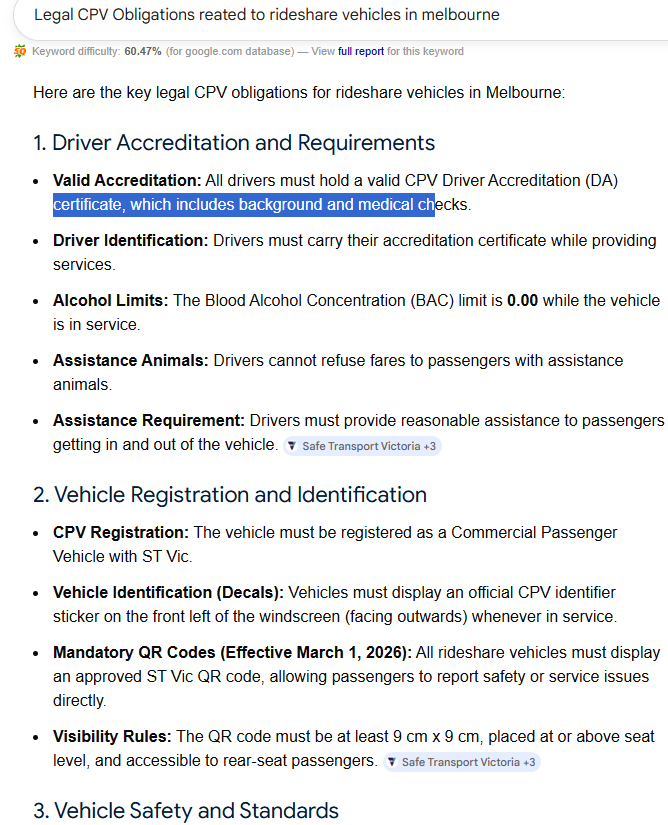
Legal obligations for commercial passenger vehicles are primarily governed by commercial vehicle industry act 2017 and managed by Safe Transport Victoria. However, I have listed key legal obligations below for your convenience.
Driver Accreditations
- Valid Driving License: The driver must always carry a valid driving license while providing ridesharing services.
- Mandatory Checks: Drivers must pass a national criminal history and a medical assessment every three years.
- Alcohol Limits: They must maintain zero blood alcohol consumption throughout the ridesharing shift.
- Assistance Animals: Car share drivers cannot refuse fares to passengers with assistance animals.
CPV Vehicle Standards
- Vehicle Registration: Your vehicle must be registered with the Safe Transport Booking Service Provider (BSPs) Victoria as a CPV.
- Car Maintenance: The rideshare cars must be kept in a safe and well-maintained condition with a Certificate of Roadworthiness (CRW).
- Camera Compliance: Taxis that operate as unbooked services must have operational security cameras to work in designated zones.
- GST Rules: Your car must be GST-approved so you can claim the credits.
Passenger Safety & Reporting Rules
- CPV Stickers: The CPV mandatory stickers must display authorised identification on the car.
- Passengers’ Safety: Drivers must take care of their own and their passengers’ safety.
- Report Incidents: Notifiable VIC incidents, i.e., accidents or injuries (where passenger safety was at risk) must be reported to Safe Transport Victoria within 10 business days.
- Mandatory QR Codes: All CPVs must show their approved ST Vic QR codes for passenger reporting.
Registration & Safety Requirements
Accreditation is a core component of Victorian rideshare regulation. The newbie rideshare drivers must follow these key steps and requirements for CPV registration.
CPV Registration Process
Eligibility: You must be 21 years old and hold a driver’s license for at least 6 months and have a valid driver’s accreditation.
Registration Process: Register your vehicle using the Safe Transport Victoria Portal. You just need to provide your vehicle, insurance, and ownership details.
Inspection: Your rideshare vehicle must pass a vehicle inspection to ensure it is suitable for commercial passenger use.
Display Decal: Every compliant vehicle must display the official identification CPV sticker on the rear window. You can download CPV stickers in a printable pdf for free directly from the Safe Transport Victoria website.
Why Vehicle Inspection & Incident Reporting Matters?
Public awareness of incidents has shaped many of the strict regulations seen today in Victoria. These incidents range from minor disputes to major road accidents. Therefore, drivers are obliged to report all the notifiable incidents to the booking service provider, like Uber, DiDi, or more.
Incident Reporting: Any accident that resulted in serious injury or any kind of mechanical failure that happened while you were online must be reported within 10 days to Uber. You can report an incident by using the “Help” or “Safety” section in the app.
Annual Safety Inspection: Additionally, every Uber car share vehicle must pass an annual safety inspection and have a certificate of inspection (COI) to ensure the car is safe for passengers.
Airport Pickup Compliance: You should also understand paramount car park policies (rideshare drivers should follow specific entry, waiting, and pickup protocols) to ensure traffic flow and passenger safety.
Explore Legal Car Hire Options With Vital Rental
Now, after knowing all the Victorian rideshare regulations, you must be searching for a legal car hire company. However, it can be difficult for you as a newbie rideshare driver to do a market analysis and then hire a car that meets all of the above CPV vehicle standards.
Vital car rental gives you rideshare-ready cars on easy and flexible rental terms. Whether you need a compact hatchback or a fuel-efficient sedan, you can rent a car for Uber, DiDi, and Uber Eats. This car hire company gives you free roadside assistance and unlimited mileage in every rental plan.
Compliance Importance & Legal Essentials
Victorian rideshare regulations aren’t just about meeting legal requirements; it’s more about building a professional and sustainable driving career. The Victorian government regularly reviews updates, modifies existing terms, or adds new requirements. Therefore, you need to understand the cpv rules and legal obligations to start your car-sharing journey and protect your income from penalties.
You May Ask
What does CPV mean on a car?
Commercial Passenger Vehicles (CPV) refers to a particular car that is available for taxis, ridesharing (Uber, DiDi, Uber Eats).
Can I drive part-time and still meet compliance standards?
Yes, part-time drivers must also comply with the regulatory standards, as full-time drivers ensure consistent passenger safety.
What happens if I forget to display my compliance sticker?
Failure to display the CPV identification sticker can result in a warning and fines. It can also impact your ability to accept future rides.
Can I drive for multiple rideshare platforms at the same time?
Yes, you can hire ride-share-ready cars from Vital Rental Company that meet the Victorian rideshare regulation, and drive for multiple rideshare platforms like Uber, DiDi, and Uber Eats.
What would disqualify me from driving Uber?
Driving under the influence, a poor rating because of reckless driving, and multiple violations of traffic rules would disqualify you from driving for Uber.