
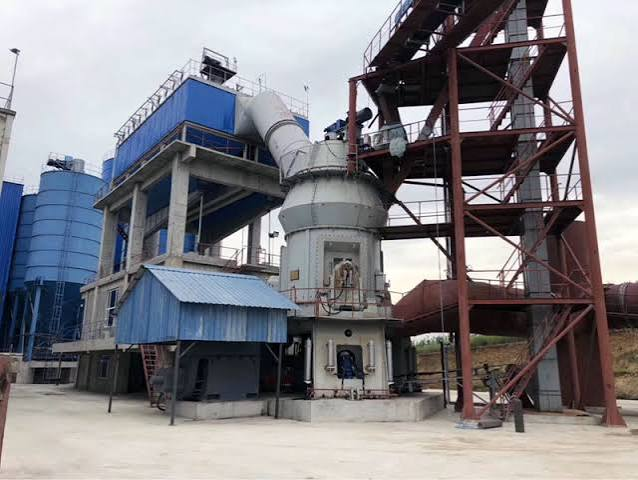
Power consumption has always been one of the biggest challenges in cement production, especially in grinding operations. As energy prices continue to rise and environmental regulations become stricter, manufacturers are under increasing pressure to optimize efficiency across every stage of production. The Vertical Roller Mill has emerged as one of the most energy-efficient grinding solutions available today, but achieving maximum savings depends on how well the system is operated and maintained.
In a modern cement grinding plant, even small inefficiencies in grinding can lead to significant energy waste over time. This is why companies like Cementl focus on advanced engineering solutions that help reduce power consumption while maintaining high production output. Understanding how to optimize a Vertical Roller Mill is essential for any operator looking to improve profitability and sustainability.
Understanding Power Consumption in a Vertical Roller Mill
A Vertical Roller Mill operates using compressive grinding between rollers and a rotating table, which is inherently more efficient than traditional impact-based systems. However, energy usage can still vary depending on feed material, operating conditions, and system configuration.
In a cement grinding plant, the Vertical Roller Mill is responsible for a large portion of total energy consumption. If not properly optimized, it can lead to unnecessary power losses, reduced efficiency, and higher operating costs.
Cementl has developed modern Vertical Roller Mill systems that are specifically designed to minimize energy waste through intelligent process control and optimized mechanical design. Their approach focuses on improving grinding efficiency at every stage of operation, ensuring that energy is used effectively rather than lost through friction or poor material flow.
Optimizing Feed Material for Lower Energy Use
One of the most effective ways to reduce power consumption in a Vertical Roller Mill is to ensure consistent and properly prepared feed material. Irregular particle size or high moisture content can force the system to work harder, increasing energy demand.
In a cement grinding plant, maintaining stable feed conditions helps the Vertical Roller Mill operate more smoothly and efficiently. Pre-grinding systems or controlled material preparation stages can significantly reduce the load on the mill.
Cementl emphasizes advanced material handling systems that stabilize feed quality before it enters the Vertical Roller Mill. This ensures that grinding occurs under optimal conditions, reducing unnecessary energy consumption and improving output consistency.
When feed material is uniform, the system requires less corrective energy, resulting in noticeable savings over time.
Controlling Grinding Pressure and Operating Parameters
Another key factor in energy efficiency is the correct adjustment of grinding pressure and operating parameters. Excessive pressure can lead to higher power consumption, while insufficient pressure reduces grinding efficiency and output quality.
In a cement grinding plant, operators must carefully balance mill settings to ensure that the Vertical Roller Mill operates at its optimal efficiency point. Small adjustments in pressure, airflow, and separator speed can significantly impact energy usage.
Cementl integrates advanced control systems into its Vertical Roller Mill designs, allowing real-time adjustments based on operating conditions. This helps maintain stable performance while minimizing unnecessary energy use.
Proper parameter control ensures that the system does not overwork, which is one of the most common causes of excessive power consumption.
Improving Airflow and System Efficiency
Airflow plays a critical role in the performance of a Vertical Roller Mill. It is responsible for material transport, drying, and particle classification. Poor airflow design or imbalance can increase energy consumption significantly.
In a cement grinding plant, optimizing airflow improves grinding efficiency and reduces pressure on mechanical components. Efficient air circulation ensures that fine particles are properly separated and recycled without overloading the system.
Cementl designs its Vertical Roller Mill systems with optimized airflow paths to improve energy efficiency and maintain stable operation. Proper air management reduces resistance within the system, allowing the mill to operate with lower power demand.
When airflow is correctly balanced, the entire grinding process becomes more stable and energy-efficient.
Reducing Mechanical Resistance and Wear
Mechanical resistance caused by worn components or poor lubrication can significantly increase power consumption in a Vertical Roller Mill. Over time, friction between moving parts reduces system efficiency and increases energy demand.
Regular maintenance is essential for keeping a cement grinding plant operating at peak performance. Replacing worn rollers, maintaining proper lubrication, and inspecting mechanical components help reduce unnecessary energy loss.
Cementl focuses on durable engineering and high-quality materials in its Vertical Roller Mill designs to minimize wear and extend service life. Their systems are built to maintain low resistance even under continuous industrial operation.
Reducing mechanical friction directly translates into lower power consumption and improved long-term efficiency.
Using Automation for Energy Optimization
Automation has become a key tool for reducing energy consumption in modern industrial systems. A smart Vertical Roller Mill can automatically adjust operating parameters based on real-time data, ensuring optimal efficiency at all times.
In a cement grinding plant, automation helps operators monitor performance indicators such as temperature, vibration, and power usage. This data allows for quick adjustments that prevent energy waste.
Cementl integrates intelligent automation systems into its Vertical Roller Mill solutions, enabling predictive adjustments that optimize performance continuously. These systems reduce human error and ensure that the mill operates at its most efficient level.
Automation also helps identify inefficiencies early, preventing long-term energy losses.
Conclusion
Reducing power consumption in a Vertical Roller Mill requires a combination of proper feed management, optimized operating parameters, efficient airflow design, mechanical maintenance, and smart automation. Each of these factors plays a critical role in improving overall grinding efficiency.
In a modern cement grinding plant, energy optimization is no longer optional but essential for competitiveness and sustainability. Cementl continues to support the industry with advanced Vertical Roller Mill solutions designed to minimize energy use while maximizing productivity.
By implementing these strategies, manufacturers can achieve significant energy savings, lower operational costs, and improve long-term performance, making their cement production more efficient and environmentally responsible.