
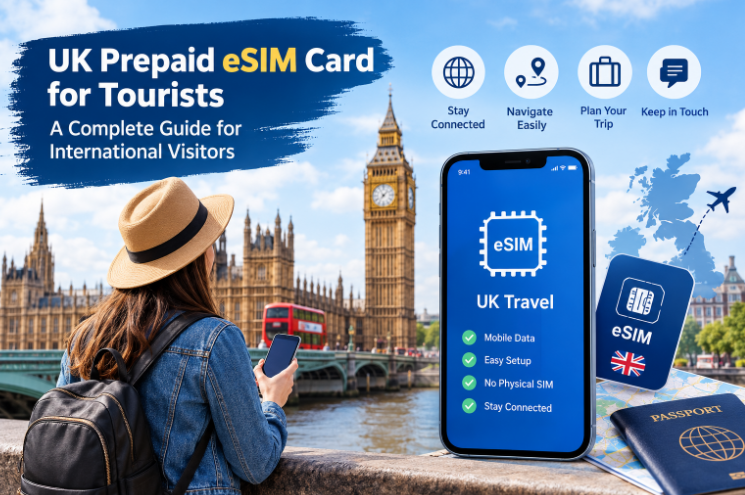
Visiting the United Kingdom involves exploring historic landmarks, discovering vibrant cities, travelling between destinations, and staying connected throughout the trip. Whether arriving in London for a holiday, attending business meetings in Manchester, or exploring Scotland, reliable mobile internet makes travelling easier. Tourists often depend on their phones for navigation, train bookings, hotel reservations, translation apps, and communication with family and colleagues.
However, international roaming charges can make mobile connectivity expensive, particularly for visitors staying several days or weeks. A UK prepaid eSIM card for tourists offers an alternative by allowing travellers to purchase a mobile data plan before departure and install it directly on a compatible smartphone. Understanding how this technology works and what to consider when choosing a plan can help international visitors stay connected during their UK visit.
What Is a Prepaid eSIM and How Does It Work?
An eSIM, or embedded SIM, is a digital SIM built into compatible smartphones and other mobile devices. Unlike a traditional SIM card, which needs to be physically inserted into a device, an eSIM allows users to download and install a mobile network profile electronically.
A prepaid eSIM works by providing access to a mobile data allowance for a specified period. Travellers select a suitable plan, complete their purchase, and receive installation instructions, usually through a QR code or an app.
Once installed and activated according to the provider’s instructions, the eSIM connects to an available supported mobile network in the destination country.
For example, someone travelling from Pakistan to the UK can purchase a prepaid plan before leaving home, install the eSIM while connected to Wi-Fi, and configure their phone to use it for mobile data after arrival.
This approach removes the need to visit a mobile shop at the airport or exchange an existing SIM card.
Why Tourists Should Consider a Prepaid eSIM in the UK
International visitors have several reasons to consider an eSIM when travelling around Britain.
Convenient internet access: Mobile data helps tourists check directions, search for nearby restaurants, access digital boarding passes, and communicate through messaging applications.
Avoiding physical SIM replacement: Travellers can keep their existing physical SIM installed while using an eSIM for mobile data, provided their device supports multiple SIM profiles. This is particularly useful for people who need to receive calls or verification messages on their regular number.
Better spending control: Prepaid plans generally provide a defined data allowance and validity period. Travellers can select an option that matches their expected usage rather than relying entirely on international roaming.
Useful throughout the trip: From checking train platforms to booking accommodation, having mobile internet available makes everyday travel arrangements easier.
For visitors who prefer arranging connectivity before departure, a prepaid eSIM can also reduce the time spent looking for local SIM cards after landing.
How to Choose the Best eSIM for the UK
Choosing a suitable plan requires more than comparing data allowances. Travellers should consider their itinerary, expected internet usage, trip duration, and smartphone capabilities.
Data allowance: A tourist who mainly uses messaging applications, maps, and email may need less data than someone who regularly watches videos, makes video calls, or uploads photographs. Reviewing typical daily usage can help determine an appropriate allowance.
Validity period: Plans may remain active for different periods, depending on their terms. A weekend visitor might prefer a short-duration plan, while someone staying for three weeks should consider a longer validity period.
Network coverage: The availability and quality of mobile service can vary between locations. Check which UK networks a provider supports and whether its service is suitable for the destinations on your itinerary.
Pricing: Compare the total cost against the included data, validity, and any additional conditions. The cheapest option is not necessarily the most suitable if it provides insufficient data.
Device compatibility: Confirm that your smartphone supports eSIM technology and is not locked to another mobile operator.
When comparing providers, international visitors can explore the best eSIM for the UK to review an option intended for travellers seeking mobile connectivity during their stay.
Where Can Tourists Use Mobile Data Across the UK?
The United Kingdom offers a variety of destinations, and mobile internet can be useful throughout a sightseeing itinerary. However, actual connectivity depends on the mobile network, local infrastructure, device capabilities, and surrounding environment.
London: Visitors often use mobile data to navigate the Underground, check bus routes, locate attractions, and access restaurant reservations. Internet access is particularly useful when moving between areas such as Westminster, Camden, and South Bank.
Manchester: Tourists attending football matches, concerts, or business meetings may need directions, digital tickets, and transport updates. Mobile data can simplify travel between the city centre and surrounding areas.
Birmingham: Visitors exploring shopping districts, museums, and cultural attractions can use internet access to research destinations and organise local transport.
Edinburgh: Travellers visiting Edinburgh Castle, the Royal Mile, and nearby attractions may find mobile connectivity helpful for navigation and travel planning.
Glasgow: From museums to shopping areas and entertainment venues, internet access supports everyday activities such as checking opening times and arranging transport.
Those travelling to smaller towns, coastal destinations, or rural parts of Scotland and Wales should check network availability before departure. Coverage can vary considerably, particularly in remote areas and inside certain buildings.
How to Set Up an eSIM Before Travelling to the UK
Preparing an eSIM before travelling can make the arrival process easier. The following steps provide a straightforward approach.
1. Check device compatibility: Confirm that your smartphone supports eSIM functionality. Also check whether it is unlocked and can accept a profile from another provider.
2. Choose a suitable plan: Compare available UK eSIM plans according to data allowance, validity, network availability, and pricing.
3. Purchase the eSIM: Complete the purchase through the provider’s website or supported application. Follow the instructions supplied after payment.
4. Install the profile: Use the provided QR code or manual installation details. Ideally, complete installation while connected to a stable Wi-Fi network.
5. Configure mobile settings: Give the new eSIM a recognisable label, such as UK Travel. Select it as the mobile data line when appropriate.
6. Activate the plan: Follow the provider’s activation instructions. Some plans start their validity period upon installation, while others begin when the eSIM connects to a supported network. Check this distinction carefully.
After arriving in the UK, enable the eSIM line and confirm that mobile data is assigned to it. Data roaming may also need to be enabled for that particular eSIM, depending on the provider’s instructions.
What to Check Before Buying a UK Travel eSIM
Before purchasing, international visitors should review the plan conditions rather than relying only on its advertised data allowance.
- Supported devices: Check the provider’s compatibility information for your exact smartphone model and regional device version.
- Data allowances: Determine whether the plan includes a fixed allowance or another usage arrangement.
- Plan validity: Confirm when the validity period begins and how long the service remains available.
- Network availability: Review the supported UK mobile networks and consider your planned destinations.
- Hotspot support: If you intend to share internet access with a laptop or another phone, check whether personal hotspot functionality is permitted.
- Activation requirements: Understand whether activation happens during installation or after connecting to a supported network.
- Voice and SMS limitations: Many travel eSIM plans are data-only. Check whether traditional calls and text messages are included or whether you will need internet-based communication applications.
A UK travel eSIM can be considered when comparing connectivity options for a planned visit, but travellers should always read the specific package details before purchasing.
Common Mistakes Tourists Should Avoid
Even a suitable eSIM plan can cause problems if travellers overlook a few important details.
One common mistake is purchasing an eSIM without checking device compatibility. Not every smartphone supports eSIM technology, and some devices may be network-locked.
Another issue is selecting an insufficient data allowance. Frequent video streaming, social media uploads, and video calls can consume considerably more data than basic browsing. Travellers should estimate their usage realistically.
Activation timing also deserves attention. Installing a profile too early may affect its validity if the plan starts immediately upon installation. Always check the activation policy before completing setup.
Finally, travellers should configure roaming settings carefully. Some travel eSIMs require data roaming to be enabled, while their original SIM should be configured to avoid unwanted roaming charges. Checking the selected data line before using mobile internet can prevent unexpected expenses.
Final Thoughts
Reliable mobile internet is an important consideration for international visitors exploring the United Kingdom. From navigating London’s public transport to checking travel arrangements in Edinburgh, having access to mobile data makes many everyday activities more convenient.
A prepaid eSIM offers a practical alternative to traditional SIM cards and international roaming, provided the device is compatible and the selected plan meets the traveller’s requirements.
Before purchasing, compare data allowances, validity periods, network availability, activation conditions, and additional features. Taking a few minutes to review these details can help tourists choose suitable connectivity for their UK visit and enjoy a more organised travel experience.