
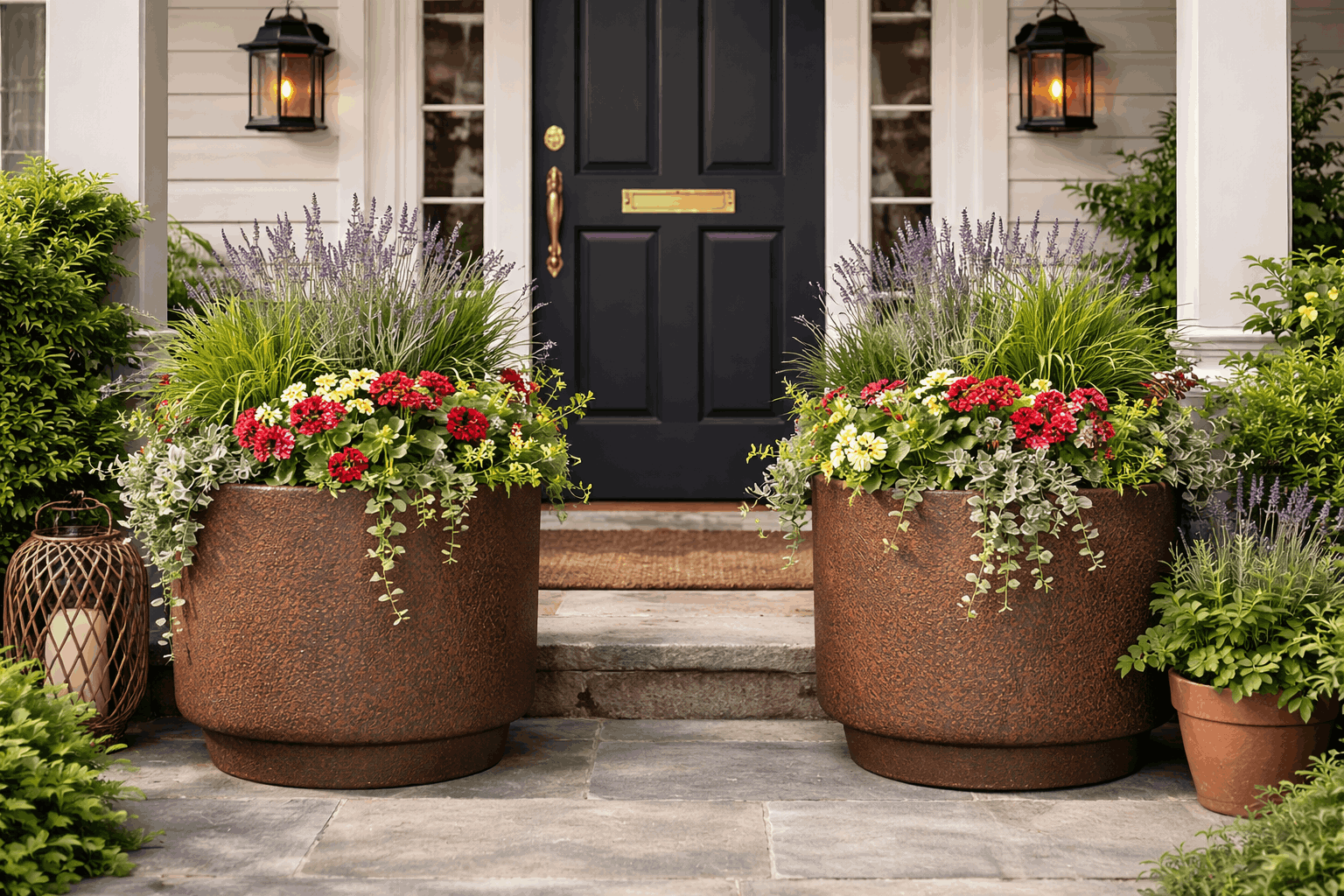
The entrance of a home says a lot about what lies inside. It is the first thing guests see when they arrive and the last thing they notice when they leave. Enhancing this area does not require a major renovation. Often, the simplest additions make the biggest difference. Placing planters by your entrance is one of the most effective ways to boost curb appeal, add a splash of color, and create an inviting atmosphere.
Whether you want to create a grand, symmetrical entrance or a relaxed, cottage-style walkway, selecting the right pots and plants is key. This guide breaks down how to choose, style, and maintain entry pots to keep your home looking its best throughout the year.
Why Front Door Planters Matter
Your entryway sets the tone for your entire property. Investing time into styling this space offers several distinct advantages.
Visual Appeal and First Impressions
Plants introduce life and texture to hard architectural surfaces. Stone, brick, and wood can sometimes feel sterile or stark. Well-placed greenery softens these sharp lines, making your porch feel more welcoming.
Flexibility Across Seasons
Unlike permanent garden beds, pots allow you to change your display whenever you want. You can shift from bright summer blooms to rich autumn foliage, and then to hardy winter evergreens without digging up your yard.
Framing Your Architecture
A pair of tall pots can frame a doorway beautifully, drawing the eye toward the entrance. This structure guides visitors naturally toward your front door while hiding minor imperfections in wall finishes or porch flooring.
Key Considerations Before Buying
Before you purchase the first pot that catches your eye, take a moment to evaluate your space. A mismatch between your environment and your planter choice can lead to cracked pots or dying plants.
Sunlight Exposure
How much sun does your front door get?
- Full Sun (6+ hours): Needs materials that can handle heat without baking the plant roots, such as thick composite or stone.
- Full Shade: Pots will stay damp longer, meaning excellent drainage is crucial to prevent root rot.
Available Space and Scale
Scale is everything in exterior design. Small pots tend to look lost and cluttered next to a standard or oversized front door. Measure the width of your porch or steps. Ensure that your chosen containers leave plenty of room for people to walk past safely without catching their clothes on branches.
Material Durability
Since these containers sit outside year-round, they must withstand changing weather patterns.
- Fiberstone and Composite: Light enough to move but tough enough to handle frost.
- Concrete and Terracotta: Heavy and stable against high winds, but terracotta can crack during freezing winters if not treated.
- Plastic: Lightweight and affordable, but cheaper varieties can fade and become brittle under direct sunlight.
If you are ready to find the perfect match for your home, you can browse a wide selection and buy planters for front door spaces that combine durability with timeless style.
Common Styling Challenges and How to Overcome Them
While adding greenery seems straightforward, homeowners often run into a few common obstacles.
Weight and Stability
Tall plants like bay trees or standard olives act like sails in high winds. If your pot is too light, it will tip over, spilling soil and damaging your plants.
- The Fix: Place heavy stones, gravel, or broken bricks at the bottom of the pot before adding soil. This lowers the center of gravity and improves drainage.
Watering Logistics
Porches are often covered by roofs or awnings, meaning your entry plants will not get regular rainfall. You must water them manually.
- The Fix: Choose large containers. Small pots dry out within hours during hot summer days, whereas larger soil volumes retain moisture for much longer. Alternatively, look for self-watering options if you travel frequently.
Drainage Issues
Without proper drainage, water pools at the bottom of the container. This drowns the roots and kills the plant.
- The Fix: Always ensure your pots have drainage holes. Use pot feet to lift the containers slightly off the ground, allowing excess water to escape freely without staining your porch floor.
Top Trends in Entrance Planter Design
Exterior design evolves, and current trends favor clean lines mixed with organic textures.
Minimalist Monochrome
Many modern homes use a simple color palette. Matte black, charcoal grey, and crisp white planters create a stark, beautiful contrast against vibrant green foliage. Grouping three pots of identical color but varying heights creates a clean, architectural look.
Asymmetrical Arrangements
The traditional look relies on two identical pots flanking a door. While this remains a classic choice, many are turning to asymmetry. Placing a single large pot on one side, balanced by a cluster of two smaller pots on the other, creates a relaxed, contemporary feel.
Architectural Planting
Instead of packing pots with a mix of colorful annuals, current trends lean toward structural plants. Ornamental grasses that move in the wind, neatly clipped boxwood spheres, or structural fatsia japonica leaves provide a sophisticated look that lasts for years.
How to Arrange Your Plants: The Three-Step Rule
When planting a mixed arrangement, professional designers use a reliable formula: the thriller, the filler, and the spiller.
- The Thriller: This is your focal point. It should be a tall, eye-catching plant placed in the center or back of the pot. Examples include dwarf conifers, cordylines, or topiary trees.
- The Filler: These are mid-height, mounding plants that surround the central star, filling out the container. Think of ferns, heucheras, or pansies.
- The Spiller: These are trailing plants placed near the edges. They cascade down the sides of the pot, softening the rims. Ivy, trailing lobelia, and creeping Jenny work wonderfully.
Maintenance Tips for Year-Round Appeal
To ensure your entrance always looks pristine, establish a quick maintenance routine.
- Rotate the Pots: Plants grow toward the light. Rotate your containers 90 degrees every few weeks to prevent lopsided growth.
- Refresh the Topsoil: Every spring, scrape off the top two inches of old soil and replace it with fresh compost mixed with slow-release fertilizer.
- Prune Regularly: Remove dead leaves, spent flowers, and yellowing stems immediately. Cleanliness keeps pests away and maintains a neat appearance.
- Wipe Down the Containers: Dust, pollen, and mud splashes can make dark pots look dull. Wipe the exterior of your containers with a damp cloth every few months to keep them looking brand new.
Final Thoughts
The entrance to your home is a preview of your personal style. Selecting the right pots helps you build a clean, welcoming path for family and guests alike. By focusing on durable materials, appropriate sizing, and proper drainage, you ensure your greenery thrives through every season. Take the time to assess your entryway, pick a style that complements your architecture, and enjoy the instant lift that beautiful greenery brings to your daily routine.