
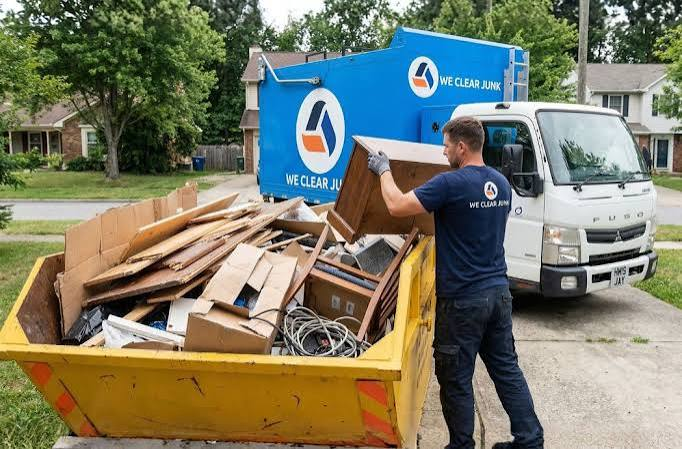
It’s the question every homeowner, landlord, and builder asks before a clearance job: do I hire a skip, or do I book a rubbish removal service?
On the surface, it looks like a simple cost comparison. In practice, the answer depends on the size of your job, where you live, what you’re throwing away, and factors most people don’t think about until the bill lands.
With rising landfill taxes, updated council permit fees, and the growth of professional waste collection services in 2026, the gap between these two options has narrowed and in some cases, completely reversed. Knowing how much to hire a skip versus the true all-in cost of a rubbish removal service could save you hundreds of pounds.
This guide gives you the honest, side-by-side breakdown you need before you spend a penny.
What You’re Actually Comparing
Before diving into numbers, it’s important to understand what each option actually involves because the headline prices rarely tell the full story.
What Skip Hire Involves
Skip hire means a company delivers an empty metal container to your property. You fill it yourself over an agreed hire period (typically 7–14 days), and the company collects it when you’re done.
The price you see advertised covers:
- Delivery and collection of the skip
- A fixed hire period
- Disposal of the skip’s contents (up to a weight limit)
What it does not automatically include:
- Road placement permits
- Excess weight charges
- Restricted or hazardous item disposal
- Your own time and labour loading it
What Rubbish Removal Involves
A rubbish removal service sends a trained team to your property. They load, sort, and remove your waste for you, transport it in a licensed vehicle, and dispose of it at a licensed facility.
The price typically covers:
- Labour (loading and sorting)
- Vehicle, fuel, and transport
- Disposal fees
- Recycling compliance
What it does not automatically include:
- Hazardous material handling (charged separately)
- Very large or specialist items (e.g. hot tubs, pianos)
Skip Hire Cost — The Real 2026 Breakdown
Understanding skip hire cost means looking beyond the advertised rate. Here is what a typical skip hire job actually costs in 2026.
Skip Sizes and Base Prices
| Skip Size | Typical Volume | Best For | Average Cost (2026) |
| Mini Skip (2 yard) | 20–25 bin bags | Small garden clearance, bathroom strip-out | £80–£130 |
| Midi Skip (4 yard) | 35–45 bin bags | Kitchen clearance, small renovations | £130–£180 |
| Builder’s Skip (6 yard) | 50–60 bin bags | Full room clearances, garage, small builds | £170–£240 |
| Large Skip (8 yard) | 60–80 bin bags | House clearances, extensions | £220–£320 |
| Maxi Skip (12–16 yard) | 100–130 bin bags | Large construction, full estate clearances | £350–£600+ |
These are base rates for placement on private land. Prices vary by region; skip hire cost in London sits at the higher end of these ranges due to land scarcity, congestion charges, and higher operating costs.
The Add-Ons That Inflate Your Bill
This is where knowing how much to hire a skip gets more complicated. The following extras are almost never included in the advertised price:
1. Road Placement Permit
If the skip cannot fit on your driveway, it must go on the public road. This requires a council-issued permit, costing £60–£150 in most London boroughs and £40–£100 elsewhere. Some councils take up to 5 working days to process permits, a delay that can push back your entire job.
2. Excess Weight Charges
Every skip comes with an assumed weight allowance. Heavy materials such as soil, rubble, tiles, bricks are extremely dense. Exceeding the weight allowance triggers surcharges of £20–£60 per additional tonne.
3. Extended Hire Fees
Standard hire periods are 7–14 days. If your job runs over, daily overage charges of £10–£25 per day apply.
4. Restricted Item Removal
Skips will not accept: asbestos, fridges or freezers, tyres, paint, batteries, mattresses (in many cases), or gas cylinders. If these items end up in your skip, the company will either remove them at a surcharge or refuse to collect them until they’re taken out.
5. Failed Collection Surcharges
If the skip is inaccessible on collection day, companies charge a failed collection fee typically £30–£70 plus a rescheduling fee.
Rubbish Removal Cost — The Real 2026 Breakdown
Professional rubbish removal is priced differently from skip hire and understanding this pricing model is key to making a fair comparison.
How Rubbish Removal Is Priced
Most reputable removal companies price by volume (cubic yards or metres), with the cost including labour, transport, and disposal. Some charge a flat rate per job after a survey or photo assessment.
| Volume | Approximate Contents | Average Cost (2026) |
| 1/4 load | 8–10 bin bags equivalent | £80–£120 |
| 1/2 load | 15–20 bin bags equivalent | £120–£180 |
| 3/4 load | 25–35 bin bags equivalent | £170–£250 |
| Full load | 40–50+ bin bags equivalent | £250–£400 |
For skip hire London and professional rubbish removal in the capital, prices sit at the upper end of these ranges but the all-in nature of the pricing means fewer surprises.
What Makes Rubbish Removal More Cost-Effective Than It Appears
The advertised price includes:
- Labour: Two trained operatives typically work 1–3 hours on a standard clearance
- Sorting and recycling compliance: Waste is segregated at point of collection
- Disposal at licensed facilities: No hidden tip fees passed to you
- No permit required: The vehicle parks, loads, and leaves no council paperwork
For jobs in restricted-access areas, flats, or properties with no driveway, rubbish removal consistently proves cheaper than skip hire once permits and logistics are factored in.
Head-to-Head Cost Comparison — Four Common Scenarios
Let’s run the numbers on four typical jobs to show which option wins on price in 2026.
Garden Clearance (Small)
Job: Clearing a rear garden. Old fence panels, soil bags, broken pots, general green waste.
| Volume | Skip Hire (4 yard) | Rubbish Removal (1/2 load) |
| Base cost | £150 | £150 |
| Permit (road placement) | £80 | £0 |
| Labour (your time) | 3–4 hrs self-loading | Included |
| Heavy soil surcharge | £40 | Included |
| Total estimate | £270 | £150 |
Winner: Rubbish Removal by a significant margin once permits and surcharges apply.
Full Garage Clearance
Job: Decades of accumulated items: furniture, appliances, boxes, tools, bikes.
| Volume | Skip Hire (6 yard) | Rubbish Removal (3/4 load) |
| Base cost | £210 | £220 |
| Permit | £90 | £0 |
| Labour (self-loading) | 5–6 hours | Included |
| Extended hire (job ran over) | £50 | £0 |
| Total estimate | £350 | £220 |
Winner: Rubbish Removal — cheaper all-in, and no physical labour required from you.
House Extension Rubble
Job: Large volume of heavy construction rubble, broken concrete, bricks, plasterboard.
| Volume | Skip Hire (8 yard) | Rubbish Removal (full load x2) |
| Base cost | £280 | £700 |
| Permit | £100 | £0 |
| Excess weight charge | £80 | Included |
| Total estimate | £460 | £700 |
Winner: Skip Hire — for high-volume, heavy construction waste loaded by tradespeople on-site.
Flat Clearance (No Driveway Access)
Job: Full flat clearance before sale. Mixed furniture, boxes, white goods.
| Volume | Skip Hire (6 yard) | Rubbish Removal (full load) |
| Base cost | £210 | £300 |
| Road permit | £120 | £0 |
| Items carried down stairs | Your labour | Included |
| Restricted item surcharge (fridge) | £30 | Included |
| Total estimate | £360+ | £300 |
Winner: Rubbish Removal — especially where access is difficult and restricted items are involved.
When Skip Hire Makes More Sense
Despite rubbish removal winning more head-to-heads than most people expect, skip hire genuinely is the better option in certain situations.
Skip Hire Is the Right Call When:
- Your job generates waste gradually over days or weeks — tradespeople working on a long build benefit from a skip sitting on-site
- You have exclusively heavy construction waste — rubble, soil, and bricks at scale make per-tonne skip pricing competitive
- You have private land for placement — eliminating the permit cost immediately shifts the comparison
- You’re happy to do the loading yourself — the self-loading model only works in your favour if your time has low opportunity cost
- You’re running a commercial site — bulk skip hire with repeat collections is often contracted at lower rates
For professional skip hire services and waste collection in London, always confirm whether the quote is all-inclusive before committing.
When Rubbish Removal Makes More Sense
Rubbish Removal Is the Right Call When:
- You have no driveway — road permits add cost and delay to every skip hire job
- Your waste is mixed (furniture, appliances, general rubbish) — sorting surcharges and restricted item fees eat into skip hire’s apparent advantage
- You’re physically unable to load a skip — elderly residents, those recovering from illness, or anyone without help
- You need same-day or next-day clearance — skip hire delivery typically requires 24–48 hours’ notice; permit applications add more
- You’re in a flat, terrace, or listed property — access restrictions make skip logistics complicated and expensive
- You want peace of mind on disposal — licensed removal companies provide waste transfer notes proving legal disposal
The Environmental Comparison — Does It Affect Cost?
In 2026, environmental compliance directly impacts pricing for both services.
The UK’s Landfill Tax now stands at £126.15 per tonne for standard waste. Responsible clearance companies whether offering skip hire or removal pass this cost on. Companies with lower quotes are almost always cutting corners on recycling compliance or operating without proper licensing.
Licensed skip hire services are required to:
- Sort and divert recyclable materials from landfill
- Issue waste transfer notes for all loads
- Hold a valid Environment Agency waste carrier licence
When comparing quotes, always ask for a company’s waste carrier licence number. You can verify it for free on the Environment Agency’s public register. An unlicensed operator may be cheaper but you become liable if the waste is fly-tipped.
Frequently Asked Questions
How much does it cost to hire a skip in London in 2026?
Knowing how much to hire a skip in London specifically means budgeting beyond the base rate. A standard builder’s skip (6 yard) starts at around £180–£240, but with a road permit (£80–£150), potential excess weight charges, and extended hire fees, a realistic all-in budget is £300–£450 for most mid-size jobs. Mini skips start lower at £90–£140 but carry the same permit and surcharge risks.
Is rubbish removal always more expensive than skip hire?
No and this is the most common misconception. Once you factor in permits, self-loading labour, extended hire, and restricted item surcharges, rubbish removal is frequently cheaper for domestic clearances, flat clearances, and mixed-waste jobs. Skip hire cost only underpins the case for skip hire when you have large volumes of construction waste, private land for placement, and are willing to do all the loading yourself.
Can I mix different types of waste in a skip?
You can mix most general waste furniture, wood, plastics, cardboard, metals. However, the following are prohibited in virtually all skips: asbestos, tyres, refrigerants (fridges/freezers), paint and solvents, batteries, and gas cylinders. Placing prohibited items in a skip results in surcharges or refusal to collect. A professional rubbish removal team will handle most of these with appropriate surcharges and specialist disposal.
How long can I keep a skip?
Standard skip hire periods are 7–14 days depending on the provider. Extensions are usually available at a daily rate of £10–£25. If you know your job will take longer, negotiate an extended period upfront it’s almost always cheaper than paying overage daily. For ongoing construction projects, ask about weekly swap-out contracts with skip hire London providers.
Do I need a permit for a skip on my driveway?
No. If the skip sits entirely on private land your driveway, garden, or private car park no permit is required. A permit is only needed when the skip must be placed on a public road or pavement. In London, this adds £60–£150 and up to 5 working days’ processing time. If you’re unsure whether your property qualifies as private land, your skip hire company can advise before booking.
Conclusion: The Honest Answer in 2026
The cheapest option for your job is the one that has the fewest hidden extras eating into its apparent headline price.
For the majority of domestic clearance jobs garages, gardens, flat clearances, house contents rubbish removal wins on total cost once permits, surcharges, and your own labour are properly accounted for. It’s faster, simpler, and carries no nasty surprises.
For high-volume construction waste on private land with tradespeople already on-site doing the loading, skip hire holds its ground particularly when the job spans several days or weeks.
The question was never really which option is cheaper in the abstract. It’s which option is cheaper for your specific job. Run the numbers with all costs included, not just the headline rate and the answer becomes obvious.
If you’re still weighing up your options, speak to a reputable team offering skip hire London and full rubbish removal services. A trusted provider should be able to quote transparently for both and recommend the right solution for your budget without pushing you toward the option that’s more profitable for them.
At WeClear Junk, we give you the honest comparison upfront. No hidden fees. No permit headaches. No surprises.
Ready to find out which option saves you more? Get a free, no-obligation quote from WeClear Junk today.