
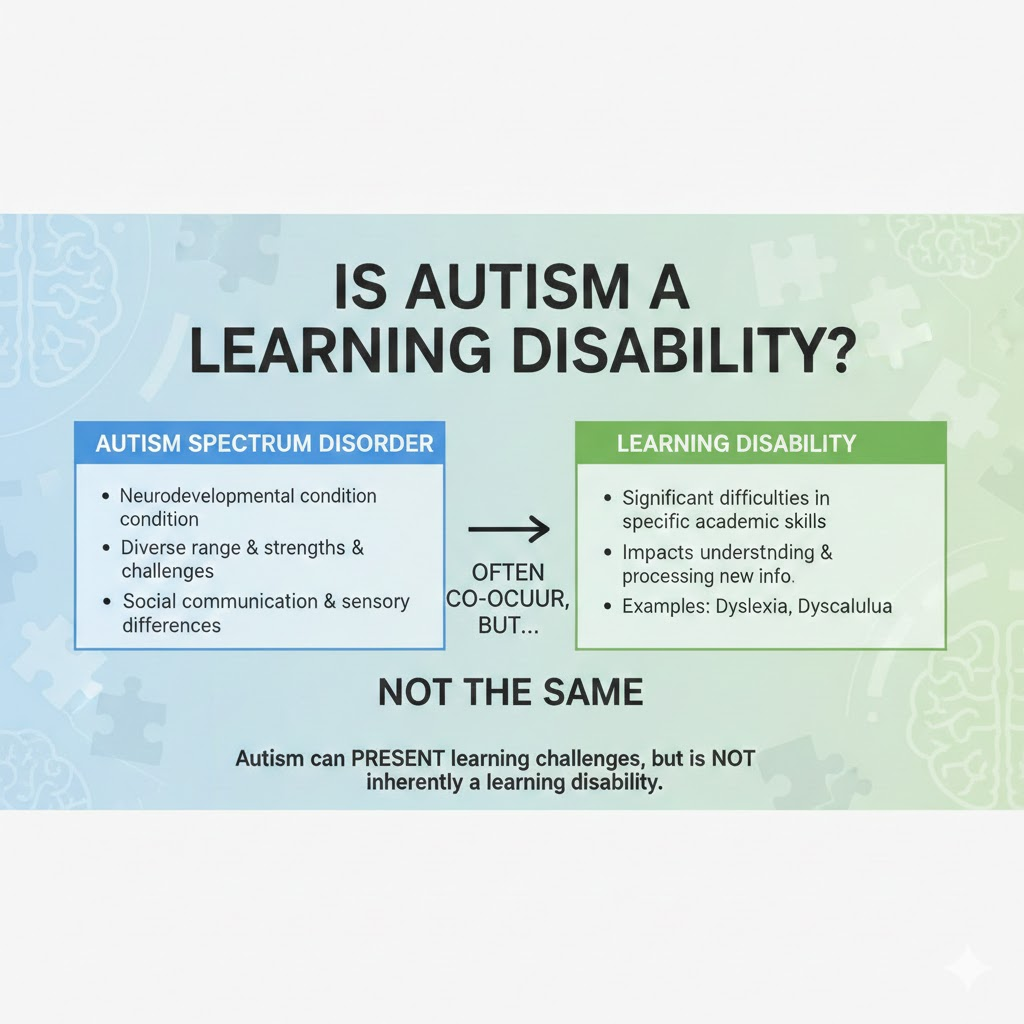
Many parents and caregivers often wonder, is autism a learning disability, and why there is so much confusion around this topic. Autism spectrum disorder (ASD) is a neurodevelopmental condition affecting communication, behaviour, and social interactions. While some autistic individuals may face challenges in learning, autism is not automatically classified as a learning disability. Understanding this distinction is essential for families, educators, and professionals supporting autistic children.
Autism manifests differently in every individual. Some people may have exceptional abilities in specific areas, while others face difficulties in day-to-day activities. The misconception that autism is a learning disability stems from the visible learning struggles that some autistic children experience. Learning difficulties may occur alongside autism, but they do not define the condition itself, highlighting the need for awareness and accurate information.
Understanding Autism
Autism is a lifelong neurodevelopmental condition that affects how a person perceives and interacts with the world. Core characteristics of autism include differences in social communication, repetitive behaviours, restricted interests, and sensory sensitivities. These traits can influence how individuals process information, but they do not necessarily impact intelligence or academic abilities, which is why the question, is autism a learning disability, often arises.
Autistic people can have a wide range of intellectual abilities, from above-average intelligence to additional learning challenges. Parents often ask, is autism a learning disability UK, because they want clarity regarding support systems. Understanding autism as a spectrum helps families focus on the individual strengths and needs of their child rather than assuming learning limitations based solely on diagnosis.
What is a Learning Disability
A learning disability is a condition that affects how a person processes, retains, or communicates information. In the UK, common examples include dyslexia, dyscalculia, and dyspraxia. These conditions are specifically linked to difficulties in reading, writing, mathematics, or coordination, distinguishing them from autism. Understanding these differences is essential for identifying the correct interventions.
Many people confuse autism with a learning disability, leading to questions such as, is autism a learning disability or difficulty. While learning disabilities directly impact cognitive functions, autism primarily affects social communication, behaviour, and sensory processing. Mislabeling autism as a learning disability can result in inappropriate educational strategies and support, which is why accurate knowledge is crucial for parents and educators.
Autism and Learning Difficulties – Are They Linked?
While autism is not a learning disability, it can affect learning in various ways. Approximately one-third of autistic individuals have a co-occurring learning disability, creating a complex set of needs. This overlap often raises the question, is autism a learning disability or mental illness, and highlights the importance of professional assessment and tailored interventions for children experiencing both conditions.
Even without a formal learning disability, autism can influence learning styles and classroom performance. Autistic individuals may struggle with executive functioning, organisation, and information processing. Recognising that these challenges are part of autism rather than a separate learning disability is essential for effective support and for promoting an inclusive educational environment where autistic children can thrive.
Signs and Challenges of Autism in Learning
Autism can affect learning indirectly through differences in focus, attention, and sensory sensitivities. Children may excel in subjects of interest while facing difficulties in areas requiring abstract thinking or rapid adaptation. Educators and parents should understand that these variations are not necessarily learning disabilities but reflect the unique cognitive profile of an autistic child.
Many parents wonder, is autism a learning disability or difficulty, when they observe learning struggles in school. Awareness of autism’s impact on learning styles enables families to provide appropriate support, such as structured routines, visual aids, and personalised teaching methods. These strategies can help autistic children succeed without mislabeling them as having a learning disability.
Support, Resources, and Intervention in the UK
The UK offers a wide range of support for autistic children, even if they do not have a learning disability. NHS services, local authority educational support, and charities like Mencap and Autistica provide guidance, therapies, and practical resources for families. Tailored support ensures children reach their full potential based on individual strengths.
Interventions such as speech and language therapy, occupational therapy, and applied behaviour analysis (ABA) help children develop essential life and learning skills. Parents asking, is autism a learning disability, should focus on personalised support plans rather than labels. Early intervention can significantly improve outcomes and foster confidence, independence, and academic achievement in autistic children.
Myths and Misconceptions About Autism and Learning Disabilities
A common myth is that autism automatically equates to a learning disability. This misunderstanding can lead to stigma, inappropriate educational strategies, and overlooked strengths in autistic children. Clarifying whether is autism a learning disability true or false ensures families, educators, and professionals adopt evidence-based approaches to care and education.
Another misconception is that autism is a mental illness. Autism is a neurodevelopmental condition, distinct from mental health disorders. While autistic individuals may experience mental health challenges, autism itself is not a learning disability or a mental illness. Education, awareness, and accurate terminology help parents provide the right support without unnecessary confusion or bias.
Conclusion
Autism is not a learning disability, but it can affect learning in unique ways. Some autistic individuals may have co-occurring learning disabilities, but autism alone does not define intellectual ability. Understanding this distinction allows families to seek appropriate support, interventions, and educational strategies tailored to their child’s individual needs.
UK parents and caregivers should rely on reputable resources such as the NHS, Autistica, and Mencap for guidance. By recognising that autism is a developmental difference, not a learning disability, society can foster inclusive environments where autistic individuals thrive academically, socially, and personally.
Frequently Asked Questions
Is autism considered a learning disability in the UK?
Autism is not automatically a learning disability. Some autistic individuals may also have learning disabilities, but the conditions are separate.
Can someone be autistic without having a learning disability?
Yes, many autistic individuals have average or above-average intelligence and do not have a learning disability.
How do learning difficulties differ from autism?
Learning difficulties affect specific cognitive skills like reading or maths, whereas autism affects behaviour, social communication, and sensory processing.
Is autism a mental illness or a learning disability?
Autism is neither a mental illness nor a learning disability. It is a neurodevelopmental condition.
Can autism affect learning without a formal learning disability?
Yes, autism can influence learning styles, attention, and processing, even without a diagnosed learning disability.
What support is available for autistic children in schools?
UK schools provide SEN support, EHCP plans, therapies, and tailored learning programmes to support autistic children.
Are there tests to determine if autism co-occurs with a learning disability?
Educational psychologists and specialists can assess for co-occurring learning disabilities alongside autism.
Is autism a lifelong condition?
Autism is lifelong, but early intervention and support can significantly improve skills, independence, and outcomes.