
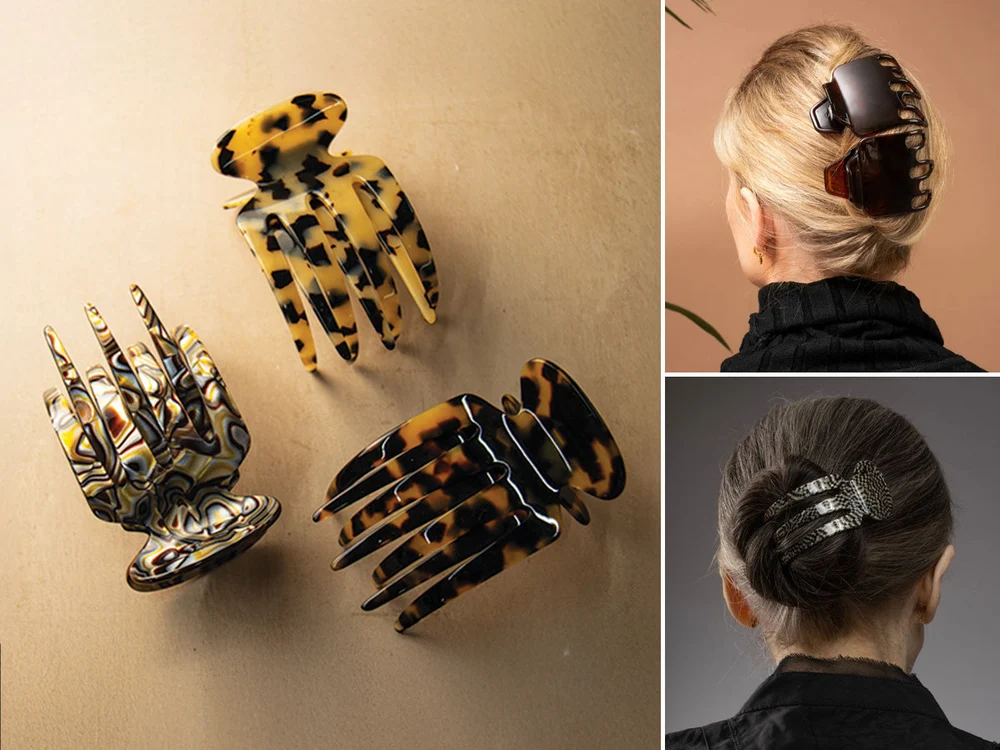
Walk through any British city on a weekday morning and you’ll see the same object again and again: a plastic clamp holding a bundle of hair at the back of someone’s head.
It’s the claw clip, and it’s certainly not a new invention. Anyone who was a teenager in the late nineties will remember the butterfly versions, the tortoiseshell ones from Boots and the enormous glittery ones that never held anything for longer than a bus journey. What changed is the design, the materials and the fact that a clip is now perfectly acceptable at work, at a wedding and on a night out. The revival has lasted long enough that calling it a trend has started to feel wrong.
Why the claw clip came back
Nostalgia is the obvious answer. Y2K styling returned across fashion generally and hair accessories came with it, but the clip stayed put after the rest of that revival moved on — which suggests something more practical is going on underneath.
Hair damage explains a lot of it. Years of tight elastics, daily heat styling and bleach left a generation with breakage around the hairline and at the exact point where a ponytail sits. A claw holds hair without that tension, and the loose twist it creates puts far less strain on the roots. Hairdressers noticed and started recommending them, which does more for a product than any advertising campaign.
Working from home helped too. A clip is the ideal compromise between doing your hair and not doing your hair, which describes an enormous number of our mornings since 2020.
Choosing a claw clip that actually holds
Most complaints about clips are really complaints about size. Fine or short hair needs a smaller clip with tighter teeth, because a large one has nothing to grip and slides out within the hour. Thick or long hair needs a wide clip with a strong spring, and cheap versions will simply snap under the load.
Material matters more than it appears to. Cellulose acetate is heavier, smoother and kinder to the hair shaft than moulded plastic, which is why the better ones cost a few pounds more. Metal teeth grip well but can catch on finer hair. When browsing a claw clip selection, retailers such as Notino list tooth count and width, which tells you more about how one will perform than the photograph ever does.
The twist that makes it work
Most people over-twist. Gather hair as if for a low ponytail, twist once or twice only, fold the length up towards the crown and clamp at the base of the fold. A tight twist gives the teeth nothing to bite into and the whole thing slides. A loose one holds all day.
Where the trend goes next
Bigger clips, softer colours and a slow move upmarket, judging by the number of jewellery brands now making them in brushed metal and marbled resin at prices that would have seemed absurd five years ago.
The clip has outlasted the trend cycle that brought it back, which usually means an item has stopped being fashion and started being infrastructure. Most wardrobes contain very few of those.