
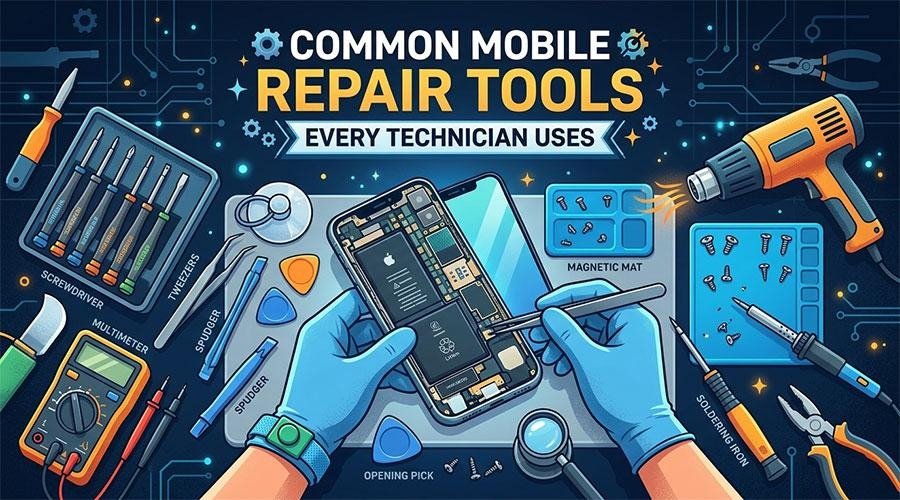
As smartphones become indispensable to daily life, malfunctions are inevitable, making smartphone repair a practical skill. Whether addressing cracked screens, battery failures, or internal defects, professional repair relies heavily on the equipment used. Equipping a technician with the correct tools facilitates safe, efficient, and precise operations.
Precision Screwdriver Set
Precision screwdrivers are foundational to mobile repair. Smartphones contain various micro-screws, each requiring a specific bit. Using incorrect drivers can strip screws or damage the chassis. A high-quality set includes Phillips, Torx, and Pentalobe bits in multiple sizes to disassemble nearly any model.
Plastic Opening Tools and Suction Cups
Opening a device without damaging the casing requires care. While advanced equipment is important, plastic spudgers and picks remain essential for separating housings and internal components without scratching or snapping plastic clips.
Suction cups are used to remove displays by adhering firmly to the screen, allowing technicians to lift the panel gently. Since modern phones use strong adhesives, using a Screen heating separator alongside a suction tool and plastic picks is the ideal method to prevent fracturing fragile glass panels.
Precision Tweezers
Tweezers are used to handle micro-components like screws, connectors, and integrated circuits (ICs). Anti-static (ESD) tweezers are preferred to prevent static discharge from damaging sensitive electronics. These provide better control when operating within cramped internal layouts.
Soldering Iron
A soldering iron connects electronic components to the logic board by melting solder with controlled heat. For hardware-level repairs, such as fixing broken traces or replacing small surface components, a soldering iron is mandatory.
Hot Air Rework Station
For advanced repairs, a hot air rework station is necessary to remove or install surface-mount devices (SMDs) like chips and ICs. Temperature-controlled stations allow technicians to work without direct contact with fragile parts, which is standard for logic board repair.
Multimeter for Testing
A Digital multimeter is a diagnostic tool used to measure voltage, resistance, and continuity. It identifies electrical faults within the circuitry, allowing technicians to locate issues before beginning physical repairs.
Opening Mats and Tool Organizers
Micro-screws and parts are easily lost during disassembly. Magnetic repair mats and storage boxes keep all components organized, optimizing the workflow and ensuring every part is accounted for during reassembly.
Cleaning Tools
Isopropyl alcohol (IPA), soft brushes, and air blowers remove dust, adhesive, and residue from components. Clean hardware ensures better performance and longevity after a repair is completed.
Heat Gun or Heating Pad
Heat guns or heating pads soften internal adhesives, making it easier to open devices without damaging the screen or frame. Controlled heating is vital to avoid warping internal plastic parts.
Conclusion
The right tools are the foundation of successful mobile repair. From basic screwdrivers and tweezers to advanced soldering and diagnostic equipment, each Phone repair tool serves a specific function. Utilizing the correct equipment increases precision, reduces the risk of damage, and improves efficiency. For anyone entering the field, investing in these essential tools is the first step toward professional-grade work.