
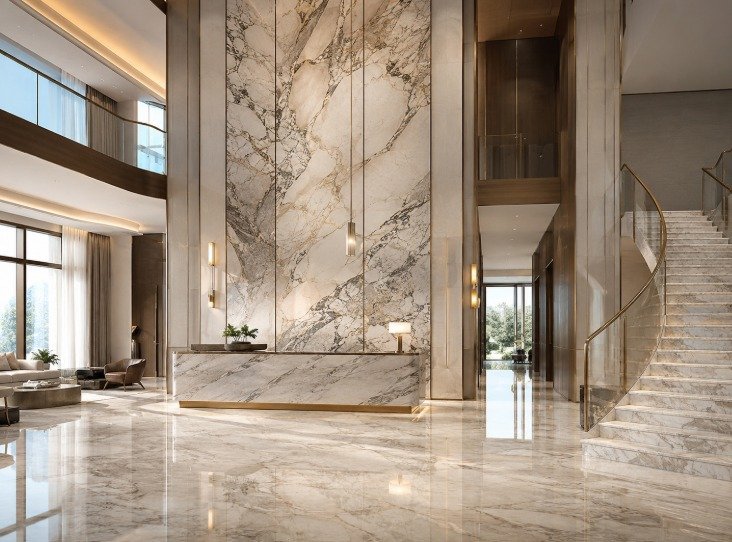
The global demand for luxury project stone has changed the way developers, contractors, designers, and procurement teams evaluate marble exporters. Marble is no longer purchased only as a decorative material for floors or walls. In high-end projects, it is increasingly treated as a complete design and construction package that must support visual identity, fabrication accuracy, delivery schedules, and long-term usability.
Luxury villas, hotels, resorts, private residences, commercial lobbies, branded retail spaces, and premium apartments often use marble as a core material. It may appear in entrance halls, feature walls, bathrooms, staircases, reception counters, fireplace surrounds, elevator areas, spa rooms, and outdoor transition spaces. Each of these areas has different requirements for stone selection, finish, thickness, cutting, labeling, packing, and installation coordination.
This is why China marble exporters are often evaluated not only by material range, but also by project support capability. A buyer looking for a China marble supplier usually needs more than slab photos and a price list. They need material advice, full slab confirmation, custom fabrication, inspection before shipment, organized packing, and clear export communication.
Why Luxury Project Stone Demand Is Growing
Luxury project stone demand is connected to several design and construction trends. Developers and homeowners want spaces that feel more permanent, more natural, and more customized. Marble and other natural stones support this direction because every slab has its own movement, color, and texture.
In high-end interiors, stone is often used to create:
- A strong first impression in lobbies and entrances
- A refined atmosphere in bathrooms and spa spaces
- A premium focal point in living rooms and reception areas
- A sense of permanence in staircases and floors
- A custom visual identity for villas, hotels, and branded spaces
Project buyers may compare different exporters and brands such as FOR U STONE when reviewing marble categories, stone applications, material range, and export supply options for residential, hospitality, and commercial projects.
The demand is not only for rare or expensive marble. Many projects need stable supply, consistent batches, practical finishes, and accurate fabrication. A luxury project may use dramatic marble in one area and calmer stone in another. The real value comes from planning the right stone for the right application.
What Makes Luxury Project Stone Different from Standard Stone Orders
A standard stone order may focus mainly on product name, size, thickness, finish, quantity, and price. Luxury project stone is more complex because the stone must fit the project design and construction sequence.
For example, a hotel lobby may need large-format marble flooring, reception counter panels, column cladding, elevator surrounds, and a feature wall. A villa may need bathroom stone, stair pieces, kitchen island panels, fireplace surrounds, and outdoor transition stone. These items cannot be managed as random slabs.
Some buyers also review companies such as HCENTURY STAR when comparing stone supply models, fabrication support, project coordination, and design-oriented stone solutions for high-end interiors.
Luxury project stone usually requires:
- Material selection based on application
- Full slab approval before cutting
- Surface finish confirmation
- Cut-to-size fabrication
- Edge and cutout details
- Dry layout for visible areas
- Inspection photos before shipment
- Strong export packing
- Room or area labels
- Shipping and document coordination
This makes exporter selection very important. A supplier that only sells slabs may be suitable for simple orders, but project stone often needs stronger technical and communication support.
The Role of China Marble Exporters in Global Projects
China marble exporters often support international projects by connecting material sourcing, processing, fabrication, packing, and export delivery. For overseas buyers, this can be useful because stone procurement may involve many separate decisions.
Material Sourcing
A marble exporter may help buyers review different stone types, including white marble, beige marble, grey marble, black marble, green marble, brown marble, and other decorative stones. The supplier may also suggest alternatives when the first-choice material is unavailable, too expensive, or unsuitable for the application.
Slab Selection
For luxury projects, buyers usually need real slab photos. Natural marble varies by slab, so catalog photos are not enough for final approval. Exporters should provide full slab photos, close-up images, slab numbers, and layout references when needed.
Fabrication Support
Project stone often requires custom processing. Exporters may support cut-to-size panels, vanity tops, countertops, stair treads, wall panels, shower panels, fireplace surrounds, reception counters, and special-shaped pieces.
Export Packing
International shipping requires strong packing. Marble can be damaged at corners, edges, cutouts, and polished surfaces if packing is weak. A project-capable exporter should understand crate strength, internal support, separators, labels, and loading protection.
Key Applications Driving Demand for Marble Project Stone
Luxury project stone is used across many spaces. Buyers should understand how each application affects material selection and supplier requirements.
Hotel Lobbies
Hotel lobbies are one of the strongest drivers of project stone demand. A lobby is the first space guests experience, so stone selection often becomes part of the brand identity. Marble may be used for flooring, walls, reception counters, columns, and elevator surrounds.
For lobby projects, buyers should consider:
- Traffic level
- Lighting reflection
- Slab consistency
- Floor pattern
- Feature wall layout
- Maintenance routine
- Replacement material availability
A bold marble may work well as a wall feature, while a calmer tone may be better for large floor areas.
Luxury Villas
Villas often use marble to create a personal and refined atmosphere. Unlike hotels, villas may allow more expressive stone choices because each area can be customized to the owner’s taste.
Common villa marble applications include:
- Entrance flooring
- Living room feature walls
- Master bathrooms
- Marble staircases
- Fireplace surrounds
- Kitchen islands
- Pool house bathrooms
- Private elevator areas
Villa buyers often care about uniqueness, slab beauty, and custom details. Full slab approval is especially important because the stone may become a major design feature.
Boutique Hotels and Resorts
Boutique hotels and resorts often use marble to create mood and identity. A boutique hotel may use a dramatic reception counter, while a resort may prefer warm beige, cream, or travertine-style stone for a relaxed atmosphere.
For these projects, the supplier should understand both visual design and practical operation. Hotel and resort stone must be beautiful, but it should also support cleaning, repeated use, and maintenance.
High-End Bathrooms
Bathrooms are one of the most common luxury marble applications. Marble may be used for vanity tops, shower walls, bathtub surrounds, floors, thresholds, and niche shelves.
Bathroom stone requires special attention to:
- Wet or dry zones
- Surface finish
- Cleaning expectations
- Cutout accuracy
- Joint placement
- Shower wall size
- Small custom pieces
A bathroom may look simple in a rendering, but it often requires many detailed stone components.
Commercial and Retail Interiors
Premium retail stores, showrooms, restaurants, clubs, and office reception areas also use marble to create a strong brand image. Marble may be used for counters, walls, display tables, flooring, and decorative panels.
In commercial interiors, stone must balance design impact with daily use. A supplier should understand which surfaces are decorative and which surfaces face frequent contact.
How Exporters Support Project Buyers
A reliable marble exporter should help buyers reduce uncertainty. This does not mean making design decisions for the buyer, but it does mean providing enough information for informed choices.
Clear Quotation Scope
A quotation should explain what is included. Buyers need to know whether the price covers only slabs or includes cutting, polishing, edge processing, cutouts, packing, labels, and inspection photos.
A clear quotation may include:
- Stone name
- Supply form
- Thickness
- Finish
- Quantity
- Unit price
- Fabrication details
- Packing method
- Lead time
- Delivery term
- Payment terms
Full Slab Confirmation
Before production, buyers should confirm the actual slabs. This step is especially important for marble with strong movement or areas with high visual importance.
Full slab confirmation helps buyers check:
- Color tone
- Vein direction
- Natural variation
- Slab size
- Usable area
- Matching potential
- Bookmatch possibility
- Surface condition
Drawing Review
For custom project stone, drawings are essential. Exporters should review drawings carefully and ask questions when information is missing. This is especially important for vanity tops, countertops, stairs, wall panels, and reception counters.
Inspection Before Shipment
Inspection photos help overseas buyers confirm that the order matches the approved details before shipment. This is important because corrections after international delivery can be slow and expensive.
Inspection should check:
- Material color
- Surface finish
- Thickness
- Dimensions
- Edge processing
- Cutout positions
- Quantity
- Labels
- Packing condition
Challenges Faced by Overseas Buyers
Although China marble exporters can support global projects, overseas buyers still need to manage several risks.
Color Variation
Natural marble varies. Even slabs with the same name may look different. Buyers should not rely only on small samples or old catalog photos.
Incomplete Drawings
Custom stone requires accurate dimensions. If drawings change after production, finished pieces may not fit.
Unclear Finish Selection
A polished finish may look beautiful, but it may not suit every wet or high-traffic area. Finish should be selected according to use.
Weak Packing
Poor packing can damage stone during transport. Finished pieces with edges, holes, or cutouts need careful protection.
Poor Labeling
Hotel, villa, and apartment projects often include many similar pieces. Without labels, the installer may waste time sorting materials on site.
What Buyers Should Check Before Choosing a Marble Exporter
Before placing a luxury project stone order, buyers should check the supplier’s ability in several areas.
1. Product Range
Does the exporter offer materials suitable for the project? Can they provide marble, granite, limestone, travertine, quartzite, or other options when needed?
2. Project Experience
Has the supplier handled hotel, villa, resort, apartment, or commercial stone projects before?
3. Slab Photo Support
Can the supplier provide real full slab photos, close-up images, and layout references?
4. Fabrication Capability
Can the supplier process cut-to-size panels, vanity tops, stairs, countertops, wall cladding, and custom details?
5. Quality Control
Can the supplier provide inspection photos before shipment?
6. Packing Standard
Does the supplier use strong crates, internal protection, labels, and loading photos?
7. Communication
Does the supplier respond clearly, ask useful questions, and confirm details in writing?
A supplier that asks detailed questions may seem slower at the beginning, but this often helps prevent mistakes later.
How Luxury Project Stone Should Be Planned
Luxury project stone should be planned early. Leaving stone procurement until the final stage can create problems with material availability, fabrication time, and installation schedule.
Step 1: Define Application Areas
The buyer should list where stone will be used:
- Lobby
- Bathroom
- Staircase
- Wall cladding
- Countertop
- Reception area
- Outdoor space
- Fireplace
- Elevator surround
Step 2: Choose Materials by Function
Each area should be matched with a suitable stone. A dramatic marble may be used for a feature wall, while a more consistent stone may be selected for large floors.
Step 3: Approve Full Slabs
Important visible areas should be approved using actual slab photos.
Step 4: Confirm Fabrication Details
Dimensions, edge profiles, cutouts, thickness, finish, and labels should be confirmed before cutting.
Step 5: Inspect and Pack
Finished pieces should be inspected, packed, labeled, and documented before shipment.
Common Mistakes in Marble Export Projects
Mistake 1: Choosing the Exporter Only by Price
Low price may not include fabrication, inspection, packing, or labeling. Buyers should compare total project value.
Mistake 2: Skipping Full Slab Approval
Small samples cannot show full marble movement. Full slab photos should be reviewed before production.
Mistake 3: Starting Production Too Early
Custom pieces should not be produced before final drawings are confirmed.
Mistake 4: Using One Marble for Every Area
Different applications may need different materials or finishes. One stone may not be ideal for every room.
Mistake 5: Ignoring Packing and Labels
Strong packing and clear labels are essential for international project orders.
Procurement Checklist for Luxury Project Stone
Material Checklist
- Stone type confirmed
- Full slab photos reviewed
- Thickness confirmed
- Finish selected
- Quantity checked
- Matching needs reviewed
Fabrication Checklist
- Drawings finalized
- Dimensions confirmed
- Edge profiles selected
- Cutouts marked
- Wall panel layout checked
- Stair details reviewed
- Small pieces included
Export Checklist
- Inspection photos required
- Packing method confirmed
- Crate marks prepared
- Piece labels confirmed
- Packing list reviewed
- Loading photos requested
- Delivery terms clarified
This checklist helps buyers organize the project before production begins.
FAQ
1. Why do global buyers source marble from China?
Global buyers source marble from China because the country has a mature stone processing and export supply chain. Buyers can often find marble slabs, cut-to-size panels, vanity tops, countertops, stairs, wall cladding, and custom stone products through experienced exporters.
2. What should I check before choosing a China marble exporter?
Buyers should check material availability, full slab photo support, project experience, fabrication capability, inspection process, packing standards, labeling method, communication quality, and export documentation support before placing an order.
3. Is marble suitable for luxury hotel and villa projects?
Yes, marble is widely used in luxury hotel and villa projects for lobbies, bathrooms, feature walls, staircases, reception counters, fireplaces, and custom interior details. The key is to choose the right marble, finish, and fabrication method for each application.
4. Should buyers approve full slabs before importing marble?
Yes. Full slab approval is strongly recommended because natural marble varies by slab. Buyers should review actual slab photos before production, especially for feature walls, lobbies, bathrooms, countertops, and bookmatched panels.
5. How can buyers reduce risk when importing project stone?
Buyers can reduce risk by preparing clear drawings, approving full slabs, confirming finishes, checking fabrication details, requesting inspection photos, reviewing packing, and requiring labels by room or installation area.
Conclusion
China marble exporters play an important role in the growing demand for luxury project stone. Villas, hotels, resorts, commercial interiors, and premium residential developments increasingly require marble that is not only beautiful, but also suitable for specific applications and prepared for efficient installation.
The strongest exporters are not only material sellers. They support project buyers through slab selection, application review, custom fabrication, quality inspection, packing, labeling, and export communication. For overseas buyers, this project-based support can reduce risk and help protect the final design result.
Luxury project stone should be planned with care. When buyers choose the right material, confirm real slabs, review drawings, inspect finished pieces, and control packing, marble can become one of the most valuable design elements in a high-end project.