
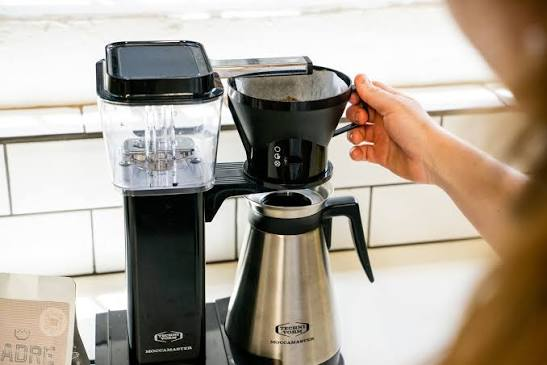
Batch brew suits businesses pouring 20 or more cups an hour with steady, predictable demand, such as busy offices, canteens, and cafes. Single-serve suits lower or unpredictable footfall where staff and visitors want different drinks made fresh, such as small offices, reception areas, and boutique settings. The right choice depends on your hourly volume and how consistent that demand is, not just your headcount.
If you’re weighing up batch brew against single-serve for your business, the answer usually comes down to one number: how many cups you pour in a busy hour, and how steady that demand stays through the day. Get it wrong and you’ll either have staff queuing at an overworked machine, or a pot of batch coffee going cold because nobody wanted it at 11am. Before committing to either route, it’s worth seeing the full spread of commercial coffee brewers on the market, because the gap between a decent batch brewer and a good single-serve unit is bigger than most buyers expect.
What’s the Difference Between Batch Brew and Single-Serve?
A batch brew machine makes a large pot, urn, or airpot of coffee in one cycle, which then sits ready to pour as staff or customers need it. A single-serve machine, whether that’s pod-based, bean-to-cup, or filter-per-cup, makes one drink at a time, on demand, with more control over strength, milk, and drink type.
Batch brew wins on speed at scale. Once the pot is made, pouring a cup takes seconds, so it copes well with a rush. Single-serve wins on freshness and choice, since every cup is ground and brewed to order, but each drink takes longer and machines can queue up during a morning rush if there’s only one unit.
How Much Coffee Does Your Business Actually Get Through?
Before picking a brewer, count heads and estimate cups per person per day, then work out your busiest single hour rather than your daily total. A 40-person office averaging two cups a day only needs to handle a modest morning peak, not 80 cups spread evenly across eight hours.
Working Out Your Hourly Peak Demand
1. Count regular staff plus average daily visitor numbers.
2. Estimate cups per person across a typical shift, usually 1.5 to 3.
3. Identify your busiest 60-minute window, usually first thing and just after lunch.
4. Multiply your estimated hourly demand by 1.3 to allow for meetings and events.
This is also the point where it pays to talk to someone who sells more than one type of machine, rather than a rep pushing whatever sits in their showroom. A supplier stocking both batch and single-serve ranges can look at your actual usage pattern and recommend honestly, instead of steering you toward the higher-margin option. Absolute Drinks is one such supplier, offering both formats so the recommendation is based on your footfall rather than what’s easiest to sell.
Batch Brew: Best Suited to Steady, High-Volume Sites
Batch brew machines make sense wherever demand is predictable and heavy, such as staff canteens, factory break rooms, large open-plan offices, and event catering. A well-run batch brewer can hold coffee at proper temperature for 30 to 60 minutes without noticeably degrading the taste, provided pots are cleared and refreshed on a schedule rather than left to stew.
Batch brew makes sense once you’re regularly pouring 20 or more cups within a single hour, or catering events and meetings where several people need coffee at the same moment. Below that volume, you’ll likely be tipping unused coffee away.
Single-Serve: Best Suited to Variety and Lower, Unpredictable Demand
Single-serve suits smaller teams, reception areas, hotel rooms, and any setting where different people want different drinks, such as flat whites, black filter, or decaf, without waste. There’s no pot sitting around going stale, so quality stays consistent whether the second cup of the day is poured at 9am or 3pm.
The trade-off is throughput. A single-serve unit making one drink every 30 to 60 seconds can’t match a batch brewer during a genuine rush, so sites with occasional spikes, like a Monday morning meeting for 25 people, sometimes need a second unit or a small batch brewer kept in reserve.
Coffee Brewers for Offices: What Actually Matters
When people search for coffee brewers for offices, they’re usually trying to solve one practical problem: keeping a break room running smoothly without someone having to babysit the machine all day. For most offices under 30 people, a good single-serve or bean-to-cup machine covers the variety staff expect without producing waste. Larger offices, or those with regular client meetings, tend to do better mixing a batch brewer for peak hours with a single-serve unit for everyone else.
Professional Coffee Brewers: Build Quality and Upkeep
Professional coffee brewers are built around commercial-grade boilers, pumps, and housings designed to run for hours a day, every working day, which is a very different job to a domestic machine used a handful of times daily. That build quality shows up in fewer breakdowns and a longer service life, but it also means routine descaling, filter changes, and cleaning schedules matter more, since a neglected commercial unit fails faster than a neglected home machine simply because it works so much harder.
Batch Brew vs Single-Serve: Side-by-Side Comparison
| Factor | Batch Brew | Single-Serve |
| Best hourly volume | 20+ cups | Under 20 cups |
| Speed per cup | Very fast once brewed | 30 to 60 seconds per cup |
| Drink variety | Limited, usually one blend | High, drink made to order |
| Waste risk | Higher if demand is unpredictable | Low, brewed on demand |
| Typical setting | Canteens, large offices, events | Small offices, reception, hotels |
Which Should You Choose? A Quick Decision Guide
• Steady 20+ cups an hour, same blend acceptable: choose batch brew.
• Under 20 cups an hour, staff want different drinks: choose single-serve.
• Mostly steady with occasional large meetings: consider one of each.
• Client-facing reception area: single-serve, for presentation and choice.
• Factory or warehouse break room: batch brew, for speed and simplicity.
Frequently Asked Questions
1. What is the difference between batch brew and single-serve coffee machines?
Batch brew machines make a large pot of coffee at once for pouring as needed, while single-serve machines brew one cup at a time on demand. Batch brew favours speed and volume, single-serve favours freshness and drink variety.
2. How many cups per hour justifies a batch brewer?
Once a site regularly needs 20 or more cups within a single hour, a batch brewer usually pays for itself in time saved and reduced queuing, compared with running several single-serve machines side by side.
3. Do single-serve machines produce worse coffee than batch brew?
Not necessarily. Single-serve machines brew each cup fresh, so quality doesn’t drop over time the way a batch pot can if it sits too long. The main difference is speed at volume, not underlying taste quality.
4. Can one machine cover both steady demand and occasional rushes?
Some hybrid units offer both a hopper for bulk brewing and a single-cup option, but most sites with mixed demand find it simpler and more reliable to run one machine of each type rather than one machine trying to do both jobs.
5. How long can batch brewed coffee sit before it goes stale?
Most commercial urns hold quality for around 30 to 60 minutes on a proper warming element. Beyond that, coffee starts to taste flat and bitter, so unsold pots should be tipped and refreshed rather than kept running all day.
6. What size office needs a batch brewer instead of single-serve?
As a rough guide, offices under 30 people are usually better served by single-serve, while offices above that, or with regular large meetings, tend to benefit from adding a batch brewer for peak periods.
7. Are commercial coffee brewers in the UK different from domestic machines?
Yes. Commercial units use heavier-duty boilers, pumps, and components rated for continuous daily use, and they’re built to be serviced regularly rather than replaced when they wear out, unlike most domestic machines.
8. How often do professional coffee brewers need servicing?
Most manufacturers recommend descaling every one to three months depending on local water hardness, with a full professional service at least once a year to check seals, pumps, and heating elements.
Final Thought :
There’s no universally better option here, only the option that matches your actual pattern of demand. Count your peak hour honestly, be realistic about how varied your team’s tastes are, and choose the format that fits, rather than the one that looks most impressive in a showroom.
If you’re still weighing up the numbers, it’s worth speaking to a supplier who carries both formats and has seen enough offices, canteens, and reception areas to know which setup actually holds up under daily use. Absolute Drinks stocks a wide range of batch brew and single-serve machines and can talk you through what suits your volume before you commit to anything.