
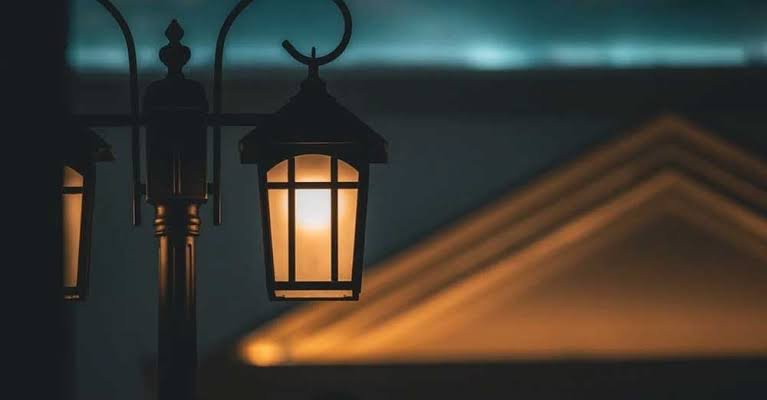
Outdoor lighting is receiving closer scrutiny as councils, communities and environmental groups discuss energy use, neighbour disturbance and the effect of artificial light at night. Government planning guidance in England identifies poorly designed lighting as a potential source of nuisance and explains that planning decisions can consider the need for light, its effect on local amenity and the character of the area.
This does not amount to a general argument against exterior lighting. Entrances, paths, yards and loading areas often need illumination for safe, practical use. The change is in how a good scheme is judged. More light is no longer an adequate answer when careful direction, timing and output could provide visibility with less spill beyond the site.
Exterior lighting should start with the task and boundary
Before choosing a fitting, property owners should identify what must be seen and from where. A delivery driver needs to read the route into a yard, while a householder may only need enough light to find a key and see the step. The site boundary, neighbouring windows, nearby habitats and road users all influence where unwanted light could travel.
The range available from Light hub direct includes outdoor wall lights, floodlights, bulkheads and sensor-controlled options for domestic and commercial settings. Selection should consider beam direction, lumen output, mounting height, colour temperature and the required IP rating. A powerful fitting aimed poorly can cause more difficulty than several lower-output products positioned with care.
Glare can reduce visibility instead of improving it
Glare occurs when a bright source sits within the field of view and makes it harder for the eye to see surrounding detail. This can affect pedestrians, drivers approaching a site and residents looking from a window. Tilting an unrestricted floodlight outwards may illuminate a large area, but much of the light can miss the ground and travel where it is not wanted.
Shielded fittings, controlled optics and downward aiming help keep light on the task. Mounting height also changes the result. A qualified designer or installer can assess larger car parks, service yards and routes where vehicle and pedestrian movement overlap. These spaces need measured coverage rather than a collection of bright points around the perimeter.
Controls can preserve darkness when a site is empty
Timing is one of the simplest ways to limit unnecessary outdoor light. A business may require full output during arrivals and loading but little or none once the premises close. Photocells respond to ambient light, timers follow a schedule and motion sensors activate lighting when movement is detected. Each method has limitations, so some sites combine them.
Sensors must be aimed and adjusted to avoid repeated activation by traffic, wildlife or movement outside the property. A very short delay can also leave someone in darkness while they remain relatively still. Commissioning should reflect the route and normal activity, followed by a review after people have used the installation for several weeks.
Colour temperature is part of responsible specification
Cooler white light can appear visually sharp, but colour temperature should not be selected from habit. Warmer options may reduce the proportion of short-wavelength light and can be more appropriate near sensitive residential or ecological locations, subject to the visual task and professional guidance. Consistency also helps a site look intentional rather than assembled in stages.
Colour rendering remains relevant, particularly where staff need to identify people, vehicles, labels or surface conditions. An efficient scheme balances recognition with restraint. Product output, optical control and positioning should work together instead of asking colour temperature alone to solve the design.
Domestic projects can avoid common neighbour disputes
A security light fixed close to a boundary may shine directly into the next property’s bedroom even when it is mounted on the owner’s wall. Discussing the position before installation is usually easier than resolving a complaint later. Testing the proposed angle after dark can reveal spill that was not obvious during daytime work.
Homeowners should also consider how reflective paving, pale walls and conservatory glazing affect the result. A lower output or different position may provide enough light at the door without illuminating the whole garden. Where security is the aim, lighting should sit alongside suitable locks, clear sightlines and other measures rather than being treated as a deterrent on its own.
Commercial estates need a recorded lighting strategy
Industrial and retail sites often add exterior fittings one repair at a time. After several years, the result can be inconsistent colour, overlapping beams and lights that remain on after the related activity has ended. A night survey allows facilities teams to record dark areas, glare sources, faulty controls and spill at the boundary under the conditions that matter.
A planned upgrade can then prioritise routes and operational areas while removing or redirecting unnecessary sources. This approach supports energy targets and better relations with neighbours without leaving staff in poorly lit spaces. As dark sky concerns move into mainstream planning and design discussions, the strongest lighting schemes will be those that provide enough light precisely where and when it is needed.