
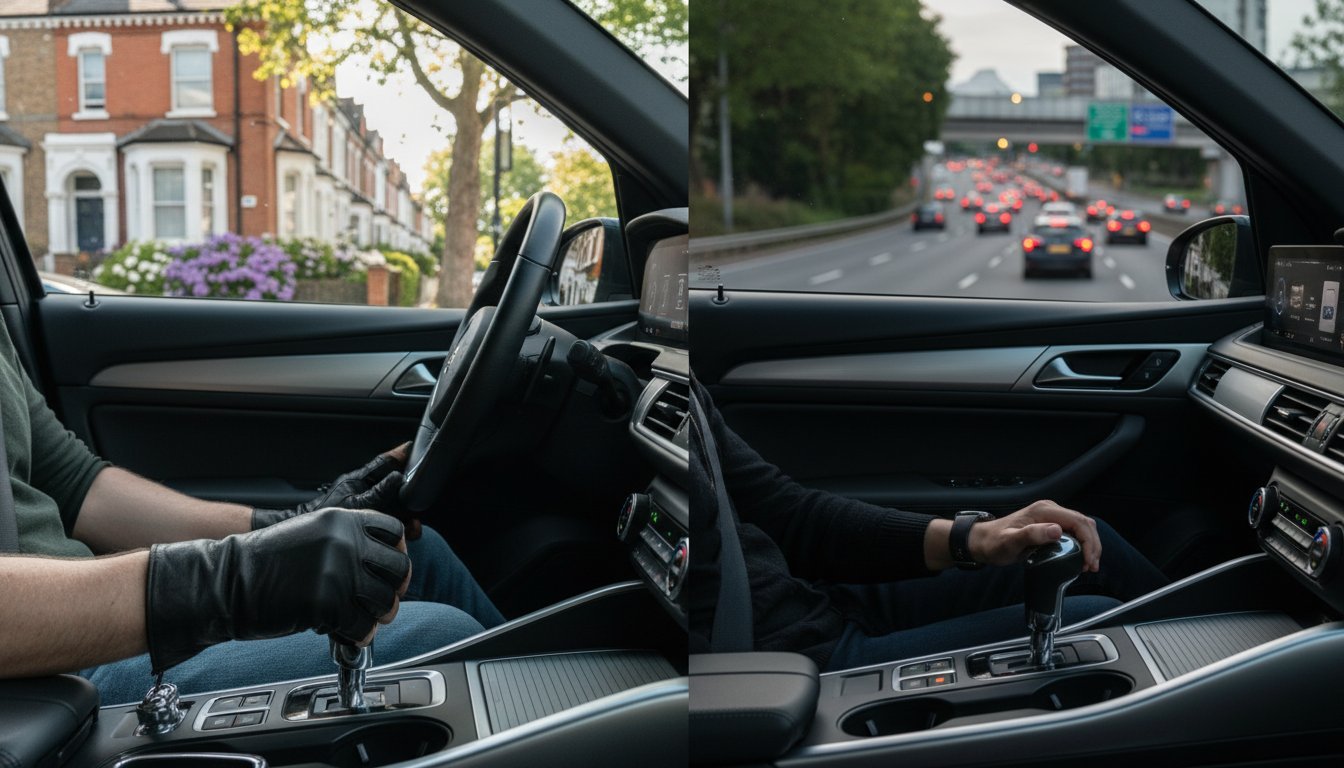
Learning to drive in Wimbledon is not simply about passing a test. It is about building real confidence on real roads, with an instructor who knows every junction, roundabout, and test route in the local area. That level of preparation is exactly what Glow Driving School was built to deliver.
Yet many learners across SW19 still begin their journey elsewhere, drawn in by introductory offers and quick availability, only to find weeks later that progress is slower than expected, scheduling is inflexible, and the instructor assigned has never driven the roads around Morden or Wimbledon Broadway.
That experience is reshaping how Wimbledon residents make their decision. A growing number of learner drivers across South West London are now choosing locally rooted schools like Glow Driving School, one based on verified pass rates, consistent one-to-one instruction, and genuine knowledge of the roads that matter on test day.
This article explains what is driving that shift and what every Wimbledon learner should know before booking their first lesson.
The Growing Demand for Local Driving Instruction in South London
The UK driving industry is under real pressure in 2026. The number of qualified Approved Driving Instructors (ADIs) has declined by around 10% over the past decade. DVSA practical test waiting times in London areas including Wimbledon and Croydon now run between 20 and 24 weeks.
From spring 2026, new DVSA rules require learner drivers to book their own practical tests directly, with stricter limits on rescheduling. This change raises the stakes of every lesson. When a test slot takes months to secure and carries new booking restrictions, learners cannot afford wasted time with a mismatched instructor or an unfamiliar route on test day.
The result is a more informed learner. One who researches local pass rates, asks about instructor consistency, and prioritises familiarity with Wimbledon roads over everything else. Local driving schools in SW19 are meeting that demand directly, and the numbers reflect it.
What Most Wimbledon Learners Discover After Their First Few Lessons
Many learners begin with high expectations. Quick availability and a recognisable name feel reassuring at the start. Within a few weeks, however, common frustrations begin to surface.
The most frequently reported issue is instructor consistency. Learners find themselves reassigned to a different instructor mid-course, sometimes more than once. Each reassignment means lost lesson time re-establishing a starting point with someone new. Progress that had been building slows down or resets entirely.
Scheduling creates friction too. Lesson availability is often shaped by wide-area instructor allocation systems rather than the individual learner’s routine. For working professionals and full-time students in commuter-heavy Wimbledon, early mornings, evenings, and weekend slots are frequently unavailable or limited.
The most consequential issue is route familiarity. Research by the Transport Research Laboratory confirms that familiarity with specific local test routes can increase a learner’s chances of passing by up to 15%. An instructor unfamiliar with the roads around Morden, Raynes Park, and Wimbledon Broadway cannot deliver that preparation, regardless of their overall teaching experience.
These are the frustrations that lead Wimbledon learners to local driving schools. And once they make that switch, the difference is consistently clear.
5 Reasons Wimbledon Learners Are Choosing Local Driving Schools
1. Deep Knowledge of Wimbledon Roads and Test Routes
The nearest DVSA practical test centre for Wimbledon learners is London (Morden), approximately 1.7 miles away. Morden holds a first-time pass rate of approximately 52%, above the national average of 47%. That result reflects learners who have been prepared on the exact roads the examiner will use on test day.
A locally based instructor in Wimbledon teaches on the A219 Merton High Street, the roundabouts on Wimbledon Broadway, and the residential roads through Raynes Park and Colliers Wood. Lessons progress from quiet streets in Wimbledon Village and South Park Gardens, where beginners build basic vehicle control, through to the more complex junctions near Wimbledon town centre where test-standard decision making is developed.
This structured local progression builds the kind of route familiarity that directly translates into test-day confidence. It is knowledge built lesson by lesson on the actual roads a learner will face on the day that matters most.
2. One Consistent Instructor From First Lesson to Test Day
The same ADI-registered instructor teaching a learner from their first lesson through to their practical test makes a measurable difference to both progress and confidence. A consistent instructor builds detailed knowledge of each student over time. They know which junctions cause hesitation, which manoeuvres need more repetition, and how the learner responds under pressure. Structured feedback after every session identifies which DVSA test requirements have been met and which areas still need attention. Learners always have a clear and honest picture of where they stand.
This continuity is one of the strongest advantages a local driving school offers, whether you are looking to learn to drive in Battersea or building confidence on the roads around Wimbledon. It means every lesson builds directly on the last, with no time lost re-explaining progress to a new instructor or adjusting to a different teaching style mid-course.
3. Flexible Scheduling Built Around Wimbledon Life
Wimbledon is a commuter-heavy area. A large proportion of residents are working professionals and full-time students whose routines do not accommodate fixed weekday daytime lessons. Local driving schools build their availability around that reality, offering early morning sessions, evening lessons, and weekend slots as standard.
Consistent lesson frequency is one of the strongest predictors of efficient progress toward test standard. For Wimbledon learners who need flexibility to maintain momentum, a locally operated school is far better placed to provide it than one running on a wide-area allocation system.
4. Better Value Over the Full Learning Journey
The hourly rate is only part of the cost calculation. The more important factor is how many hours a learner needs before reaching the test standard.
DVSA-backed data from 2025 shows the standard hourly rate for a qualified instructor sits between £36 and £40. The difference between needing 35 hours and 50 hours to pass represents between £540 and £700 in additional spend. Most learners need between 40 and 50 hours of professional instruction. Those taking automatic lessons often reach test standard in 25 to 30 hours, as removing the demands of clutch and gear management frees mental focus for road awareness.
Local driving schools in urban South London consistently achieve pass rates of around 49%, compared to the national average of 46%. Those percentage points translate directly into fewer lessons on average. Personalised instruction, route-specific preparation, and a consistent instructor relationship all reduce the total hours needed. For most Wimbledon learners, that efficiency makes a local school the better value option across the full learning journey.
5. Community Trust and Local Accountability
A local driving school’s reputation is built entirely within the community it serves. Every Google review, every passed student, and every recommendation from a neighbour or colleague is a direct reflection of that school’s standard of instruction. There is no wider network to absorb a poor review or reassign an underperforming instructor elsewhere.
That visibility creates a fundamentally different level of accountability. A locally based school in Wimbledon is motivated to maintain high standards because its reputation and its livelihood are directly tied to the results of the learners it teaches. That connection between quality and consequence is what makes local schools consistently more responsive, more invested, and more focused on student outcomes.
Research by the Federation of Small Businesses found that for every £1 spent with a local business, 63p remains within the local economy compared to just 40p with larger organisations. Choosing a local driving school is a smarter learning decision and a direct investment in the Wimbledon community.
What to Check Before Booking a Driving School in Wimbledon
Before making a booking, every learner should take the time to verify the following:
- DVSA-approved instructors with current ADI registration, verifiable on the official DVSA register
- Genuine familiarity with Morden and Tolworth test routes, confirmed by asking which specific roads and junctions are covered in lessons
- Flexible lesson timings including evenings and weekends, genuinely available rather than simply advertised
- A confirmed one-to-one instructor relationship from first lesson through to test day
- Independently verified local reviews from recent students in the Wimbledon, Morden, and Raynes Park areas
- Both manual and automatic lesson options available
- Transparent pricing with no pressure to commit to block packages before assessing instructor fit
Learners who take the time to check these points before booking can find driving schools in Wimbledon that publish their pass rates, instructor qualifications, and full lesson structures openly. A school that makes this information straightforward to find is one that has built its reputation on consistent, verifiable results.
Local Knowledge Is Not a Bonus. It Is the Baseline.
In a city as layered and traffic-dense as London, local road knowledge is not a supplementary benefit. It is the foundation of effective driving instruction. The specific junctions on the Morden test route, the traffic patterns on Wimbledon Broadway during peak hours, the quiet residential streets that build a nervous beginner’s confidence before busier roads are introduced — this knowledge is not transferable from one part of London to another. It is built through years of teaching on those exact streets, with learners who face the same roads on test day.
Wimbledon residents who choose a locally based driving school are making a considered, evidence-based decision. One supported by stronger local pass rates, consistent one-to-one instruction, and a level of community accountability that larger organisations are not structured to match.
Before booking the first lesson, take the time to research what is genuinely available in the local area. For most learners in Wimbledon, that research leads to a shorter journey, fewer wasted lessons, and a faster, more confident route to a full UK driving licence.