
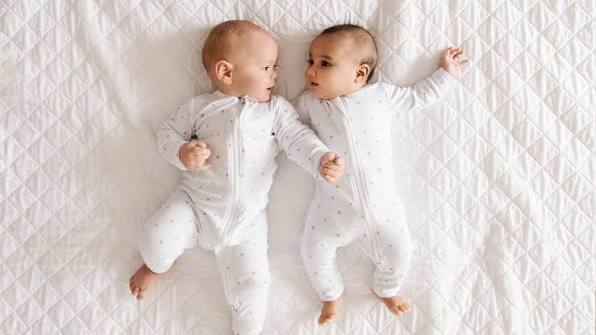
There are millions of decisions to be made when it’s your baby’s first time to take on the role of a parent, and clothe your little bundle is among the most vital. The skin of a baby is very sensitive, much thinner than that of adults and therefore every fabric, that comes into contact with their skin, is of special importance. There are numerous varieties of baby clothes on the market, and bamboo baby clothes has proven to be the better option for those who want the best possible in terms of comfort, safety and convenience. Their unbeatable softness, the capability to self-regulate temperature and many other advantages are unbeatable against any other fabrics. This article will discuss the reasons behind using bamboo baby clothes and how they can provide the infant the very best investment to ensure their comfort and well-being.
Baby clothes made with bamboo fabric are just as soft as baby’s skin
What makes you feel your first contact with the baby clothes made of bamboo is that they are so soft. Bamboo fabric is well known for its soft and soothing feel to a baby’s tender skin, and its silk-like texture. Cotton fibres are twisted in shape with some coarseness while the Bamboo fibres are round and are very smooth and give that perfect feel.
Hypoallergenic (for sensitive skin)
The skin of newborns is sensitive, allergic and susceptible to eczema and other skin problems. The baby clothes made from bamboo are natural hypoallergenic clothes, which are safe and comfortable for babies with delicate and easily-irritated skin. Bamboo fibres are naturally smooth and won’t cause any irritation, particularly for babies with eczema and sensitive skin. In addition, bamboo is endowed with a bioactive substance called “bamboo kun”, which has natural antibiotic properties to inhibit bacteria for fabrics to keep fresher for longer.
Excellent temperature control and breathability
Bamboo baby clothes have one of the most spectacular attributes – their breathability. The fiber structure of bamboo has a tiny pore which can facilitate the air circulation, and regulate baby’s body temperature. Babies are less able to thermoregulate their body temperature as adults are and therefore they need to be comforted and their safety ensured by wearing breathable clothing. Bamboo baby clothes naturally insulate babies in cold weather, and cool them down in warm weather, offering them a cool and warm outfit.
Excellent Moisture-Wicking Capabilities
Sweating is a common problem in babies, whether due to sleep, activity and/or warm weather. Bamboo baby clothes are superb in absorbing moisture, which is able to move the perspiration away from the skin 3 to four times quicker than cotton. Bamboo fibers have a high water absorption rate – the fibers are able to absorb and retain up to 3 times its weight of water. This allows bamboo baby clothes to quickly absorb moisture, allowing it to evaporate to keep baby dry and comfortable.
Safe on Newborn’s Skin and has natural Antibacterial Property
Aside from softness and breathability, bamboo baby clothes also have a natural anti-bacterial characteristic, which is very gentle to newborn’s skin. The agent ‘bamboo kun’ can be naturally made from bamboo, and thus will not be affected by bacterial growth. This natural anti-bacterial property not only helps eliminate allergens and irritations to the skin but it’s also great for drooling babies or kids who spit-up often. Bamboo baby clothes are also odour resistant, which stops the bacteria growing on the clothes, causing them to smell.
This is a highly flexible course which includes freedom of movement
Babies are continually learning and growing skills, they are rolling, crawling, sitting and then learning to walk. Unlike cotton baby clothes, bamboo baby clothes have a great extent of stretch, give babies a sense of freedom of movement, allowing them to move freely without being constrained. Typically, the bamboo fibres are a blend of a small amount of spandex, such that the fabric is naturally elastic to allow for garments to move gently over the baby’s body. This is a key factor in helping to develop fine motor skills and allows clothing to not restrict baby’s movements.
Non-scratch and long-lasting durability
From all the washing that baby clothes endure, to the daily activities of play, a kid’s clothes put in a lot of wear and tear. Bamboo baby clothes, although they are very soft, are very durable; they will not lose their softness and shape after being washed repeatedly. They retain their smoothness and structural strength over time when properly cared for and will be of good quality bamboo clothing.
The material must have a long-lasting value and be cost effective
Although the initial price of bamboo baby clothes might be higher than other cloths, in the long run, it is cost effective. Bamboos’ durability and ease of stretching make clothing that lasts for many longer than regular cotton clothes. Bamboo baby clothes have the natural elasticity, which allows them to adjust to the baby’s body, thus prolonging the life of the clothes.
To make parents feel better
In the end, parents’ peace of mind is invaluable when it comes to buying bamboo baby clothes. You’ll be able to concentrate on what is really important: spending time with your baby when you know you’re wearing soft, safe, hypoallergenic, breathable and temperature regulating fabric. Pediatricians recommend bamboo baby clothes for its characteristics of comfort, safety and skin friendliness.
Conclusion
As a parent, every choice you make has a significance in your parenting journey and selecting an appropriate clothes for your baby is not an exception. The bamboo baby clothes are the best option as they are naturally hypo-allergenic, extremely soft, able to wick up the moisture, have excellent breathability and have a natural antibacterial property. Their flexibility and freedom of movement allow growing babies to move around and requires no rigidity, and not only are they long lasting but they are also durable. Besides, bamboo baby garments are eco-friendly and sustainable, enabling moms and dads to look after their baby and the environment.