
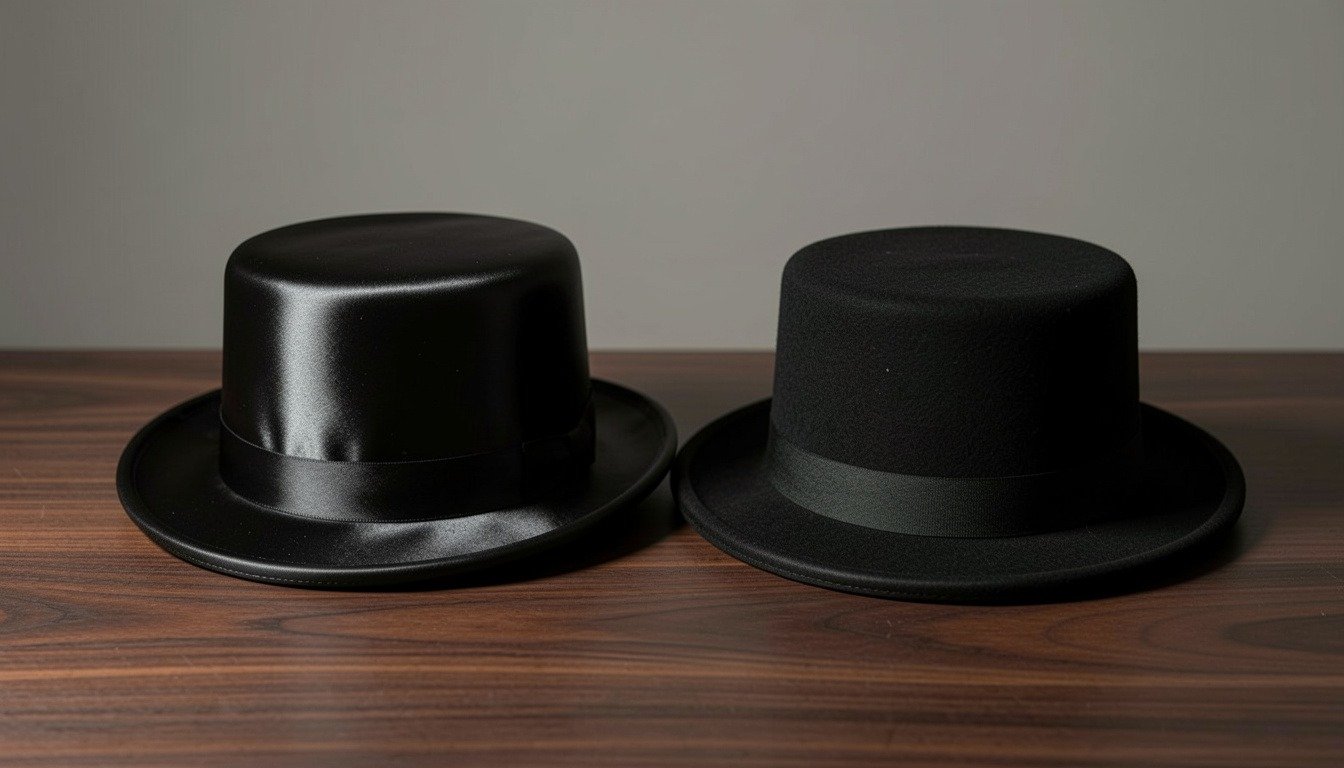
The material of a top hat affects how it looks, how it wears, and which occasions it suits. Silk and wool are the two most common materials used in men’s top hats, and they produce distinctly different results in terms of finish, texture, and formality. Understanding the difference helps you choose the right hat for the occasions you’re dressing for, rather than buying a hat that looks out of place when you wear it.
This guide covers both materials in detail: how they’re made, how they look and behave in wear, what each costs relative to the other, and which occasions each is most suited to. Whether you’re buying a hat for Royal Ascot, a formal wedding, or a more relaxed occasion, the material decision is one of the first choices to make.
Why the Material of a Top Hat Matters
A top hat’s material determines its surface finish, which is visible from a distance in a way that most clothing details are not. The crown of a top hat sits high on the head, making it one of the most prominent single elements of any formal outfit. A silk hat’s high gloss finish reads differently from across a paddock or a church aisle than a wool hat’s matte texture, and that difference matters when the occasion has specific dress code conventions.
Material also affects how the hat wears over time, how it responds to weather, and how easily it can be packed and transported. For men who wear a top hat regularly, these practical considerations carry real weight.
The men’s top hats range covers both materials in a variety of crown heights and finishes, so the decision ultimately comes down to how you’ll wear the hat and which occasions you’re buying it for.
Silk Top Hats: What to Know
How Silk Top Hats Are Made
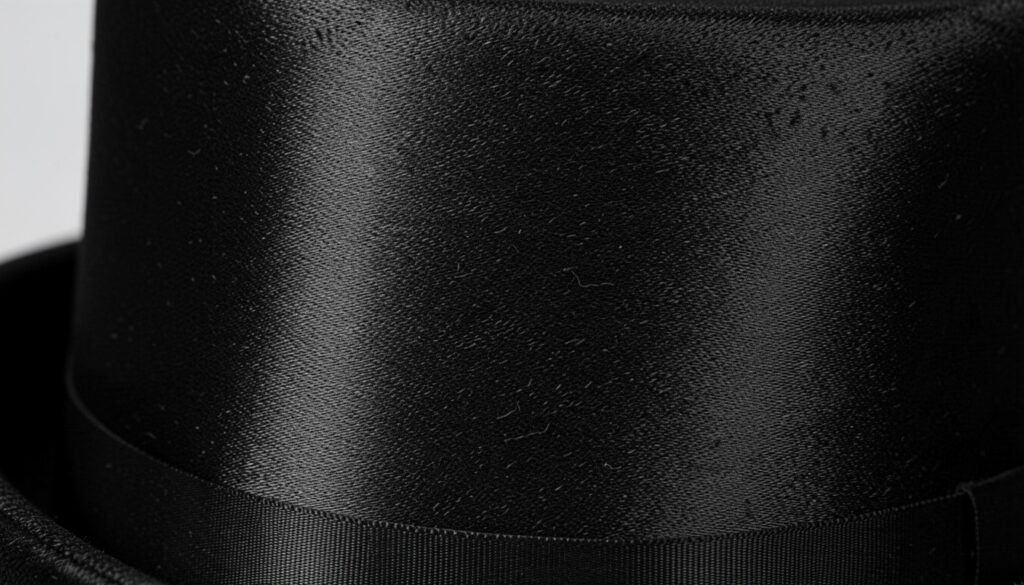
Traditional silk top hats are made using silk plush, a woven silk fabric with a directional nap that produces a distinctive sheen when light catches it at the correct angle. The plush is stretched over a rigid frame, typically made from shellac-stiffened felt or buckram, and pressed to shape. The result is a hat with a smooth, high-gloss surface that reads as unmistakably formal.
The silk band at the base of the crown is made from silk grosgrain ribbon, which complements the surface of the hat. The brim is typically narrow, flat, and bound in matching silk. The overall construction is labour-intensive, which is reflected in the cost.
When a Silk Top Hat Is the Right Choice
A silk top hat is the formally correct choice for events with strict dress codes where morning dress is expected. This includes Royal Ascot’s Royal Enclosure, formal weddings where the groom and groomsmen are wearing morning coat, and state and ceremonial occasions. The gloss finish of silk is what the dress codes at these events are typically referring to when they specify a ‘top hat’.
In the context of British formal dressing, silk is the traditional and historically correct material for a top hat. If you’re attending an event where the formality of the hat will be noticed and judged, silk is the safer choice.
The Limitations of Silk Top Hats
Silk top hats are not weather-resistant. Rain, strong sunlight, and humidity can damage the silk plush finish, which is difficult and expensive to repair. They require careful storage in a hat box and should not be packed flat or crushed. For outdoor events, a silk hat needs a cover or shelter when not being worn.
The cost of a silk top hat is also significantly higher than a wool equivalent. For men who wear a top hat only occasionally, this cost difference may make a high-quality wool hat a more practical investment.
Wool Top Hats: What to Know
How Wool Top Hats Are Made
Wool top hats, often called felt top hats, are made from wool felt that has been pressed and blocked to the top hat’s characteristic shape. The felt is produced by matting and compressing wool fibres under heat and pressure, creating a dense, smooth fabric with a matte finish. The brim is typically finished with grosgrain ribbon and the crown is bound with a matching band.
Wool felt top hats are lighter than silk equivalents and more forgiving in terms of care and handling. The matte finish is consistent in different lighting conditions and doesn’t show dust or marks as readily as the high-gloss surface of a silk hat.
When a Wool Top Hat Is the Right Choice
A wool top hat suits formal occasions where the dress code is smart or black tie adjacent without being strictly morning dress, as well as theatrical, themed, and period-inspired events. It works for weddings where the couple haven’t specified a formal morning dress code, for formal parties, and for everyday formal wear in autumn and winter.
Wool felt is also the better choice for men who need a hat that travels well. A collapsible top hat in wool felt folds flat for transport and reshapes reliably when worn, which makes it a practical option for destination events, outdoor festivals, and occasions where packing a rigid hat box isn’t possible.
For themed events, Victorian-inspired occasions, and heritage-style styling, a Victorian top hat in wool felt reads authentically and handles the wear and movement of a long day better than silk.
The Limitations of Wool Top Hats
Wool felt top hats are not the formally correct choice for events where morning dress and a strict top hat convention apply. At Royal Ascot’s Royal Enclosure, for example, a wool felt hat may be noticed as falling short of the expected standard. For these occasions, a silk hat is advisable.
Wool felt can also pill or catch over time if handled roughly, and it can absorb moisture in sustained rain. It is more weather-resistant than silk but not fully waterproof.
Silk vs Wool Top Hat: The Key Differences at a Glance
- Finish: Silk has a high directional gloss. Wool felt has a smooth, consistent matte finish.
- Formality: Silk is the formally correct choice for morning dress events. Wool felt suits smart and semi-formal occasions.
- Durability: Wool felt is more robust in everyday handling. Silk plush requires careful maintenance.
- Weather resistance: Wool is more tolerant of light moisture. Silk should be kept dry at all times.
- Packability: Wool felt top hats, particularly collapsible styles, travel better. Silk hats require a rigid hat box.
- Cost: Silk top hats are typically more expensive to produce and purchase. Wool felt offers better value for occasional wear.
- Best for: Silk suits Royal Ascot, formal weddings, and ceremonial occasions. Wool suits weddings, themed events, and general formal wear.
Choosing Your Top Hat by Occasion
Royal Ascot and Formal Race Days
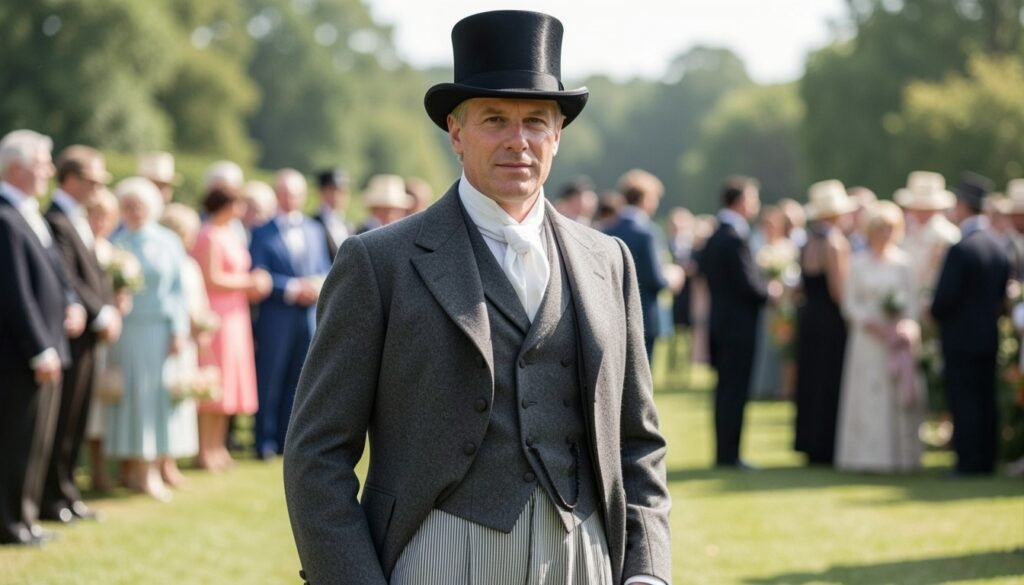
Royal Ascot’s Royal Enclosure dress code specifies a top hat as part of morning dress for men. In practice, this means a silk top hat is the expected choice. A wool felt hat is unlikely to be turned away, but among guests who follow the dress code closely, the material distinction is noticed. If you’re attending Royal Ascot and want to dress correctly, a silk hat is the right choice.
For other race days with less formal enclosures, a black top hat in either material works well as part of morning dress or a smart suit combination.
Weddings and Formal Events
For top hats for weddings, the right material depends on the formality of the dress code. If the wedding calls for morning dress, a silk hat is the more correct choice. If the wedding is smart or black tie adjacent but not strictly morning dress, a wool felt hat suits the occasion equally well and is easier to manage over a long day.
For grooms and wedding parties, the practical advantages of wool felt, including easier care and more comfortable long-term wear, often make it the more sensible everyday choice.
Themed Events and Victorian Styling
For themed events, theatrical occasions, and period-inspired looks, wool felt is the more practical and versatile choice. The matte finish suits a wider range of theatrical contexts, and the material handles the wear and movement of extended events more comfortably than silk. A top hat in wool felt is the material of choice for most theatrical and themed applications.
FAQs About Silk and Wool Top Hats
What is a silk top hat made from?
A silk top hat is made from silk plush, a woven silk fabric with a directional nap that produces a high-gloss finish. The plush is stretched over a rigid internal frame and pressed to shape. The band is typically made from silk grosgrain ribbon. Traditional silk top hats are labour-intensive to produce and require careful maintenance to preserve the surface finish.
Is a wool top hat the same as a felt top hat?
Yes. Wool top hats are made from wool felt, which is why the two terms are used interchangeably. Wool felt is produced by matting and compressing wool fibres under heat and pressure to create a dense, smooth fabric. A felt top hat and a wool top hat refer to the same product.
Which top hat material is better for outdoor events?
Wool felt is more practical for outdoor events. It handles light moisture better than silk, is more robust in terms of handling and transport, and doesn’t show surface marks as readily. For extended outdoor occasions such as summer race days or outdoor weddings, a wool felt hat is the more sensible practical choice unless the event requires silk for dress code reasons.
Can you wear a silk top hat in the rain?
A silk top hat should be kept dry. Rain can damage the silk plush finish by causing the fibres to mat, lose their directional sheen, or develop water marks that are difficult to remove. If you’re attending an outdoor event in uncertain weather, a wool felt hat is a safer choice, or bring a hat cover to protect a silk hat if rain is possible.
Which material is correct for Royal Ascot?
A silk top hat is the formally correct choice for Royal Ascot’s Royal Enclosure, where morning dress conventions apply. A wool felt top hat is not technically incorrect, but the dress code at Royal Ascot is interpreted strictly by many guests and hat hire companies, and a silk finish is considered the expected standard for the Royal Enclosure.
How do you care for a silk top hat compared to a wool top hat?
A silk top hat should be stored in a rigid hat box, kept away from moisture, and brushed lightly with a soft hat brush following the direction of the pile. Avoid handling the crown surface with bare hands. A wool felt top hat is easier to maintain: brush it regularly with a soft hat brush, allow it to dry naturally if it gets damp, and store it in a cool, dry place. Neither material should be left in direct sunlight for extended periods.
Making the Right Choice Between Silk and Wool
If you’re dressing for a strictly formal occasion with morning dress conventions, a silk top hat is the correct and traditional choice. If you’re dressing for a wedding, a smart occasion, or any event where practicality matters alongside formality, a wool felt top hat gives you all the visual impact of the style with more versatility in wear