
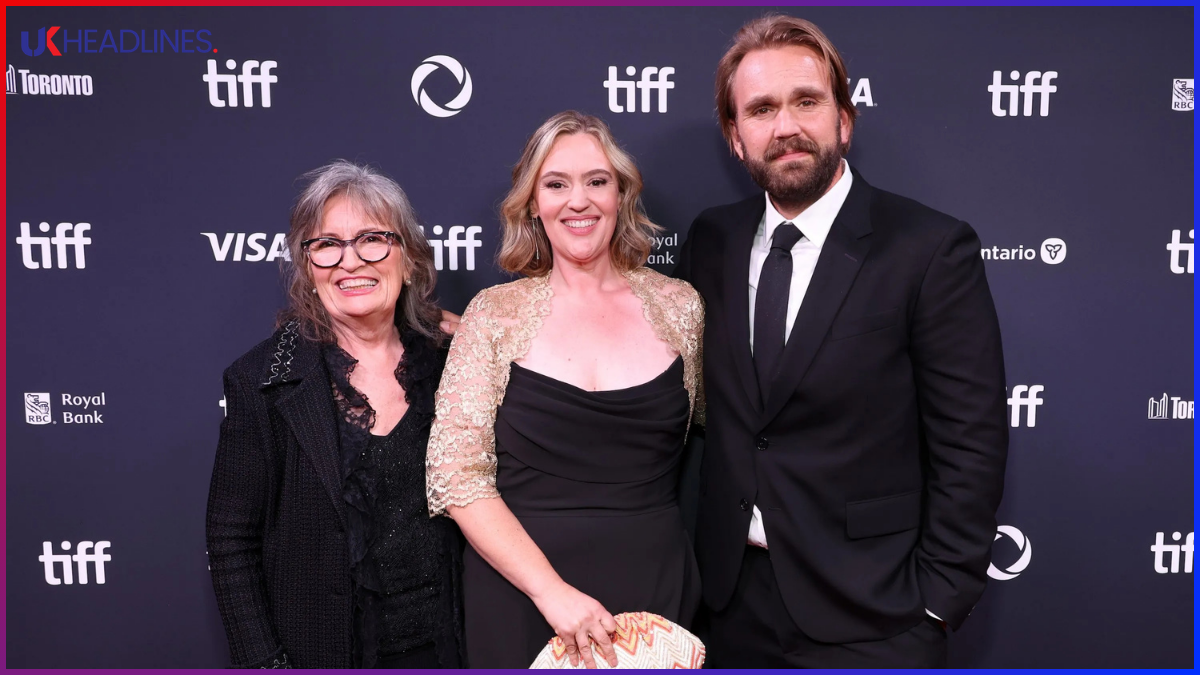
Rosemary Margaret Hobor is best known to the public as the wife of much-loved Canadian comedian John Candy, yet her own story stretches far beyond that marriage. She built a genuine career as a ceramicist and painter, raised two children largely out of the spotlight, and has quietly continued her creative work for decades.
This article looks closely at who Rosemary Margaret Hobor is, her background, her artistic career, and the life she shares with her family today. Anyone searching for a clear, accurate picture of her story will find it here, drawn from publicly reported facts and her own artist biography.
Who Is Rosemary Margaret Hobor?
Rosemary Margaret Hobor was born on 30 August 1949 in Toronto, Ontario, Canada. She grew up in the city and attended Notre Dame High School, an all-girls institution, before pursuing further study in the arts. Consequently, her formative years were shaped by a strong local Toronto identity that later influenced both her creative outlook and her family life.
She went on to study at the Ontario College of Art and Design, earning a qualification in material arts, and later attended the Brentwood Art Centre to refine her craft further. This academic grounding gave her the technical skill that would define her later work in ceramics and painting. As a result, Rosemary Margaret Hobor is regarded as a properly trained artist rather than simply a public figure by association.
Although she is widely recognised as John Candy’s widow, Rosemary Margaret Hobor built her own professional identity long before and after that marriage. She has worked as a painter, ceramicist, and occasional producer, with credits linked to documentary projects about her late husband. Therefore, understanding her requires looking at both the artist and the family life she has maintained since the 1970s.
Early Life and Career in Toronto
Growing up in Toronto during the 1950s and 1960s, Rosemary Margaret Hobor was immersed in a city with a genuinely active arts scene. This environment nurtured her early interest in design, sculpture, and hand-built ceramics. Consequently, by the time she left school, she already had a clear sense of the creative direction she wanted to pursue professionally.
During the early 1970s, she exhibited work at several notable Toronto venues, including the Canadian Guild of Crafts in Yorkville and Timothy Eaton’s Artist Showcase. She also took part in the Davidson Artisan Show and worked through the Potters Studio Co-op on Dupont Street. These early exhibitions helped establish her reputation among fellow Toronto ceramicists and craft collectors.
Between 1974 and 1979, Rosemary Margaret Hobor received Ontario Arts Council Visiting Artist Grants, allowing her to teach hand-building and wheel-throwing workshops across numerous schools, including Spring Gardens Public School and Don Mills Collegiate. This teaching work spanned elementary pupils through to adult night classes. As a result, her influence extended well beyond her own studio practice into arts education across Ontario.
Marriage to John Candy
Rosemary Margaret Hobor met John Candy in Toronto in the late 1960s, reportedly on a blind date arranged by mutual friends. According to their daughter Jennifer, the pair did not immediately connect, though John later reached out asking for help typing a script, which helped their relationship develop naturally. Over time, this friendship grew into a genuine romantic partnership.
The couple married on 28 April 1979 in Los Angeles, while John was filming the movie 1941. Because the wedding was arranged quickly, they reportedly did not have time to properly check the venue beforehand, and photographs later revealed a McDonald’s sign visible in the background, sparking a long-running rumour that has since been clarified in family retellings. Nonetheless, the day marked the formal beginning of their life together.
Rosemary Margaret Hobor and John Candy went on to have two children, Jennifer, born in 1980, and Christopher, born in 1984. They remained married until John’s sudden death in 1994, meaning their marriage lasted fifteen years. Throughout this period, Rosemary balanced family life in Los Angeles with her continued artistic career, often working from home studios.
How Rosemary Margaret Hobor’s Career Has Developed
Rosemary Margaret Hobor’s artistic career has developed steadily across five decades, moving from Toronto craft fairs to established galleries. Her ceramic and painting work blends abstract forms with bold, confident colour choices, reflecting a style that has matured considerably since her early workshop years. This gradual evolution shows a genuine, sustained commitment to her craft rather than a passing hobby.
Following John Candy’s death in 1994, Rosemary Margaret Hobor increasingly turned to her art as both a creative outlet and a source of personal stability. She has spoken, through family members, about how continuing her work helped her process grief while still raising two young children. Because of this, her later pieces are often described as more personal and emotionally resonant than her earlier commercial commissions.
Today, her ceramic and painting studios operate from Los Angeles, and her work is displayed at galleries such as Las Laguna Art Gallery in Laguna Beach, California. She also maintains her own website showcasing available pieces for collectors. Consequently, Rosemary Margaret Hobor remains an active, working artist rather than someone defined solely by her past marriage.
Important Things to Know About Rosemary Margaret Hobor
Several key facts help clarify who Rosemary Margaret Hobor actually is, beyond her association with John Candy. She holds Canadian nationality, was born in Toronto in 1949, and trained formally at the Ontario College of Art and Design. Understanding this background is essential for anyone researching her beyond surface-level celebrity coverage.
It is also worth noting that Rosemary Margaret Hobor did not remarry following John Candy’s death in 1994. She has instead focused on raising their two children and continuing her artistic career, largely avoiding the public eye except when connected to projects honouring her late husband. This includes involvement in the 2025 Prime Video documentary John Candy: I Like Me, directed by Colin Hanks.
Additionally, both of her children, Jennifer and Christopher, have gone into entertainment-related fields, and Jennifer helped produce the aforementioned documentary. This shows that Rosemary Margaret Hobor’s family has maintained a close connection to John Candy’s legacy while each member pursues their own creative path. Her story, therefore, is one of quiet continuity rather than public reinvention.
Common Mistakes People Make When Researching Her
One frequent mistake is assuming Rosemary Margaret Hobor is primarily a public figure, when in reality she has deliberately kept a relatively private profile since John Candy’s death. Many online summaries overstate her media presence, when her actual public appearances are infrequent and usually tied to documentaries or tribute events. This misunderstanding can lead to inaccurate assumptions about her lifestyle.
Another common error involves confusing details about her wedding, particularly the persistent myth that she married John Candy inside a McDonald’s restaurant. In fact, the golden arches simply appeared in the background of wedding photographs by coincidence, not because the ceremony took place there. Repeating this myth without context spreads inaccurate information about a real family event.
Finally, some sources inaccurately describe her nationality or career details, occasionally mislabelling her as American rather than Canadian by birth. Since Rosemary Margaret Hobor was born and raised in Toronto before later working in Los Angeles, it is important to distinguish her origin from where she currently practises her art. Getting these basic facts right matters for accurate reporting.
Expert Tips for Learning More About Her Story
Anyone genuinely interested in Rosemary Margaret Hobor should start with primary, verifiable sources rather than aggregated celebrity websites. Her own artist website provides a direct biography, exhibition history, and details of her ceramic and painting work. This approach ensures accuracy rather than relying on repeated, sometimes distorted, secondary summaries.
It is also worth watching John Candy: I Like Me, the 2025 documentary that features family interviews and previously unseen home footage. Because Jennifer Candy helped produce it, the film offers a more authentic perspective on Rosemary’s role within the family than most tabloid coverage. Consequently, it remains one of the most trustworthy sources currently available.
Readers should additionally cross-reference dates and details, such as her birth year, wedding date, and children’s names, across multiple reputable outlets before citing them. Given how often celebrity-adjacent biographies contain small factual errors, this extra verification step protects against spreading inaccuracies. Ultimately, treating her as a real, working artist, not just a celebrity spouse, leads to a more respectful and accurate portrayal.
Quick Facts About Rosemary Margaret Hobor
| Detail | Information |
| Full Name | Rosemary Margaret Hobor (also known as Rose Candy) |
| Born | 30 August 1949, Toronto, Ontario, Canada |
| Education | Notre Dame High School; Ontario College of Art and Design; Brentwood Art Centre |
| Profession | Ceramicist, painter, occasional documentary producer |
| Marriage | Married John Candy on 28 April 1979; together until his death in 1994 |
| Children | Jennifer Candy-Sullivan (b. 1980) and Christopher Candy (b. 1984) |
| Current Base | Los Angeles, California, running ceramic and painting studios |
Future Outlook for Rosemary Margaret Hobor’s Legacy
Interest in Rosemary Margaret Hobor is likely to continue growing following the release of John Candy: I Like Me, which has introduced her story to a new generation of viewers. As documentaries and retrospectives about John Candy remain popular, her role as his wife and creative partner will likely stay part of that ongoing conversation. This renewed attention may also draw fresh appreciation for her own artistic achievements.
Given her continued studio work in Los Angeles, it is reasonable to expect Rosemary Margaret Hobor will keep producing and exhibiting ceramic and painted pieces for collectors. Her galleries, including Las Laguna Art Gallery, suggest an ongoing, active presence within the contemporary craft and fine art community. Therefore, her artistic legacy appears set to grow independently of her connection to John Candy.
Looking ahead, her children’s continued involvement in entertainment and documentary production suggests the family will keep preserving John Candy’s legacy thoughtfully. Rosemary Margaret Hobor’s own story, meanwhile, seems likely to be increasingly recognised on its own merits, as more people learn about her decades-long artistic career. This shift reflects a broader, welcome trend of honouring the full lives of public figures’ spouses.
Conclusion
Rosemary Margaret Hobor’s life reflects far more than her marriage to a beloved comedian; it tells the story of a dedicated Toronto-trained artist who built a genuine creative career across five decades. From early ceramic exhibitions in the 1970s to her current Los Angeles studio, she has consistently pursued her craft while raising a close-knit family.
As documentaries and public interest continue to explore John Candy’s life, Rosemary Margaret Hobor deserves recognition as an accomplished artist in her own right, not merely a supporting figure in someone else’s story. Her quiet resilience, creativity, and continued dedication to her work make her an inspiring and genuinely interesting figure to learn about.
FAQs
Q1. Who is Rosemary Margaret Hobor? Rosemary Margaret Hobor is a Canadian ceramicist and painter, born in Toronto in 1949, best known publicly as the wife of comedian John Candy, whom she married in 1979.
Q2. Did Rosemary Margaret Hobor remarry after John Candy’s death? No, Rosemary Margaret Hobor did not remarry following John Candy’s death in 1994. She has focused on raising their children and continuing her artistic career instead.
Q3. How many children does Rosemary Margaret Hobor have? Rosemary Margaret Hobor has two children with John Candy: daughter Jennifer, born in 1980, and son Christopher, born in 1984, both now working in entertainment.
Q4. Where does Rosemary Margaret Hobor live now? Rosemary Margaret Hobor currently lives in Los Angeles, California, where she runs her ceramic and painting studios and continues exhibiting work at local galleries.
Q5. Did Rosemary Margaret Hobor and John Candy marry at a McDonald’s? No, this is a myth. They married in a Los Angeles church in 1979; a McDonald’s sign simply appeared in the background of wedding photographs by coincidence.