
Introduction
The latest rachel reeves car tax changes have quickly become one of the most searched motoring topics in Britain. Drivers across the country want to know how much more they may need to pay and whether their current vehicle is still affordable to run. From family hatchbacks to premium electric cars, the updated tax rules could influence everyday budgets in a meaningful way.
Car ownership is already expensive when fuel, insurance, servicing, tyres, parking, and repairs are added together. That is why even a modest increase in annual Vehicle Excise Duty matters to many households. Understanding the new rules now can help drivers avoid surprises later, make better buying choices, and prepare for the real cost of motoring in 2026 and beyond.
What Are Rachel Reeves Car Tax Changes
The rachel reeves car tax changes centre around revised Vehicle Excise Duty rates, adjustments linked to inflation, and new charges for electric vehicles. These changes aim to modernise the system as more drivers move towards EV ownership. The government also wants to protect tax revenue as traditional fuel duty income changes over time.
In simple terms, more motorists may now contribute through annual car tax, including owners of vehicles that previously enjoyed major savings. Petrol and diesel drivers still face emissions-based costs, while premium and higher-value vehicles can attract additional charges. The result is a broader and more balanced tax system, although many drivers will feel the financial impact.
Standard VED Rate Increases Explained
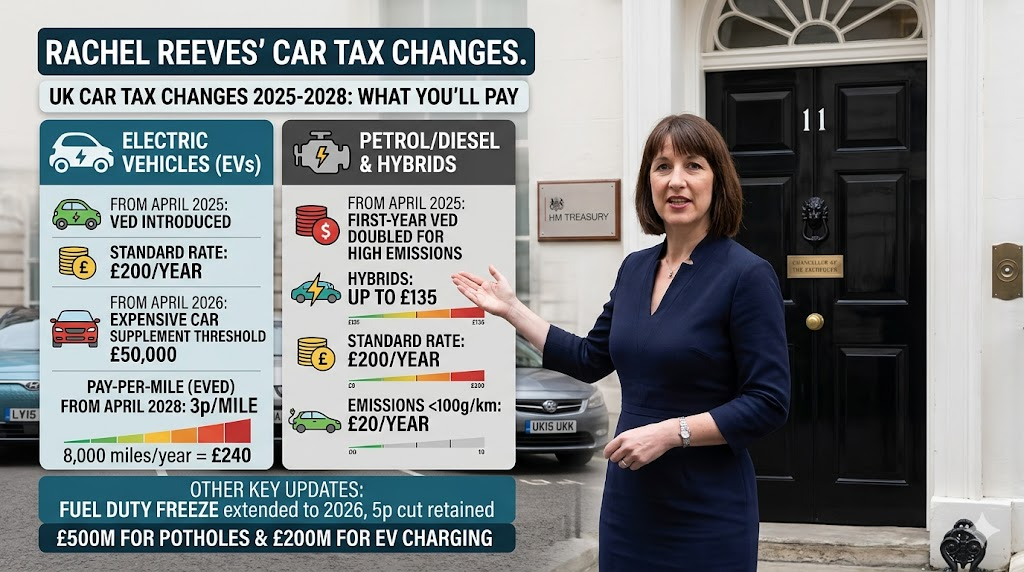
The standard VED rate has increased for many cars, meaning eligible drivers may pay more each year simply to keep their vehicle taxed and legal on UK roads. While the rise may not look dramatic in isolation, it becomes more noticeable when combined with other living costs that have also risen recently.
For families with two vehicles, the increase can feel doubled. Many households rely on one car for commuting and another for school runs or errands, so annual tax changes can affect wider budgeting decisions. It is wise to check renewal dates and expected costs early rather than waiting for a reminder letter or online renewal notice.
Petrol and Diesel Drivers: What Will Change
Petrol and diesel owners remain among the most affected groups because emissions still play a major role in the tax system. New cars with higher CO2 output often face larger first-year charges, which can significantly increase the cost of buying a vehicle. This makes engine choice more important than ever before.
Older petrol and diesel vehicles may also sit in different tax categories depending on when they were first registered. Many drivers assume every car pays the same flat rate, but that is not always true. Registration year, emissions data, and model type can all influence what you owe annually, so checking details matters.
Electric Cars, Hybrids and Luxury Charges
One of the biggest talking points within the rachel reeves car tax changes is the treatment of electric vehicles. EVs were once seen as the easy route to lower running costs, but that advantage is narrowing. Many electric models now face annual VED charges, meaning owners must factor tax into their yearly motoring budget.
Hybrid vehicles also sit in an interesting position, especially as future policy may continue evolving. Premium electric and hybrid cars can be hit by the expensive car supplement if their list price crosses the required threshold. Buyers attracted by advanced technology may discover that luxury features bring a higher annual tax bill too.
How Much Will You Pay in 2026
There is no single answer because your payment depends on several factors, including fuel type, emissions, registration date, and original list price. A modest city car with efficient emissions may cost far less to tax than a large SUV or prestige model. The differences between vehicles can be surprisingly wide.
The smartest approach is to use the official vehicle registration checker before renewal or before buying another car. This gives tailored figures based on your exact vehicle rather than relying on estimates from friends or social media posts. Accurate information can help you plan monthly finances and avoid expensive mistakes.
How Drivers Can Reduce Car Tax Costs
If you are thinking about changing vehicles, compare annual tax costs before agreeing to any purchase. Two cars may appear similar in size and price, yet their yearly tax bills can be very different. Looking beyond the showroom sticker price is often where the real savings are found.
Drivers can also reduce costs by choosing efficient engines, avoiding unnecessarily expensive trim levels, and considering total ownership costs rather than style alone. A sensible car that is cheaper to tax, insure, and fuel may deliver better value over several years than a flashy model with hidden expenses attached.
What These Changes Mean for the UK Car Market
Tax policy often shapes buyer behaviour, and these changes could alter the direction of the market. Some motorists may delay upgrading to a new vehicle, while others may search for efficient used models that offer lower annual costs. When ownership becomes more expensive, shoppers naturally become more cautious.
Dealerships and manufacturers may respond by highlighting low-emission cars, practical hybrids, and better-value trims. Clear running-cost information could become just as important as horsepower or touchscreen features in the showroom. In that sense, the rachel reeves car tax changes may influence not only drivers, but the wider automotive industry too.
Why Planning Ahead Matters
Many drivers only think about tax when renewal time arrives, but planning ahead can save money and stress. If you know your current vehicle will become more expensive to run, you have time to compare alternatives, adjust your budget, or prepare for higher annual costs before they land unexpectedly.
This forward-thinking approach is especially useful for families, commuters, and business users who rely heavily on their cars. A little research today can prevent rushed decisions tomorrow. Whether you keep your current vehicle or upgrade, informed choices are usually the cheapest and smartest choices in the long run.
Conclusion
The rachel reeves car tax changes represent a major shift in how UK motorists contribute through Vehicle Excise Duty. Standard rates have risen, electric cars are now included more widely, and premium vehicles may face extra charges. For many households, this means reviewing motoring costs more carefully than before.
The best response is not panic, but preparation. Check your tax band, understand your vehicle’s running costs, and think ahead before buying your next car. When you know the rules, you can make smarter financial decisions and stay in control of your motoring budget throughout 2026.
FAQs
What are Rachel Reeves car tax changes
They are updated UK Vehicle Excise Duty rules for 2026 that increase standard rates and apply wider charges to electric vehicles and some premium cars.
Will electric cars now pay road tax
Yes, many electric vehicles now fall under revised VED rules and may pay annual charges depending on their status and price.
How can I check my exact car tax amount
Use the official UK registration checker online. It provides accurate tax information based on your specific vehicle details.
Are older diesel cars affected
Some older diesel cars may remain in different tax categories depending on registration date and emissions output.
Can I lower future car tax costs
Yes, choosing efficient vehicles, comparing tax bands, and avoiding expensive high-tax models can reduce long-term motoring costs.
You May Also Read: Easy Elf on the Shelf Ideas for Busy Parents