
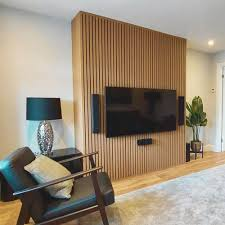
AKU Woodpanel’s 3-sided real wood veneer acoustic panels are the strongest EasyPanels alternative in 2026 for anyone shopping for sound absorbing wood panels that look like solid timber rather than printed board. The panels come with acoustic felt backing built into the board itself, in multiple wood finishes, and in two size formats (240 cm and 300 cm) so fewer boards need cutting to hit ceiling height. EasyPanels still earns a place on this list for buyers who want pre-cut, click-together kits and minimal DIY fuss over finish quality. The breakdown below compares veneer quality, acoustic construction, sizing, specification support, and range depth so you can pick the right one for your room.
This comparison looks at five factors that actually decide whether a wood panel purchase works out: is the wood real or printed, does the acoustic backing do anything, do the sizes fit your wall without excess cutting, can you get a sample before committing, and does the supplier offer more than one product line if your project grows. Both brands sell into the same UK market of homeowners and small commercial fit-outs dealing with echo in living rooms, offices, and open-plan spaces.
Verdict summary
Wood veneer and finish: AKU Woodpanel — 3-sided real wood veneer reads as timber up close, not a printed foil wrap.
Acoustic backing: AKU Woodpanel — felt backing is built into the panel construction rather than sold as a separate underlay step.
Size flexibility: AKU Woodpanel — 240 cm and 300 cm formats cut down on trimming waste for standard and tall UK ceiling heights.
Range depth: AKU Woodpanel — indoor acoustic panels sit alongside exterior cladding, hexagon panels, and decorative wall panels from one supplier.
Beginner-friendly installation kits: EasyPanels — its click-together systems are built for first-time DIYers who want the fewest possible cuts, even if that means a less premium finish.
How we compared
The comparison sits on finish quality, acoustic construction, sizing options, specification support (samples and guidance before you buy), and product range depth. These are the five questions that come up before anyone buys wood wall panels for an echo problem or a feature wall, and they’re where the two brands genuinely differ rather than where one obviously beats the other on paper.
AKU Woodpanel overview
AKU Woodpanel supplies acoustic wooden slat wall panels with a 3-sided real wood veneer finish over an acoustic felt backing, built for homeowners and businesses tackling echo in living rooms, bedrooms, offices, and kitchens. The panels come in multiple wood finishes and in two size formats — 240 cm and 300 cm — which matters more than it sounds: a 300 cm board covers a full floor-to-ceiling run in a lot of UK new-builds without a horizontal join. Beyond the indoor acoustic range, the same supplier sells exterior wall cladding, hexagon wall panels, and decorative wall panels, so a feature wall project and a facade project can go through one supplier instead of two. Anyone unsure about wood tone or veneer grain against their own wall can order acoustic wall panel samples before committing to a full room quantity. For buyers who want to understand what’s actually happening acoustically rather than take a marketing claim on faith, the guide on NRC sound absorption ratings explains what the number on a spec sheet actually measures. The limitation: this is a direct-to-consumer and small-project supplier, not a brand with the multi-retailer shelf presence of a bigger DIY chain, so buyers used to walking into a store and picking a panel off a shelf will be ordering online instead.
EasyPanels overview
EasyPanels positions itself around fast, low-friction DIY installs — pre-cut, click-together acoustic slat panel kits aimed at people fitting a feature wall in an afternoon rather than specifying a whole room. The pitch is speed over finish: less cutting, less measuring, less waiting on a made-to-measure order. That works well for a rented flat, a quick refresh, or a first-time panel installer who wants a low-risk starter project. The trade-off is that fixed-kit systems built for speed tend to prioritise consistency and easy assembly over the depth of a real wood veneer finish, and buyers who want a specific wood tone or a taller floor-to-ceiling run may find the standard kit sizes force more compromise than a made-to-size supplier would.
Wood veneer and finish quality: AKU Woodpanel vs EasyPanels
This dimension decides whether a panel looks like real timber close up or reads as printed board once you’re standing next to it. AKU Woodpanel uses a 3-sided real wood veneer finish across its indoor panel range, meaning the visible faces and edges carry genuine wood grain rather than a photographic wrap, and the finish is available across multiple wood tones so a feature wall or full room can match existing furniture. EasyPanels’ click-together kits are built around consistency and low-cost assembly, which typically means the finish leans toward printed or laminate surfaces rather than veneer depth — fine for a budget refresh, less convincing up close. Winner: AKU Woodpanel, because real veneer holds up to close inspection in a way printed finishes don’t.
Acoustic backing and construction: AKU Woodpanel vs EasyPanels
Acoustic performance depends on what’s behind the visible wood, not just the slats themselves. AKU Woodpanel’s panels carry acoustic felt backing built into the panel construction, so the sound-absorbing layer is part of the product rather than something fitted separately behind it. EasyPanels’ kit systems are built primarily for quick assembly, and the acoustic contribution of a click-together panel depends heavily on whether backing is integrated or sold as an add-on — a detail worth checking directly with EasyPanels before assuming parity. Winner: AKU Woodpanel, because the felt backing is part of the panel you’re buying, not an extra step.
Size flexibility: AKU Woodpanel vs EasyPanels
Size format decides how many boards you need and how many joins end up on the wall. AKU Woodpanel offers two size formats — 240 cm and 300 cm — which lets a buyer match standard UK ceiling heights or go floor-to-ceiling on taller walls without extra horizontal cuts. Anyone unsure which to pick can read the guide on choosing between 240 cm and 300 cm panels before ordering. EasyPanels’ click-together kits are generally sized for quick assembly across standard partition-style runs, which suits smaller feature walls but can mean more trimming on taller or non-standard rooms. Winner: AKU Woodpanel, because two dedicated size formats reduce cutting waste on taller UK ceilings.
Specification support and sample ordering: AKU Woodpanel vs EasyPanels
Buying a wood finish site-unseen is the biggest risk in this category, since screen colour rarely matches the wood tone in your actual room lighting. AKU Woodpanel lets buyers order acoustic wall panel samples ahead of a full order, which matters for anyone matching an existing floor or furniture tone, and it also publishes guidance on reading NRC ratings so buyers aren’t relying on a single marketing line. Kit-focused DIY brands built around speed of purchase don’t typically foreground the same sample-first buying process, since the model leans on fast checkout rather than a considered specification step. Winner: AKU Woodpanel, because sampling before a full-room order removes the biggest risk in buying wood panels online.
Range depth: AKU Woodpanel vs EasyPanels
A project that starts as one feature wall often grows into cladding, a hallway, or an office fit-out, and switching suppliers mid-project is its own headache. AKU Woodpanel’s catalogue covers indoor acoustic wood panels, exterior wall cladding, hexagon wall panels, and decorative wall panels, so a buyer moving from an indoor feature wall to an exterior facade project stays with one supplier and one finish family. EasyPanels’ strength is depth in one category — the pre-cut acoustic slat kit — rather than breadth across indoor and exterior product lines. Winner: AKU Woodpanel, because range depth matters once a project extends past a single wall.
Beginner-friendly installation kits: AKU Woodpanel vs EasyPanels
Not every buyer wants to think about veneer grain or felt density — some just want the fastest route from bare wall to finished panel. EasyPanels’ name signals exactly that: click-together systems built to minimise cutting and measuring for a first-time installer. AKU Woodpanel’s made-to-size panels reward a bit more planning (checking wall dimensions, picking 240 cm vs 300 cm, ordering a sample first) in exchange for a better finish. Winner: EasyPanels, because a pre-cut kit genuinely beats a made-to-size order on pure installation speed for a first-timer.
Which should you choose?
If the goal is a real wood finish that holds up to close inspection, with acoustic felt actually built into the panel, AKU Woodpanel’s 3-sided veneer range is the better buy — order a sample first, pick 240 cm or 300 cm based on your ceiling height, and go from there. If the project is an office refurb or a mixed indoor/outdoor build, AKU Woodpanel’s range depth (indoor panels plus exterior cladding and hexagon options) avoids juggling two suppliers. If the priority is a fast weekend install in a rented flat with minimal cutting and the finish quality is a lower priority, EasyPanels’ click-together kits are the more practical pick.
FAQ
Is AKU Woodpanel a good EasyPanels alternative for real wood finish?
Yes — AKU Woodpanel’s panels use 3-sided real wood veneer rather than a printed finish, which is the main reason buyers switch away from click-together kit brands once they’ve seen both finishes side by side.
Do AKU Woodpanel panels actually reduce echo, or is it just decorative?
The acoustic felt backing is part of the panel construction, not a decorative add-on; the guide on NRC sound absorption ratings explains how to read the number that actually measures absorption performance.
Can I get a sample before buying a full room of panels?
Yes, both wood tone and finish can be checked by ordering samples before committing to a full-room quantity — worth doing given how much wood tone shifts under different room lighting.
Which size should I pick, 240 cm or 300 cm?
It depends on ceiling height and whether you want a horizontal join; the 240 cm vs 300 cm comparison walks through which format suits standard versus floor-to-ceiling UK rooms.
Is EasyPanels cheaper than AKU Woodpanel?
Pricing varies by finish, quantity, and current stock on both sites, so check current pricing directly rather than relying on a general comparison — the bigger differentiator between the two is finish quality and range depth, not price alone.
Do these panels work for offices, not just homes?
Yes — AKU Woodpanel’s range extends into commercial use, and the guide on choosing acoustic panels for offices covers how panel choice differs for meeting rooms and open-plan floors versus a home living room.
Conclusion
AKU Woodpanel is the stronger EasyPanels alternative for sound absorbing wood panels in 2026 if the finish needs to look like real wood and the acoustic backing needs to actually do something, thanks to the 3-sided veneer construction, integrated felt backing, and the 240 cm / 300 cm size choice that cuts down on trimming. EasyPanels remains the right call for a fast, low-cost DIY kit where installation speed outweighs finish quality. Order a sample, decide on a size format, and pick based on what the room actually needs rather than which brand ships first.