
Owning a property let to multiple tenants comes with a level of legal responsibility that catches many landlords off guard, and fire safety sits right at the centre of it. Among the various compliance requirements attached to shared housing, fire door regulations are some of the most detailed and, unfortunately, some of the most commonly misunderstood.
The rules governing fire doors in Houses in Multiple Occupation exist for one clear reason: to slow the spread of fire and smoke long enough for everyone in the building to escape safely. Because several unrelated people are living under one roof, sharing hallways, kitchens, and staircases, the potential consequences of a fire spreading unchecked are far more serious than in a typical single-family home. This is exactly why landlords are strongly encouraged to get properly familiar with current HMO Fire Doors requirements before converting or letting out a shared property, rather than assuming standard doors will be sufficient.
The Legal Basis for Fire Door Requirements
Fire door obligations for HMOs stem from a combination of housing and fire safety legislation, including licensing conditions set by local councils and broader building regulations covering fire resistance in escape routes. While the exact wording varies depending on jurisdiction, the underlying principle is consistent: any door leading onto a shared escape route, whether that’s a bedroom door, a kitchen door, or a door to a storage area, generally needs to meet a specified fire resistance rating.
Local authorities enforce these requirements as part of the HMO licensing process, and inspectors routinely check fire doors during both initial licence applications and periodic compliance visits. A property that fails to meet the required standard can have its licence application rejected or, in more serious cases, face enforcement action against an existing licence.
What the Regulations Actually Require
Fire doors used in HMOs typically need to achieve a minimum of 30 minutes of fire resistance, often referred to as FD30 doors, though some circumstances call for a higher 60-minute rating depending on the property’s layout and escape route design. This resistance rating isn’t just about the door material; it depends on the entire assembly performing together, including intumescent seals that expand under heat, compliant hinges, and a matching, undamaged frame.
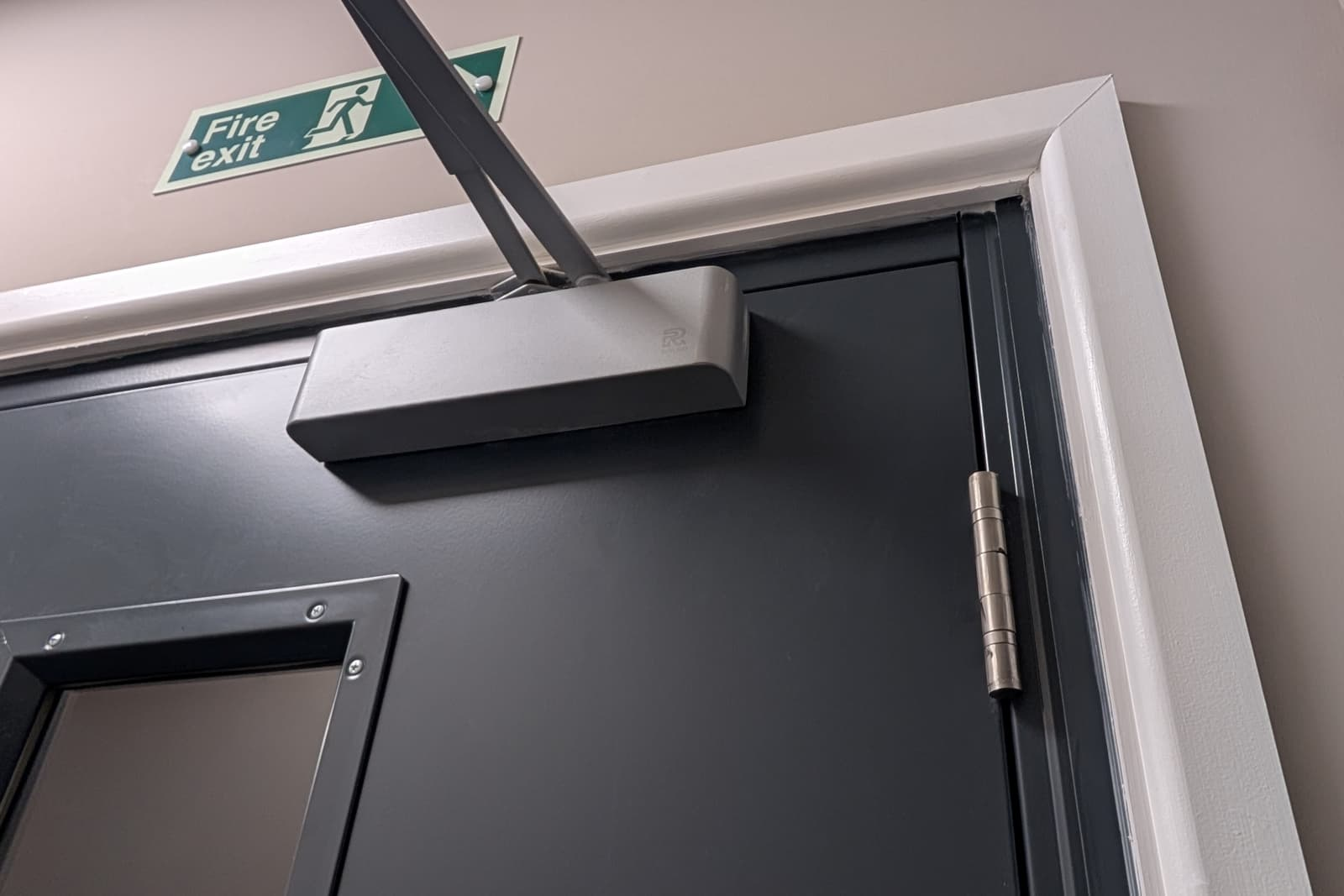
Self-closing devices are another standard requirement, ensuring the door returns to a closed position automatically rather than relying on tenants to close it manually every time. Regulations generally require every fire door to include this feature on escape routes, since a fire door propped open provides no protective benefit at all, regardless of its rating.
Where Compliance Commonly Breaks Down
Even landlords who install fire doors correctly at the outset can fall out of compliance over time. Seals wear down, self-closing mechanisms get disconnected or adjusted by tenants seeking convenience, and door frames can shift slightly as a building settles, creating gaps that exceed permitted tolerances. None of these issues are necessarily obvious on a casual glance, which is why regular inspection matters just as much as the initial installation.
Another frequent problem arises during minor renovations. Landlords sometimes replace a damaged door with a standard, non-fire-rated alternative without realising the replacement needs to match the original specification. A single non-compliant door on an escape route is enough to fail an inspection, even if every other door in the property meets the standard.
Keeping a Property Compliant Over Time
Given how easily fire door compliance can slip without anyone noticing, building a routine inspection schedule into property management is one of the most effective safeguards available. Checking seals, hinges, and self-closers on a quarterly basis, and keeping a simple written record of these checks, gives landlords both an early warning system for developing issues and useful documentation if a council inspection or dispute arises later.
It’s also worth briefing tenants on why fire doors need to remain closed and unobstructed, since many compliance failures come down to doors being wedged open out of habit rather than any deliberate disregard for safety. A short explanation at the start of a tenancy, paired with a written house guide, often prevents this issue before it starts.
Frequently Asked Questions
What fire rating do HMO fire doors need to meet?
Most HMOs require a minimum of 30 minutes of fire resistance, known as FD30, though some layouts or larger properties may require a 60-minute rated door depending on the escape route design and local council requirements.
Do all internal doors in an HMO need to be fire doors?
Generally, any door opening onto a shared escape route, including bedroom, kitchen, and storage room doors, needs to meet fire door standards. Doors that don’t lead onto an escape route, such as an internal bathroom off a bedroom, may not require the same rating, but this depends on the property’s specific layout.
Why do fire doors need self-closing devices?
A fire door only works if it’s closed. Self-closing devices ensure the door automatically returns to a closed position after use, since relying on tenants to close it manually leaves the property vulnerable if a door is left open during a fire.
Can I replace a damaged fire door with any solid door?
No. A replacement must match the original fire rating and be part of a certified assembly, including compatible seals, hinges, and hardware. Fitting a standard, non-rated door in its place can cause the property to fail a licensing inspection.
How often should fire doors be inspected in an HMO?
A quarterly visual inspection checking seals, hinges, and self-closing mechanisms is a widely recommended standard. Keeping a written log of these checks also provides useful documentation if a council inspection or dispute arises later.
Treating Fire Doors as an Ongoing Responsibility, Not a One-Off Task
Fire door regulations aren’t designed to be satisfied once and forgotten. They require an ongoing commitment from landlords to maintain the standard the property was originally licensed against, adapting as wear, tenant behaviour, or property changes create new risks. For anyone managing shared housing, treating fire door compliance as a continuous responsibility, rather than a box ticked during the initial licensing process, is one of the clearest ways to protect both tenants and the long-term viability of the investment.