
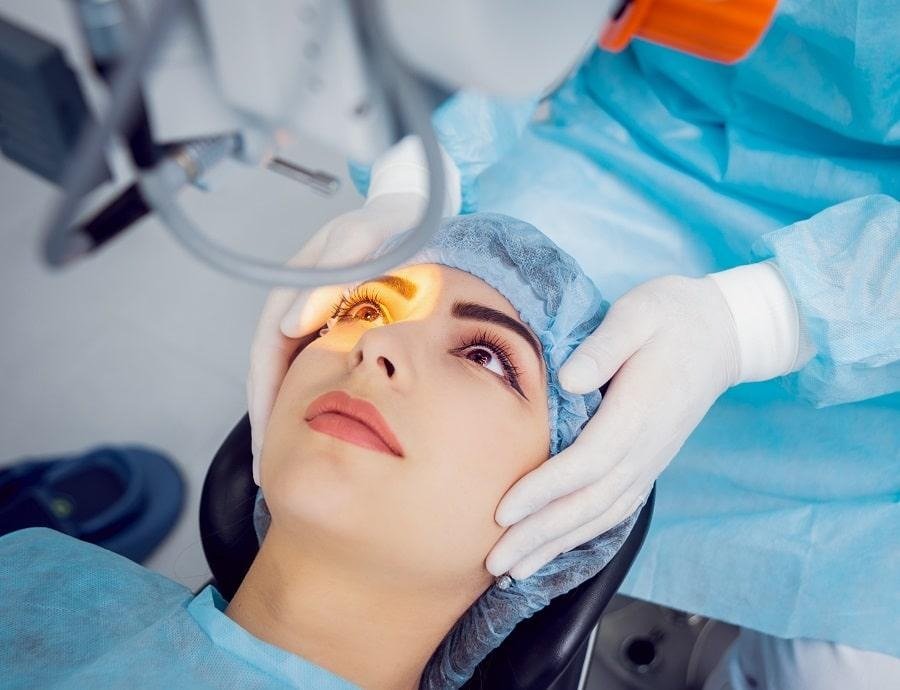
Most of us don’t wake up thinking about refractive surgery. There’s usually something much more ordinary behind the search.
Glasses fog up. Contact lenses become uncomfortable. Swimming becomes awkward. We forget the lens case before a weekend away. Or we simply get tired of having one more thing to remember every morning.
Then we search for a laser operation for eyes and suddenly we’re comparing LASIK, LASEK and other procedures as though we’ve been studying ophthalmology for years. I can see why.
But the procedure name probably shouldn’t be the first thing we choose.
Start with the problem, not the procedure
We often search for the treatment we have already heard about. If a friend had LASIK, we search for LASIK. If an advert mentions LASEK, we search for LASEK. That’s understandable, but suitability comes before preference.
The Royal College of Ophthalmologists explains that laser vision correction includes different procedures and that alternatives such as phakic intraocular lenses and refractive lens exchange may also be considered in some circumstances.
So there isn’t one universal operation that suits everyone who wants to reduce their dependence on glasses.
Your everyday life is part of the conversation
Imagine two people with similar prescriptions. One spends every weekend playing sport. Another works at a desk and spends most of the day on screens.
Someone else travels constantly and is simply fed up with managing contact lenses in airports, hotels and unfamiliar places. The prescription matters, obviously.
But so does the life built around it. That’s why a useful consultation isn’t just about asking, “Can you correct my prescription?” It’s also about asking what you want your vision to be like afterwards.
| Something you care about | Why it may matter |
| Work | Recovery and visual demands may need consideration |
| Sport | Your activities may affect the treatment discussion |
| Contact lenses | Reducing daily dependence may be your main motivation |
| Age | Near vision can become a separate consideration |
| Prescription | Different procedures have different suitability criteria |
| Corneal health | The condition and shape of the cornea need assessment |
None of these automatically determines the answer. They simply make the decision more personal than a procedure name suggests.
Sometimes the treatment you searched for isn’t the treatment you need
This is probably the least exciting part of the process, but it matters. We can become attached to a treatment before anyone has actually assessed our eyes.
At Optimal Vision’s Birmingham clinic, patients are assessed for suitability before treatment, and the service currently lists LASIK and LASEK among its Birmingham laser options. The clinic also provides lens replacement and cataract surgery.
That broader range is useful because it means the consultation doesn’t have to start with a predetermined answer. You’re not saying, “I want this, make it happen.” You’re asking, “What makes sense for my eyes?”
Birmingham matters too
If you’re looking for a laser operation for eyes in Birmingham, convenience is obviously part of the decision. Optimal Vision’s Birmingham clinic is at 92 Hagley Road, B16 8LU, and its current service information lists laser eye surgery alongside lens replacement and cataract care. But location shouldn’t be the only reason to choose a provider.
The more useful question is whether the clinic can assess your eyes properly, explain the available options and provide appropriate follow-up afterwards. Optimal Vision describes its Birmingham service as consultant-led, with personalised assessment and aftercare.
What happens after you stop thinking about the operation name?
This is where the decision often becomes clearer.
Instead of:
“Should I have LASIK?”
you can start asking:
“Am I suitable for laser vision correction?”
“What are my alternatives?”
“What would my everyday vision look like afterwards?”
“What does recovery involve?”
“Could I still need glasses for some activities?”
Those questions give you much more useful information than simply comparing procedure names. The Royal College of Ophthalmologists recommends that patients consider the benefits, risks, alternatives, costs and recovery associated with refractive surgery before making a decision.
The goal isn’t necessarily perfect freedom from glasses
This is another expectation worth checking. We can easily read about people throwing their glasses away after surgery and assume that must be the expected outcome. Real decisions are more nuanced.
Refractive surgery aims to reduce dependence on glasses or contact lenses, but the outcome depends on the individual and no procedure guarantees a particular result.
That makes the consultation important for another reason: expectations need to be realistic before treatment starts.
Final thought
By the time you’ve looked at the different procedures, suitability criteria and alternatives, the choice can feel rather different from the one you had in mind when you first searched. The laser may have been what brought you to the subject, but it isn’t necessarily what should decide the outcome.
At Optimal Vision’s Birmingham clinic, that assessment is part of the process, with treatment considered around the individual’s eyes and visual needs.
Sometimes the most useful thing you can take into a consultation isn’t a decision. It’s a good question.