
Introduction
When Taylor Swift announced her engagement to Travis Kelce, one question spread almost as quickly as the news itself: who is the Taylor Swift ring designer responsible for that unmistakable antique-style diamond? Within hours, jewellery fans across the UK and beyond were searching for answers, eager to learn the story behind the sparkler that had taken over their social feeds.
The Taylor Swift ring designer turned out to be Kindred Lubeck, a New York goldsmith whose name was largely unknown outside jewellery circles until that moment. Her journey from quiet workshop craftsperson to global talking point offers a genuinely interesting story, and it says a lot about where bridal jewellery trends are heading next.
What Is a Taylor Swift Ring Designer?
The phrase “Taylor Swift ring designer” refers specifically to Kindred Lubeck, founder of Artifex Fine Jewelry, the boutique studio that created Swift’s engagement ring. Lubeck is a second-generation goldsmith based in New York City, trained partly through her father’s workshop in Florida before building her own reputation through hand-engraved, vintage-inspired designs. Her work sits firmly in the antique jewellery tradition rather than mass-produced modern styles.
Unlike large commercial jewellery houses, Lubeck operates on a much smaller, more personal scale. Consequently, every piece she creates tends to carry individual character, shaped by direct conversations with clients about what matters most to them. This bespoke approach is precisely what drew Travis Kelce to commission her for such a significant purchase, rather than opting for a well-known global brand.
Because Swift is one of the most photographed people alive, the term now also functions as a shorthand search phrase for anyone hoping to recreate a similar aesthetic. People searching for a Taylor Swift ring designer are often not looking for Lubeck specifically, but rather for jewellers who can produce comparable antique-cut, hand-engraved engagement rings within their own budget.
Key Features of the Ring She Designed
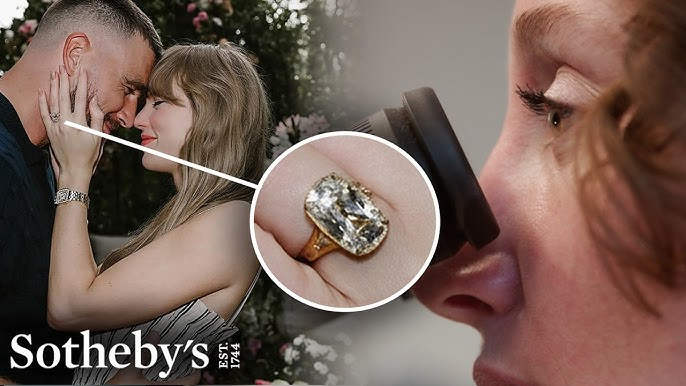
Swift’s engagement ring centres on an old mine brilliant cushion-cut diamond, a cut dating back to the 18th century and prized for the way it catches light unevenly, almost like candlelight flicker. Unlike modern round brilliant diamonds, old mine cuts have a boxier outline, softer corners and fewer, larger facets. This gives the stone a warmer, more romantic glow rather than sharp, uniform sparkle.
The setting itself is equally distinctive. Rather than a plain claw or pavé band, the ring features hand engraving across the gold, a technique Lubeck specialises in and one that requires considerable patience and precision. Each engraved line is cut individually rather than stamped, meaning no two rings from her studio are ever truly identical, even when the design brief is similar.
Additionally, the ring reflects a broader vintage sensibility that runs through Lubeck’s entire portfolio. She is known to collect antique jewellery herself, and that appreciation clearly informs her design choices. The result is a ring that feels inherited rather than newly bought, which is precisely the emotional effect many couples now request when approaching bespoke jewellers.
Benefits of Choosing a Designer Like This
Working with an independent goldsmith rather than a mainstream retailer offers several practical advantages. Firstly, clients typically get far more input into the finished piece, from stone selection through to engraving style, band width and metal tone. This collaborative process often results in a ring that genuinely reflects the couple’s story, rather than a design pulled from an existing catalogue.
Secondly, craftsmanship at this level tends to hold both sentimental and material value exceptionally well. Hand-engraved antique-style pieces are increasingly sought after, partly because they cannot be easily replicated by machine production. As a result, rings made in this tradition often become distinctive heirlooms, something buyers increasingly prioritise over simply choosing the largest available diamond.
Finally, choosing a smaller studio supports a slower, more considered approach to jewellery making. Instead of rushed turnaround times, pieces are typically created over weeks or months, allowing for genuine craftsmanship. For many couples, that process itself becomes meaningful, adding another layer of personal significance to the final ring beyond its appearance alone.
How Does This Style of Ring Design Work?
The process generally begins with an in-depth consultation, where the designer learns about the couple’s taste, lifestyle and any symbolic details they want reflected in the piece. Rather than presenting a fixed range of styles, independent goldsmiths like Lubeck often start from scratch, sourcing an appropriate antique or vintage-cut stone before building the setting around it entirely by hand.
Once a suitable diamond is chosen, attention turns to the metalwork. Hand engraving is applied using small hand-held tools called gravers, which cut fine grooves directly into the gold surface. This differs significantly from laser engraving, since every mark depends on the goldsmith’s steady hand, meaning subtle imperfections become part of the ring’s charm rather than flaws to be corrected.
Finally, the stone is set, polished and finished, often taking considerably longer than a standard retail purchase. Throughout the process, communication between designer and client typically continues, allowing adjustments before completion. This is precisely how Kelce and Lubeck reportedly worked together, resulting in a ring that felt tailored rather than simply selected from stock.
Important Things to Know Before Commissioning Similar Work
Anyone inspired by this style should understand that bespoke, hand-engraved rings generally cost more than comparable mass-produced pieces, partly due to the time investment involved. Old mine cut diamonds are also rarer than modern cuts, since they are no longer widely produced, which can affect both price and availability depending on carat size and clarity requirements.
It’s also worth noting that turnaround times vary considerably between independent goldsmiths. Because each piece is handmade, waiting periods of several weeks or months are common, particularly for detailed engraving work. Anyone hoping to replicate a similar ring should factor this timeline into their planning, especially if working toward a specific proposal date.
Furthermore, provenance matters. Reputable independent jewellers, including Artifex Fine Jewelry, typically provide documentation regarding stone origin, carat weight and metal purity. Buyers should always request this information upfront, since transparency around sourcing has become an increasingly important consideration for UK consumers purchasing fine jewellery, whether celebrity-inspired or not.
Common Mistakes to Avoid
One frequent mistake is assuming that “vintage-inspired” automatically means lower quality or lower cost. In reality, antique-style cuts and hand engraving often require more skill and time than modern manufacturing techniques, meaning prices can be comparable to, or higher than, contemporary designs of similar carat weight.
Another common error involves rushing the consultation stage. Buyers sometimes approach a designer wanting an exact replica of Swift’s ring without considering their own lifestyle, hand shape or daily wear requirements. A skilled designer will usually encourage some personalisation, since a design successful for one person doesn’t automatically suit another’s proportions or taste.
Lastly, many shoppers overlook the importance of aftercare. Hand-engraved gold and antique-cut diamonds sometimes require different maintenance than standard modern settings. Skipping conversations about resizing, cleaning and insurance at the point of purchase can lead to complications later, particularly with older or more delicate stone cuts that need gentler handling over time.
Expert Tips and Best Practices
Before approaching any independent designer, it helps to gather reference images and be clear about which specific elements appeal to you, whether that’s the stone cut, the engraving pattern or the overall colour tone. Clear communication from the outset typically results in fewer revisions and a smoother overall design process for both parties involved.
It’s also sensible to ask directly about the diamond’s origin and cut classification. Old mine cuts vary in quality, and understanding grading terminology beforehand allows buyers to have more informed conversations with their chosen jeweller. Requesting certification, where available, is a reasonable and increasingly standard expectation within the bespoke jewellery industry today.
Finally, patience genuinely pays off. Rushing a bespoke commission tends to limit creative possibilities and can compromise craftsmanship quality. Couples who allow adequate lead time generally report greater satisfaction with the finished piece, largely because the designer has sufficient opportunity to refine details rather than working under unnecessary time pressure throughout the process.
Comparison Table
| Feature | Description | Benefits | Drawbacks |
| Old mine cut diamond | Antique cut with boxy outline and soft corners | Warm, candlelight-style sparkle; rare and distinctive | Harder to source; often pricier per carat than modern cuts |
| Hand engraving | Manual gold engraving using gravers | Unique, one-of-a-kind detailing; strong craftsmanship value | Time-consuming; increases overall commission cost |
| Bespoke consultation | Direct collaboration between client and designer | Highly personalised outcome; stronger emotional value | Longer process than buying off-the-shelf |
| Independent studio | Small-scale jeweller rather than global retailer | Individual attention; flexible customisation | Limited stock; longer waiting times |
| Vintage-style setting | Design inspired by antique jewellery traditions | Timeless appeal; strong resale and heirloom potential | May not suit those preferring sleek modern styles |
| Certification and provenance | Documentation of stone and metal origin | Transparency; easier insurance and valuation | Not all budget jewellers provide this consistently |
Future Outlook for This Style of Ring Design
Interest in antique-cut diamonds and hand-engraved settings has grown noticeably since Swift’s engagement became public, and industry commentators expect that trend to continue. As sustainability concerns grow, many buyers increasingly favour vintage-inspired or reclaimed stones over newly mined alternatives, viewing them as both more distinctive and more environmentally considered choices for a significant purchase.
Independent goldsmiths are likely to benefit from this shift too. As consumers grow more curious about craftsmanship and provenance, smaller studios offering genuine bespoke work stand to gain visibility they previously struggled to achieve. Social media exposure, in particular, has proven capable of transforming relatively unknown designers into recognised names almost overnight.
Looking ahead, it seems probable that more couples will actively seek out lesser-known jewellers rather than defaulting to established luxury houses. The appeal of a personal, story-driven commission, much like the one behind Swift’s own ring, appears to resonate strongly with a generation increasingly drawn to individuality over instantly recognisable branding.
Conclusion
Ultimately, the story behind the Taylor Swift ring designer reflects something bigger than one celebrity engagement. It highlights renewed appreciation for hand craftsmanship, antique diamond cuts and genuinely personal jewellery design at a time when many buyers feel overwhelmed by mass-produced options.
Whether or not you’re planning your own proposal, Kindred Lubeck’s rise offers a useful reminder that thoughtful, well-executed design can capture public imagination just as effectively as any major luxury brand, proving that craftsmanship still matters enormously in modern jewellery culture.
FAQs
Q1. Who is the Taylor Swift ring designer? The Taylor Swift ring designer is Kindred Lubeck, founder of Artifex Fine Jewelry in New York. She created Swift’s engagement ring using an old mine brilliant cushion-cut diamond set within a hand-engraved gold band.
Q2. What type of diamond is on Taylor Swift’s ring? Swift’s ring features an old mine brilliant cushion-cut diamond, an antique style known for its boxy shape, soft corners and warm, candlelight-inspired sparkle rather than the sharp brilliance of modern round cuts.
Q3. Can I commission a ring from the same studio? Yes, Artifex Fine Jewelry accepts bespoke commissions, though waiting times and pricing vary depending on stone availability, engraving complexity and overall design requirements. Contacting the studio directly is recommended for accurate timelines.
Q4. Why are hand-engraved rings more expensive? Hand engraving requires significant time, skill and precision, since every mark is cut manually rather than machine-produced. This craftsmanship, combined with rarer antique-cut stones, typically increases overall commission costs compared to standard designs.
Q5. Is vintage-style jewellery a lasting trend? Industry experts suggest vintage-inspired and antique-cut jewellery reflects a lasting shift toward sustainability and individuality, rather than a short-term trend, meaning demand for such craftsmanship is likely to remain strong.
You May Also Read: UKheadlines