
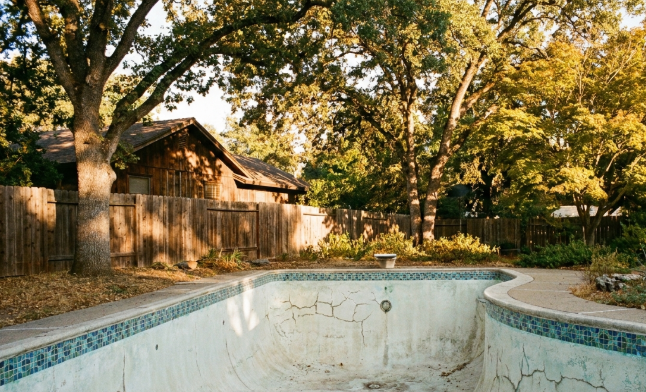
A pool built twenty years ago has a different surface, different plumbing, and different wear patterns than one built last year. The plaster is rougher. The tile grout is pitted. The steps have rounded edges from years of foot traffic. The floor has subtle depressions where the ground has settled.
Modern cleaning equipment is designed and tested on new pools with smooth surfaces and regular geometry. When you deploy it in an older pool, you encounter conditions that the engineers never tested for. Most of the time it works fine. Sometimes it does not. Knowing the difference before you invest prevents disappointment.
Rough Plaster and Aggressive Scrubbing
New plaster is smooth and dense. Old plaster is porous and rough, with a texture that grabs debris and holds it more tenaciously than a smooth surface. This roughness also grabs the brushes of a cleaning machine, increasing the mechanical load on the brush motors and drive system.
The practical effect is that old plaster requires more aggressive scrubbing to clean, and more aggressive scrubbing wears out brushes and tracks faster. A set of brushes that lasts two years on a new pool may last only one year on a pool with rough, aged plaster. Budget for more frequent brush replacement.
The rough surface also holds algae more effectively. Algae spores embed in the microscopic pores of aged plaster and establish roots that are difficult to dislodge with mechanical scrubbing alone. If your older pool is prone to algae on the walls, expect that the cleaner will reduce but not eliminate the problem. Supplemental manual brushing and chemical treatment are likely still necessary.
Settling and Uneven Floors
Ground settling over decades creates subtle slopes and depressions in the pool floor that are not visible but affect cleaner navigation. A cleaner that relies on consistent floor contact for traction may lose grip on a slope or become stuck in a depression where the drive wheels lift off the surface.
Depressions also collect debris. The low point in the floor becomes the repository for everything that sinks, which means the cleaner spends disproportionate time in that area. This can result in the rest of the floor being under-cleaned while the depression is over-cleaned.
If your pool has noticeable settling, look for a cleaner with adjustable drive wheel tension or models that maintain floor contact over uneven surfaces. Lightweight cleaners that rely on suction for floor contact are more susceptible to losing traction on slopes than heavier models that use gravity and wheel friction.
Vintage Tile and Grout Lines
Older pools often have tile at the waterline with grout lines that have eroded over time, creating grooves and crevices that trap debris and are difficult for a machine to reach. The waterline is already the weakest point for robotic cleaning, and eroded grout makes it worse.
The machine’s brushes pass over the tile surface but cannot reach into the grout lines. Debris and biofilm accumulate in these grooves and require manual cleaning with a tile brush and a degreasing agent. No automated cleaner currently available addresses this issue effectively.
If the tile is cracked or loose, the mechanical pressure of a cleaner climbing the wall can worsen the damage. Inspect the waterline tile before deploying a wall-climbing cleaner in an older pool, and consider limiting wall climbing to once per week rather than every cycle if the tile is fragile.
Outdated Electrical and Plumbing
Older pools may not have a dedicated electrical outlet near the equipment pad, which is where a robotic pool cleaner requires power. Running an extension cord from a distant outlet across a wet pool deck is a safety hazard. If your pool lacks a nearby GFCI-protected outlet, have one installed by a licensed electrician before using any electrical cleaning equipment.
Older plumbing may also lack a dedicated line for a pressure-side cleaner, which limits your options if you prefer that type of system. Robotic cleaners are the best choice for older pools because they are self-contained and do not require any connection to the pool’s existing plumbing.
The Compatibility Checklist
Before purchasing a cleaner for an older pool, run through this checklist. Is the plaster rough enough to require aggressive brushes? Are there floor depressions that might trap the cleaner? Is the waterline tile in good enough condition to withstand wall climbing? Is there a GFCI outlet within cable reach? Does the cable length account for the distance from the outlet to the farthest point in the pool?
If the answer to all of these is satisfactory, any quality cleaner will work. If there are concerns about surface roughness, floor settling, or tile condition, choose a model with adjustable features — variable brush pressure, multiple cycle options, and wall-climbing that can be turned on and off.
Old pools are not incompatible with modern cleaning technology. They just require a more deliberate matching process. The same cleaner that glides effortlessly across a new plaster surface may struggle on a rough, settled, and worn one. Account for the pool’s age and condition, and you will find a machine that works. Ignore these factors, and you will find a machine that frustrates.