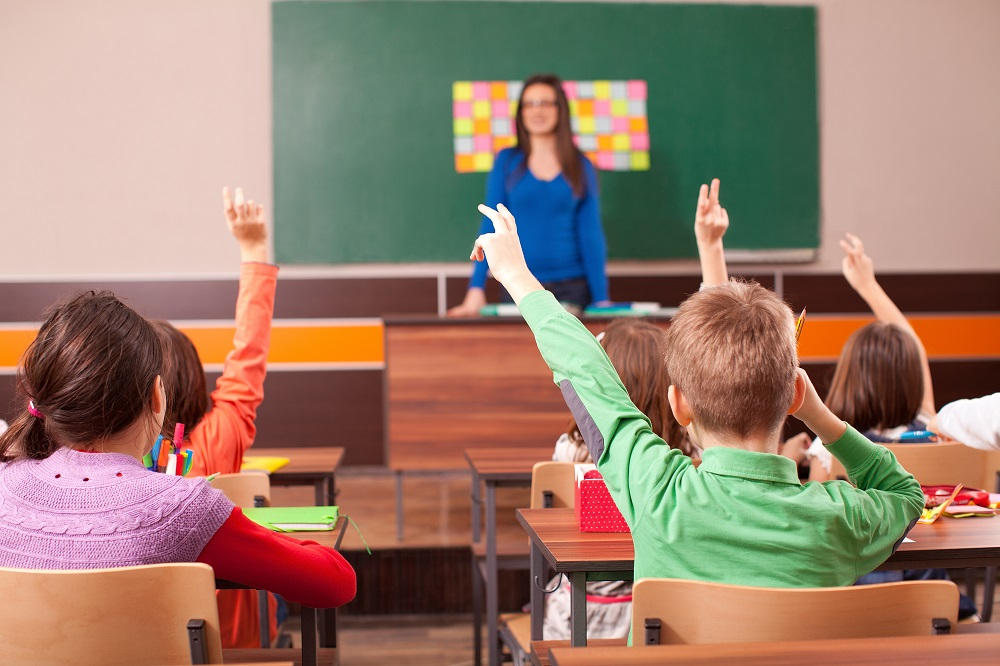
Walk into a classroom today and, on the surface, it might look much the same as it did a decade ago. Students sit at desks, teachers stand at the front, and somewhere in the room there is a whiteboard covered in notes. But look a little closer at what is happening on those screens, and you will find something that has crept into education so gradually that most people barely noticed. Artificial intelligence is now woven into the daily rhythm of learning — and it is changing everything from how students receive feedback to how teachers plan their lessons.
Already Here, Just Not Always Visible
The most significant thing about AI in education is how quietly it arrived. Students are not necessarily sitting in front of robots or futuristic interfaces. They are using tools they already know — Google Search, Grammarly, Duolingo, Khan Academy — all of which now run on AI-powered engines that adapt to individual behaviour. When a student practises Spanish on Duolingo and the app adjusts the difficulty based on yesterday’s mistakes, that is AI at work. When a pupil drafts an essay and receives real-time grammar suggestions, that too is AI shaping the learning experience. The technology did not burst through the classroom door; it slipped in through the back.
Learning That Moulds Itself Around the Student
One of the most genuinely useful things AI brings to education is personalised learning at a scale that no single teacher could manage alone. Platforms such as Khanmigo, Carnegie Learning, and Synthesis use machine learning to track how each student responds to material, then adjust the pace, difficulty, and format accordingly. A student who struggles with quadratic equations will receive more scaffolded support, while a peer who has already grasped the concept is pushed further ahead. This kind of responsive teaching has long been considered best practice, but in a class of thirty students, it has historically been nearly impossible to deliver consistently. AI makes it far more achievable.
This shift matters particularly in subjects where gaps in foundational knowledge compound over time. In mathematics and science, a student who misses a core concept early on can fall behind quickly. AI-powered tools can identify those gaps earlier than a teacher might and offer targeted practice before the problem grows. For families exploring additional academic support — whether through online revision tools or IGCSE tutoring programmes — AI is increasingly integrated into how personalised study plans are built and monitored.
The Teacher Is Not Going Anywhere
There is a persistent anxiety that AI will eventually make teachers redundant. That fear misunderstands what teaching actually involves. What AI is doing, more accurately, is relieving teachers of some of the most time-consuming administrative work — automated grading of multiple-choice assessments, tracking student progress across a term, generating differentiated worksheets for mixed-ability classes. When these tasks are handled by software, teachers recover time they can redirect toward the parts of their job that genuinely require a human: building trust with a struggling student, facilitating a debate, noticing that someone seems off today.
There is a real risk that over-reliance on AI feedback could reduce the depth of teacher-student interaction. A system that tells a student their essay scored 74 out of 100 is not the same as a teacher explaining why the argument lacked evidence and how to strengthen it. The human layer of education — mentorship, encouragement, the ability to read a room — remains irreplaceable.
The Risks That Do Not Get Enough Attention
Academic integrity is perhaps the most discussed challenge, and for good reason. Generative AI tools have made it considerably easier for students to produce written work that is not their own, and schools are still catching up with policies that are enforceable and fair. Beyond cheating, there are data privacy concerns that parents and institutions should take seriously. AI learning platforms collect detailed behavioural data on children, and not every school has robust policies governing how that data is stored, shared, or used.
AI-enhanced learning tools tend to be available to students whose schools and families can afford the subscriptions, the devices, and the reliable internet connections required to use them. For students in under-resourced environments, the gap between what AI can offer and what they can actually access may widen existing educational inequalities rather than close them. This is a conversation the sector needs to have honestly.
Building the Skills to Use AI Well
Rather than treating AI as either a threat or a cure-all, schools are increasingly recognising that AI literacy needs to become a taught skill — as foundational as reading comprehension or numeracy. Students should understand not just how to use these tools, but how to evaluate the outputs critically, recognise their limitations, and use them to enhance their thinking rather than replace it.
Some schools are already updating their curricula to reflect this, while others are still working through the policy questions. In the meantime, educators, parents, and students would benefit from open conversations about what responsible AI use looks like inside and outside the classroom. Much like the gradual shift towards more sustainable everyday choices, such as opting for bagasse coffee cups instead of traditional disposables, integrating AI into education calls for a measured and conscious approach, with attention paid to its long-term impact.
The Real Test Starts Now
The classroom is changing. Not dramatically, not all at once, but steadily and meaningfully. The students sitting in those rooms today will graduate into a world where AI is embedded in nearly every professional field they enter. The question schools face now is whether they are preparing students to work alongside these tools with a genuine understanding or simply handing them a shortcut they do not yet know how to use responsibly.