
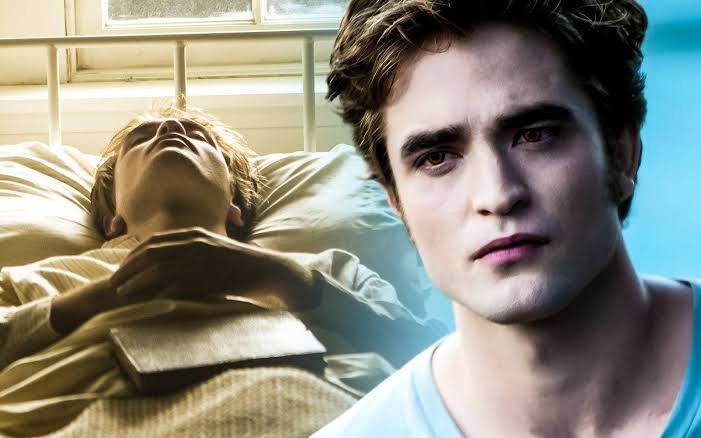
When Stephenie Meyer sat down to write Twilight, she could not have predicted that one character would go on to redefine what millions of readers expected from a romantic hero. Edward Cullen is not simply a vampire who falls in love with a human girl. He is a study in contradictions — a creature built for destruction who chooses tenderness, an immortal being haunted by the weight of a conscience that never quiets. Two decades after his debut, psychologists, literary critics, and fans alike are still unpacking what makes him tick.
This article explores the psychological dimensions of Edward Cullen — why he resonates so deeply, what drives his choices, and how his character reflects something universal about the human need to be loved by someone who could hurt you but chooses not to.
Edward Cullen and the Burden of Immortality
Most vampire fiction treats immortality as a gift. Edward Cullen treats it as a sentence.
By the time the events of Twilight unfold, Edward has been alive for over a century — frozen physically at seventeen but carrying the emotional and intellectual weight of someone who has watched the world transform multiple times over. He has outlived every person he knew as a human. He has watched wars begin and end. He has seen ideologies rise, collapse, and be forgotten. And through all of it, he has remained the same — unchanging on the outside while everything around him shifts.
This creates a unique psychological condition that therapists might recognize as a form of chronic grief. Edward cannot form permanent connections with the human world because the human world is always moving past him. He makes friends knowing he will eventually have to disappear. He attends high school not because he enjoys it but because it provides a cover — and even that cover has to be discarded every few years before people notice he never ages. His existence is a cycle of investment and loss, repeated indefinitely.
What makes this more acute for Edward than for other vampires in Meyer’s universe is his telepathy. While most people must live with uncertainty about what others think of them, Edward has no such buffer. He hears everything — every surface thought, every unguarded reaction, every private judgment. After a century of this, he has developed a bone-deep wariness of other people. He knows too much about human nature to be easily surprised by it, and what he knows has not always been flattering.
This is part of why Bella Swan’s mental silence is so profoundly disorienting for him. She is the first person in over a hundred years who exists as a genuine mystery. He cannot pre-process her reactions or anticipate her feelings. He has to actually pay attention. For someone as isolated as Edward, that experience of not-knowing is unexpectedly, terrifyingly alive.
Why Edward Cullen Left — The New Moon Decision Explained
No decision Edward makes in the entire saga generates more fan debate than his choice to leave Bella in New Moon. To readers who love him, it is the ultimate act of self-sacrifice — a man removing himself from the life of someone he loves because he genuinely believes she is safer without him. To critics of the character, it is controlling behavior dressed up as nobility.
Both readings have merit, and that tension is actually what makes the decision so interesting from a psychological standpoint.
Edward’s reasoning is not irrational. He has watched his brother Jasper — a vampire with decades of experience controlling his instincts — nearly attack Bella because she cut her finger at a birthday party. The threat is not theoretical. It is immediate and it is real. Edward has spent his entire vampire life developing the self-control to resist human blood, and he still finds Bella’s scent more overwhelming than anything he has previously encountered. Every day they spend together, he is one lapse of concentration away from killing her.
From that perspective, leaving is not an act of emotional cruelty. It is a risk assessment carried out by someone who takes his own dangerousness seriously.
Where the psychology becomes more complicated is in how Edward leaves. He does not give Bella a choice. He does not tell her the truth about why he is going. He constructs a lie — that he no longer loves her — and delivers it with the practiced emotional control of someone who has had a century to master the art of concealment. The intention is to make the separation clean, to give Bella a version of events she can eventually move past. The result is something that functions like psychological devastation.
This gap between intention and impact is one of the most psychologically honest things about Edward Cullen as a character. His capacity for self-sacrifice is genuine. His ability to imagine what Bella actually needs in that moment is limited. He acts from his own moral framework without fully accounting for hers. That is a recognizably human failure, which is perhaps why it generates such strong reactions — readers recognize it from their own lives.
The Vampire as Protector: Edward Cullen’s Controlling Tendencies
It would be intellectually dishonest to write about Edward Cullen’s psychology without addressing the criticism that has followed the character since the saga’s earliest days: that his protectiveness frequently tips into control.
The evidence is there in the text. Edward disables Bella’s truck to prevent her from visiting Jacob. He monitors her movements. He makes decisions about her safety unilaterally, without consultation. He is, by any reasonable modern definition, overprotective in ways that would be considered red flags in a real relationship.
Understanding why does not excuse it, but it does contextualize it. Edward was born in 1901 and socialized in an era when male protectiveness was not just accepted but actively expected. His emotional development was frozen — literally — at seventeen, an age when romantic love tends to be experienced as all-consuming and total. And he is a vampire with genuine, concrete reasons to fear what proximity to him might cost Bella. His protectiveness is not purely a character flaw. It is a flaw tangled up with love, fear, cultural conditioning, and the specific horror of knowing exactly what you are capable of.
Meyer has acknowledged this dimension of the character, and Midnight Sun — the retelling from Edward’s perspective — makes his internal reasoning far more transparent. Reading his thoughts does not eliminate the critique, but it does reveal a character who is genuinely trying, who monitors himself constantly, and who is aware of his own tendency to overstep even as he struggles to contain it.
Edward Cullen is not a model partner. He is a believable one — which is a different thing entirely.
Edward Cullen’s Relationship with Guilt
If Edward Cullen has a defining emotional state, it is not love. It is guilt.
Guilt about what he is. Guilt about what he has done — the years he spent as a vigilante predator, feeding on criminals and convincing himself the moral arithmetic worked out. Guilt about what being near him costs Bella. Guilt, in New Moon, about leaving. Guilt, in Eclipse, about the war being fought partly because of his choices. Guilt runs like an undercurrent beneath every other emotion he experiences, and it shapes everything.
For more on Edward Cullen — including his full backstory, vampire transformation, and complete list of powers — that deep dive covers the factual foundations of who he is across all five books and films.
This chronic guilt is both a strength and a weakness. On the strength side, it keeps him honest. It prevents him from rationalizing away his darker impulses. It is the engine that drives his commitment to the vegetarian lifestyle even on the days when that commitment costs him everything. On the weakness side, it makes him slow to forgive himself for anything, prone to assuming the worst about his own intentions, and inclined to make decisions based on what he deserves rather than what Bella wants.
The moment in Breaking Dawn when Edward hears Renesmee’s thoughts in the womb — when he realizes the baby loves Bella, is not trying to harm her, and simply wants to exist — is the first time in the saga that his guilt genuinely lifts. He stops trying to talk Bella into an abortion. He starts allowing himself to love the child. It is a quiet moment in a book full of dramatic events, but psychologically it might be the most significant thing that happens to Edward across the entire saga.
What Edward Cullen Represents in the Vampire Genre
The vampire has always been a metaphor. Depending on the era and the author, it has stood in for sexual transgression, disease, colonial exploitation, the predatory aristocracy, addiction, and countless other anxieties that a given society needed to process through the safe distance of fiction.
Stephenie Meyer’s contribution to this tradition was to use the vampire as a metaphor for the specific tension between desire and restraint. Edward Cullen wants Bella — her blood, her presence, her love — with an intensity that is literally physically overwhelming. Every moment he is near her is an exercise in not giving in to what every instinct he has is screaming at him to do. The romance of Twilight is built on that tension: the question of whether love is strong enough to override nature.
This speaks to something that transcends the specific scenario. Most people have experienced, in some form, the feeling of wanting something that might hurt them or someone else, and the effort of choosing not to pursue it. Edward makes that universal experience literal and extreme. His restraint is not metaphorical. It is a daily, active, costly choice. That is why the story resonates with readers who have no particular interest in vampires — they recognize the emotional core.
Edward Cullen’s Legacy in Pop Culture
It is now more than twenty years since Twilight was published, and Edward Cullen has not faded. If anything, the character has become more interesting as the initial wave of fandom intensity has subsided and given way to more considered reflection.
A new generation has discovered the saga through social media — short video clips, fan edits, discussion threads on Reddit and TikTok — and is engaging with Edward’s character with fresh eyes and fewer of the cultural biases that shaped the original reception. These younger fans are more likely to acknowledge his flaws directly while still finding him compelling, which is arguably a more sophisticated reading than either the uncritical adoration or the blanket dismissal he received in his first wave of fame.
Robert Pattinson’s post-Twilight career has also recontextualized the performance. Knowing what he went on to do — the intense, unconventional roles, the critical acclaim, the Batman — makes it easier to see what he was actually doing in those five films. He was playing a genuinely difficult character with restraint and commitment. The smoldering stare was doing a lot of work, but so was everything underneath it.
Edward Cullen endures because he is not a fantasy. He is a fictional character who feels psychologically true — flawed, burdened, loving, and trying. Those qualities do not go out of date.
Conclusion
Reducing Edward Cullen to a romantic archetype does him a disservice. At his most interesting, he is a portrait of someone living with the consequences of what he is — someone who cannot undo his nature but refuses to be defined by it. His psychology is shaped by guilt, isolation, a century of involuntary access to other people’s thoughts, and a love that arrived without warning and changed everything.
Whether you read his protectiveness as romantic or controlling, his self-sacrifice as noble or presumptuous, his restraint as admirable or exhausting — you are engaging with a character substantial enough to sustain those competing interpretations. That is the mark of a genuinely well-crafted fictional person.
Edward Cullen is complicated. That is exactly why he has lasted.
Frequently Asked Questions
Why does Edward Cullen feel so guilty all the time? Edward carries deep guilt about his vampire nature, his past as a vigilante predator who fed on criminals, and the constant danger his proximity poses to Bella. His telepathy means he has spent over a century hearing the unfiltered thoughts of everyone around him, which has deepened his understanding of human suffering and made him hyper-aware of the harm he could cause.
Is Edward Cullen’s behavior considered controlling? Many readers and critics have noted that Edward’s protectiveness frequently crosses into control — disabling Bella’s truck, monitoring her movements, and making unilateral decisions about her safety. These behaviors reflect a mix of genuine fear for her safety, early twentieth century gender conditioning, and the emotional development of someone frozen at seventeen. Understanding the context does not eliminate the criticism, but it does complicate it.
Why does Edward leave Bella in New Moon? Edward leaves because he believes Bella is genuinely safer without him after Jasper nearly attacks her. His intention is to protect her. His method — constructing a lie that he no longer loves her — causes enormous harm despite that intention. The gap between what he means to do and what he actually does is one of the most psychologically revealing aspects of his character.
What makes Edward Cullen different from other fictional vampires? Meyer’s vampires do not have traditional weaknesses like sunlight vulnerability or the need for coffins. More significantly, Edward Cullen’s defining characteristic is not predation but restraint — his entire character arc is built around the choice not to give in to his nature. This inversion of the typical vampire archetype is what distinguishes him in the genre.
Why can’t Edward read Bella’s mind? Bella has a natural psychic shield — an ability that exists even before she becomes a vampire — that blocks Edward’s telepathy. Meyer has described this as reflecting Bella’s deeply private inner world. After her transformation, this ability develops into a projectable shield she can extend to protect others around her.