
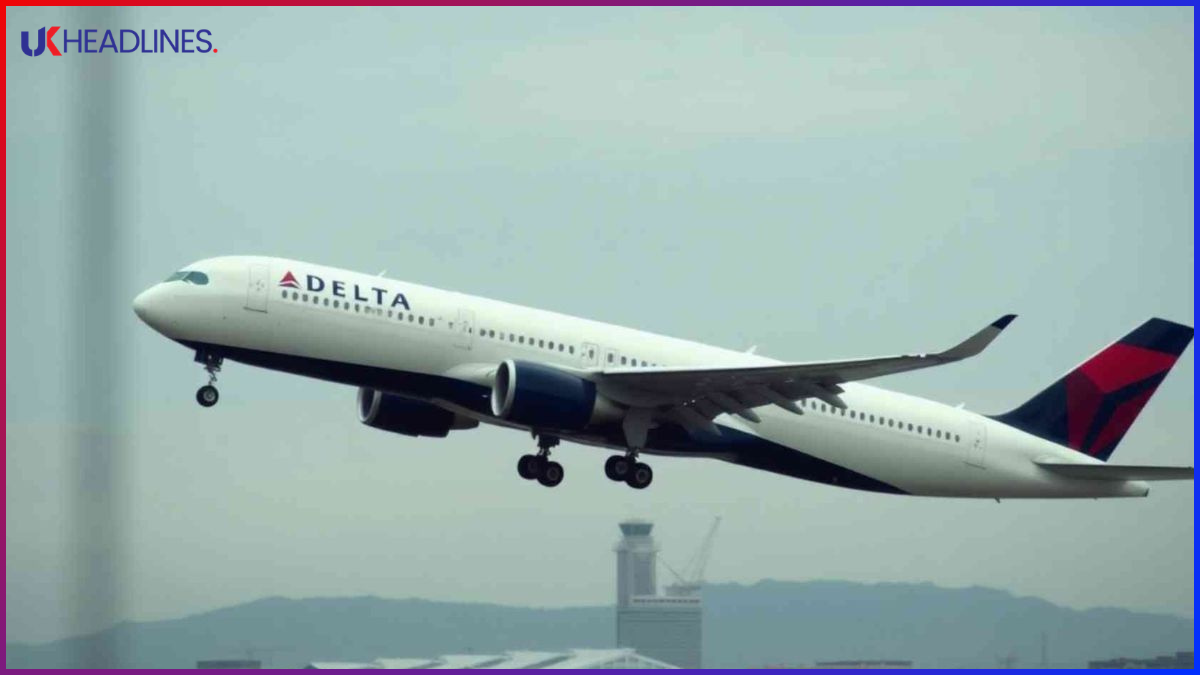
On 27–28 May 2025, Delta flight DL275 diverted LAX in one of the most widely discussed aviation incidents of the year. The aircraft — a Detroit-to-Tokyo Haneda service aboard an Airbus A350-900 — turned around over the Bering Sea and completed a five-hour flight south to Los Angeles International Airport, carrying nearly 300 passengers to safety. For those on board, it was an anxious and exhausting experience. For the wider aviation community, it became a textbook case of precautionary safety decision-making at its finest.
Whether you were on that flight, know someone who was, or simply want to understand what actually took place, this guide covers everything: the technical cause, the timeline, how the crew made their decision, what happened to passengers on the ground, and what your rights are if you ever face a similar situation. By the end, you will have a thorough, honest, and factual picture of why this diversion happened and what it means for the future of long-haul aviation safety.
What Is Delta Flight DL275 Diverted LAX?
Delta Flight DL275 is a scheduled long-haul international service operated by Delta Air Lines between Detroit Metropolitan Wayne County Airport (DTW) and Tokyo Haneda Airport (HND). The route spans roughly 6,200 miles and typically takes around 13 hours, making it one of Delta’s core trans-Pacific operations. The aircraft assigned to this service is the Airbus A350-900, registration N508DN, powered by two Rolls-Royce Trent XWB engines and certified to carry up to 306 passengers across three cabin classes.
On 27 May 2025, DL275 departed Detroit’s Gate A46 as normal, slightly delayed due to a late inbound aircraft. For the first five to six hours, the flight progressed without issue, climbing to a cruising altitude of 38,000 feet and heading north-west over the Pacific on the standard trans-Pacific corridor. Then, somewhere above the Bering Sea approximately 620 nautical miles south-west of Anchorage, Alaska, the cockpit received an alert related to the engine anti-ice system — and everything changed.
The term “delta flight dl275 diverted lax” became a trending search almost immediately after the incident. Aviation tracking sites showed the A350 making a controlled arc over the North Pacific and heading south-east, away from Japan and toward the California coast. The aircraft touched down safely on Runway 06R at Los Angeles International Airport at 1:38 AM local time on 28 May 2025, with no injuries reported among the passengers or crew.
Key Features of the DL275 Diversion Event
The most critical technical element at the heart of this incident was the engine anti-ice system. At cruising altitude, outside air temperatures can plummet to well below −50°C. The anti-ice system works by routing hot compressed air from the engine compressor around the inlet rim, preventing ice from forming on the engine intake — a condition that could otherwise disrupt airflow and cause serious problems. When sensors detected an anomaly in this system, the aircraft’s Electronic Centralised Aircraft Monitor (ECAM) generated an alert that the flight crew was required to act upon immediately.
Crucially, the diversion was precautionary, not a declaration of emergency. The engine did not fail, and the aircraft remained fully controllable throughout. However, under FAA Extended-range Twin-engine Operational Performance Standards — known as ETOPS — both engines on a twin-engine aircraft operating transoceanic routes must have fully functional ice protection systems. The anti-ice system malfunction effectively made it a regulatory requirement for the crew to divert, rather than a discretionary judgement call. This distinction is important: the system worked exactly as intended.
The choice of LAX over geographically closer airports such as Anchorage was deliberate and well-reasoned. The A350-900 holds ETOPS-370 certification, the highest available, meaning regulators have verified that its redundancy and monitoring systems justify a 370-minute diversion window. Delta had pre-designated LAX as a primary diversion airport for this route because it offers Airbus A350 maintenance certification, Rolls-Royce Trent XWB–qualified engineers, full passenger rebooking infrastructure, and long runways capable of handling wide-body aircraft. Anchorage, whilst closer, presented colder ground temperatures — precisely the wrong environment for an aircraft with a potential anti-ice issue — and more limited wide-body maintenance capability.
Benefits of Understanding the DL275 Incident
For frequent flyers and aviation enthusiasts, understanding what happened on DL275 offers genuine reassurance about how safe modern commercial aviation truly is. The diversion was not a failure of the aircraft or airline; it was the opposite. Multiple redundant safety layers — from the Rolls-Royce FADEC engine monitoring system to ETOPS regulations under 14 CFR Part 121 — all performed precisely as designed. The alert was detected early, the crew followed protocol, and nearly 300 people landed safely at a well-equipped hub airport.
For passengers who found themselves in this unexpected situation, knowing your rights is equally valuable. Because the diversion was caused by a mechanical issue within Delta’s operational control, affected travellers were entitled to comprehensive duty-of-care provisions. These included rebooking on the next available flight to Tokyo Haneda, hotel accommodation during the extended ground time, meal vouchers, and ground transport where required. Many passengers also received goodwill gestures such as future travel credits, and several reported that the Fly Delta app automatically offered rebooking options before the aircraft had even reached the gate.
For the broader aviation industry, the DL275 incident reinforces the importance of continued investment in predictive maintenance technology. The Airbus A350 already generates approximately 2.5 terabytes of real-time data per flight. The FADEC system on the Rolls-Royce Trent XWB caught the anti-ice anomaly before it developed into anything more severe — precisely the scenario that early-detection architecture is designed to prevent. As predictive AI tools become more sophisticated, the expectation is that fault signatures will be identified even earlier, potentially before departure, further reducing the need for mid-flight diversions.
How Does a Trans-Pacific Diversion Work?
When the ECAM alert fired in the cockpit of DL275, the flight crew immediately began working through their checklists. The captain and first officer assessed the nature of the system indication, consulted with Delta’s Operations Control Centre on the ground, and reviewed their ETOPS alternate airport options. The entire process is structured and methodical: every long-haul transoceanic flight pre-designates a list of approved diversion airports before departure, and the crew simply activates the pre-approved plan that best fits the current situation. There is no guesswork involved.
Once the decision to divert to LAX was made, air traffic control was notified and a priority landing corridor was arranged. The A350 executed a controlled arc over the Bering Sea, maintaining its cruising altitude throughout the turn, which tracking data confirmed. This was not a rapid descent or a dramatic change in aircraft behaviour — it was a calm, methodical reroute. The cabin crew informed passengers of the change in plans without disclosing technical details that would not have been relevant or helpful to those on board, maintaining composure and professionalism throughout the five-hour return flight.
On the ground at LAX, Delta’s support infrastructure absorbed the unplanned arrival efficiently. Maintenance engineers and Rolls-Royce Trent XWB–certified technicians began inspections immediately. The aircraft remained on the ground for approximately 18.5 hours before being cleared and returned to service. Passengers were directed through customs and immigration, provided with hotel accommodation and meal vouchers, and rebooked on subsequent DL275 departures or alternative Pacific routings. Delta confirmed the incident cost the airline approximately £4.6 million in total — a reflection of the full scale of its duty-of-care obligations, not negligence.
Important Things to Know About the DL275 Diversion
One of the most important facts to understand is the legal distinction between a precautionary diversion and an emergency landing. A precautionary diversion, as was the case with DL275, is a controlled, planned reroute made to address a system indication before it can escalate into something more serious. An emergency landing involves an immediate and imminent threat to the safety of the aircraft. DL275 was unambiguously the former: no emergency was declared, no rapid descent occurred, and passengers were never in immediate danger.
Passengers from the United Kingdom who were booked on DL275 should also be aware that their rights differ slightly from those of US domestic travellers. While US Department of Transportation rules govern Delta’s obligations as a US carrier, UK travellers with travel insurance from UK-based providers may have additional grounds to claim for trip interruption, accommodation costs, and consequential losses — provided they have documented their expenses carefully. Saving boarding passes, photographing delay notices, and retaining all receipts for meals and transport is essential for any subsequent claim.
The diversion also highlighted the critical importance of travel insurance for long-haul transoceanic flights. Many travellers assume that airline duty-of-care provisions will cover everything, but gaps can exist — particularly around consequential costs such as missed hotel bookings at the destination, prepaid tours, or onward connecting flights. A comprehensive travel insurance policy, especially for routes crossing remote oceanic airspace, provides an important financial safety net that works alongside, rather than instead of, the airline’s own passenger support commitments.
Common Mistakes to Avoid When Your Flight Diverts
One of the most common errors passengers make when a diversion is announced is panicking before gathering accurate information. Diversions sound alarming, but they are frequently precautionary decisions made to preserve safety margins — not signs of catastrophic failure. The first and most effective action is to listen carefully to the cabin crew’s announcements, note the stated reason for the diversion, and remain calm. The reason matters, because it directly affects your passenger rights: a mechanical diversion like DL275 typically results in more comprehensive airline support than a weather-related disruption, which airlines often classify as outside their control.
Another mistake is waiting passively at the gate rather than taking proactive steps the moment the aircraft begins its approach. Experienced travellers recommend opening the airline’s app before the wheels touch the runway. For DL275, passengers who checked the Fly Delta app early found that the system had already begun generating rebooking options. Simultaneously calling the airline’s international customer service line while standing in the physical rebooking queue — a dual approach — significantly reduced waiting time for many affected passengers. The competition for seats on the next available Tokyo-bound flight is real, and speed matters.
Finally, many passengers overlook the documentation they will need if they wish to pursue reimbursement or compensation after returning home. A photograph of your original boarding pass, any written delay or diversion notices, and receipts for every expense incurred during the disruption — food, transport, accommodation not provided by the airline — are all essential. Without this evidence, claims to both the airline and travel insurers become far more difficult to substantiate. Treating documentation as a priority from the moment the diversion is announced can make a significant financial difference once you are home.
Expert Tips and Best Practices for Long-Haul Travellers
Aviation professionals consistently advise that the best preparation for any long-haul flight disruption begins before you leave home. Purchasing comprehensive travel insurance that explicitly covers flight diversions, trip interruptions, and consequential losses is the single most effective financial safeguard available to UK travellers. Many travellers are also surprised to discover that premium credit cards frequently include built-in travel disruption cover — worth checking before you purchase a separate policy. Knowing exactly what your cover includes before you board means you can act decisively if a situation like DL275 ever arises.
Frequent flyers who operate in Asia-Pacific corridors should also familiarise themselves with ETOPS routing and what it means in practice. Understanding that transoceanic twin-engine flights operate under strict alternate airport protocols — and that the aircraft you are on is one of the most rigorously certified in commercial aviation — provides genuine reassurance. The Airbus A350-900’s ETOPS-370 certification, for example, represents years of demonstrated reliability data reviewed by the FAA. This level of oversight is exactly why incidents like DL275 end the way they did: safely, efficiently, and with every passenger accounted for.
Finally, when faced with an unexpected diversion, adopting what aviation professionals call a “structured mindset” dramatically reduces stress and improves outcomes. Prioritise three things in order: safety first, then communication (notify anyone waiting at your destination as soon as possible), then logistics (rebooking, accommodation, and documentation). Delta’s ground teams at LAX were praised by many DL275 passengers for their speed and professionalism. Working with airline staff rather than against them — and coming prepared with your booking reference, passport, and travel insurance policy details — puts you in the strongest possible position to get back on your way quickly.
| Feature | Description | Benefit | Drawback |
| Flight Route | Detroit (DTW) to Tokyo Haneda (HND) | Core trans-Pacific Delta service with daily frequency | 13-hour overwater route with limited mid-flight diversion options |
| Aircraft Type | Airbus A350-900, registration N508DN | ETOPS-370 certified, highly redundant safety systems, purpose-built for ultra-long-range routes | Any technical fault mid-ocean requires long diversion flight |
| Diversion Trigger | Engine anti-ice system indication at 38,000 ft over the Bering Sea | Early detection by FADEC system prevented escalation | Anti-ice alerts in remote airspace leave few nearby diversion airports |
| Diversion Airport | Los Angeles International Airport (LAX) | Full A350 maintenance certification, Rolls-Royce engineers on-site, Delta hub with rebooking infrastructure | Approximately 5 hours of additional flight time from point of alert |
| Ground Time at LAX | Approximately 18.5 hours for inspection and repair | Aircraft returned to service fully certified and airworthy | Significant passenger delay and operational disruption across Delta’s network |
| Passenger Outcome | All 287 passengers rebooked; hotel, meals, and transport provided | No injuries, comprehensive duty-of-care support delivered | Disrupted travel plans, missed connections, and significant personal inconvenience |
| Estimated Airline Cost | Approximately £4.6 million (c. $5.9 million) | Reflects full duty-of-care obligations being met | High operational cost absorbed by the airline, not passed to passengers |
| ETOPS Compliance | Mandatory diversion under 14 CFR Part 121 ETOPS rules | Regulatory framework ensured no ambiguity — diversion was required, not optional | Adds complexity to Pacific route operational planning |
Future Outlook of Long-Haul Aviation Safety
The DL275 incident has accelerated conversations within the aviation industry about the role of predictive maintenance technology on transoceanic routes. Modern aircraft like the Airbus A350 already generate enormous volumes of real-time diagnostic data during every flight. The next frontier is deploying advanced machine-learning models capable of identifying fault signatures in systems like engine anti-ice circuits — potentially before the aircraft even departs. Several major carriers are already piloting these systems in partnership with engine manufacturers, and the expectation within the industry is that such technology will become standard across wide-body fleets within the coming decade.
ETOPS regulations themselves are also evolving. As aircraft certification standards improve and engine reliability data accumulates, regulators are reviewing whether current diversion airport selection criteria should be updated to reflect the operational capabilities of aircraft like the A350. The DL275 crew’s decision to fly five hours to LAX rather than divert to the closer but less capable Anchorage demonstrates that ETOPS alternate airport selection is already an exercise in operational judgement as much as regulation. Future policy may formalise this approach, giving crews and dispatch greater flexibility to select the most capable diversion airport within an approved window rather than defaulting to the nearest.
For passengers, the long-term outlook is broadly positive. Commercial aviation’s global safety record is already exceptional — the probability of being involved in a serious incident on a certified airline operating modern equipment is extraordinarily small. Incidents like DL275, far from undermining confidence in air travel, actually demonstrate the system working as intended: sensors detect anomalies, crews act conservatively, airlines provide comprehensive support, and passengers reach the ground safely. As monitoring technology improves and the industry continues to invest in crew training and operational infrastructure, the expectation is that precautionary diversions will be resolved more quickly and with less disruption to passengers than ever before.
Conclusion
Delta flight DL275 diverted LAX on 28 May 2025 as a direct result of an engine anti-ice system indication detected over the Bering Sea. What followed was not a failure but a demonstration of modern aviation’s multilayered safety culture: early fault detection, conservative crew decision-making, ETOPS regulatory compliance, and comprehensive passenger care at one of the world’s best-equipped hub airports. Every system performed as designed, and all 287 passengers landed safely without injury.
For UK travellers, this incident serves as a valuable reminder to invest in comprehensive travel insurance before any transoceanic journey, to understand your passenger rights when disruptions occur, and to approach flight diversions with informed calm rather than anxiety. The story of delta flight dl275 diverted lax is ultimately a reassuring one — proof that when aviation’s safety architecture is tested, it holds. The skies, even over the most remote stretches of the Pacific, remain in very capable hands.
FAQs
Q1. Why did Delta flight DL275 divert to LAX instead of Anchorage?
LAX was chosen over the geographically closer Anchorage because it offered certified Airbus A350 and Rolls-Royce Trent XWB maintenance facilities, full Delta passenger rebooking infrastructure, and warmer ground temperatures — critical given the aircraft’s anti-ice system concern. Anchorage’s wide-body maintenance capability is comparatively limited.
Q2. Was delta flight DL275 diverted LAX classed as an emergency landing?
No. The diversion was precautionary, not an emergency. No emergency was declared by the crew, the aircraft remained fully controllable throughout, and passengers were never in immediate danger. A diversion is a controlled reroute; an emergency landing involves imminent risk to the aircraft.
Q3. What is an engine anti-ice system and why does it matter on Pacific routes?
The engine anti-ice system prevents ice from forming on the engine inlet by routing hot compressed air around the intake rim. At cruising altitude over cold oceanic airspace, temperatures fall below −50°C. Under ETOPS rules, both engines must have fully functional anti-ice systems for the flight to continue legally over remote transoceanic routes.
Q4. What passenger rights applied to those on Delta flight DL275?
Because the diversion was caused by a mechanical issue within Delta’s control, passengers were entitled to rebooking, hotel accommodation, meal vouchers, and ground transport. UK travellers with travel insurance may have had additional grounds to claim for consequential losses such as prepaid hotels or missed tours at the destination.
Q5. Has Delta flight DL275 resumed normal operations after the LAX diversion?
Yes. The Airbus A350-900 involved was inspected and repaired at LAX, remaining on the ground for approximately 18.5 hours before being returned to service. Flight tracking data confirms that DL275 has continued operating the Detroit-to-Tokyo Haneda route on its regular schedule without further reported diversions since the May 2025 incident.