
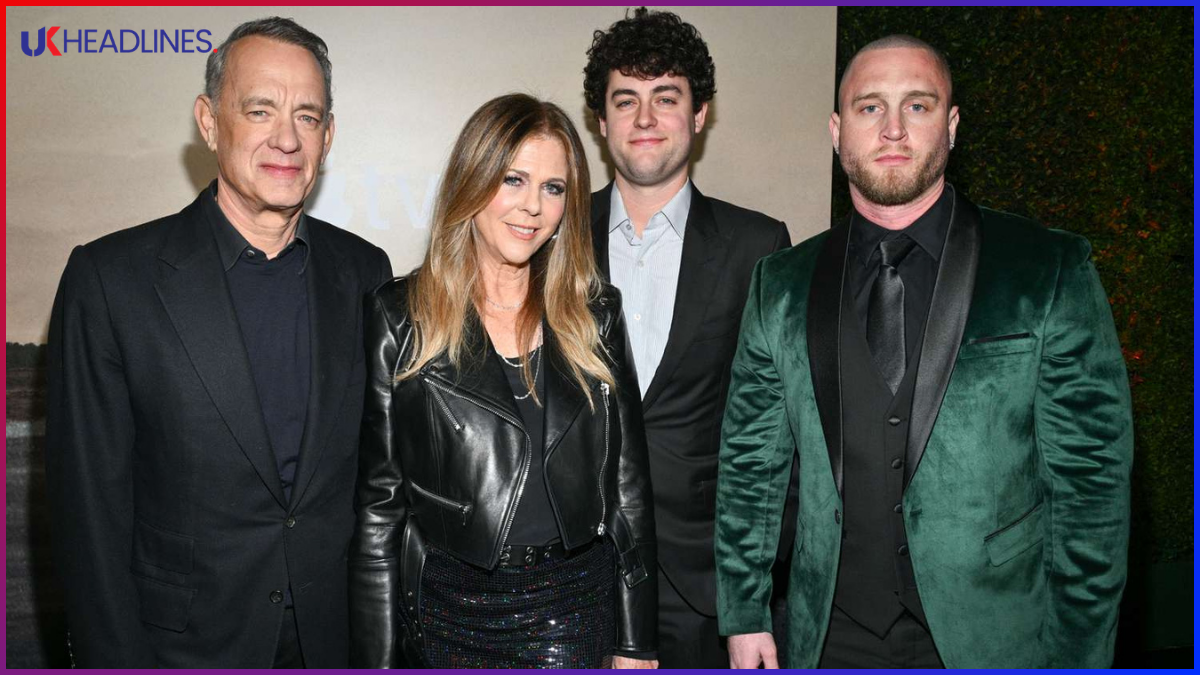
Truman Hanks is one of Hollywood’s most quietly compelling emerging talents — a young filmmaker who has deliberately chosen depth over dazzle. Born on 26 December 1995 in Los Angeles, California, he is the youngest son of two-time Academy Award winner Tom Hanks and acclaimed actress and singer Rita Wilson. Rather than chasing the spotlight that his famous surname could so easily have afforded him, Truman has spent years building a serious, skill-first career on his own terms.
What makes Truman Hanks particularly fascinating is the deliberate path he has taken. While many celebrity children leverage family connections for fast-tracked acting careers, he chose to study mathematics at Stanford University, earn his craft in technical film roles, and only step in front of the camera when the role genuinely called for it. In a culture increasingly obsessed with nepotism debates and overnight fame, his story offers a genuinely refreshing counter-narrative.
What Is Truman Hanks?
Truman Hanks is both an actor and a cinematographer working within the Hollywood film and television industry. He is a member of SAG-AFTRA and the International Cinematographers Guild (ICG-600), which speaks to his dual professional standing in two distinct creative disciplines. His career sits at the intersection of technical filmmaking and performance, giving him a perspective that few in the industry share. Understanding who he is means recognising that his identity extends well beyond simply being Tom Hanks’ son.
Professionally, Truman operates primarily as a camera department professional — working as a film loader, camera loader, digital utility operator, and director of photography assistant across major productions. These are not glamorous titles, but they are foundational ones. The camera and electrical departments are the beating heart of any film production, and working within them for years on major studio pictures requires genuine technical skill, discipline, and industry knowledge that cannot simply be inherited.
His acting work, while secondary to his behind-the-scenes career, has nonetheless drawn considerable attention. His most significant on-screen role came in the 2022 drama A Man Called Otto, where he played the younger version of his father’s character — a nuanced choice that demonstrated both familial trust and real acting ability. That performance, alongside smaller roles in News of the World (2020), Asteroid City (2023), and a memorable cameo in Wes Anderson’s The Phoenician Scheme (2025), paints the picture of an actor who picks his moments carefully.
Key Features of Truman Hanks
One of the defining features of Truman’s career is his commitment to ground-level filmmaking. Rather than accepting producer credits or executive roles — avenues his family connections could reasonably have opened — he started as a camera trainee on the German series Babylon Berlin and worked his way up through the industry’s technical ranks. This approach is unusual for someone of his background and speaks to an authenticity that the film world tends to respect deeply.
His academic background is another standout characteristic. Graduating from Stanford University in 2018 with a degree in mathematics may seem an unlikely foundation for a film career, but it has clearly shaped his technical precision. Cinematography, after all, involves a great deal of applied mathematics — from calculating exposure and depth of field to understanding the physics of light. His scientific training arguably gives him a sharper analytical eye than many peers who entered film school more conventionally.
Truman is also a member of both SAG-AFTRA and ICG-600, reflecting the dual nature of his professional life. Very few individuals hold active memberships across both an actors’ union and a cinematographers’ guild simultaneously, and this duality sets him apart. It signals not just versatility, but a genuine investment in both crafts — something that becomes increasingly rare as the industry tends to push professionals towards narrower specialisations.
Benefits of Truman Hanks’ Dual Career Approach
The most obvious benefit of Truman’s combined acting and cinematography career is the depth of perspective it gives him on set. When he steps in front of the camera, he understands exactly what the camera operator needs from him. When he works behind the lens, he brings an actor’s understanding of performance and intention to his technical framing choices. This dual awareness makes him an unusually collaborative and adaptable presence on any production.
For the wider film industry, his approach serves as an instructive model for how celebrity-adjacent talent can build genuine credibility. There is growing public scepticism around nepotism in entertainment, and Truman’s route — starting at the bottom, taking on unsexy technical roles, and earning credits on merit — directly challenges the assumption that famous surnames automatically translate into unearned success. His trajectory is, in many ways, a quiet argument for the value of craft over celebrity.
From a career sustainability standpoint, his technical expertise provides a foundation that pure acting rarely offers. The film industry is notoriously unpredictable, and those who understand multiple aspects of production tend to weather its ups and downs more effectively. By developing real cinematography skills alongside his acting, Truman has built a career that is likely to be both more resilient and more creatively fulfilling over the long term.
How Does Truman Hanks Work?
Truman’s working method is rooted in a bottom-up approach to filmmaking. He began by taking camera trainee and loader roles — positions that involve managing film magazines, maintaining equipment, and supporting the first and second camera assistants. These jobs are physically demanding and require intense focus, as a mistake in the camera department can ruin irreplaceable footage. His willingness to start there, rather than walking straight into higher-profile roles, reveals a great deal about his professional character.
His on-set collaborations span both blockbuster and prestige productions. On the studio side, he contributed to the camera and electrical departments for Marvel’s Black Widow (2021) and Steven Spielberg’s West Side Story (2021). On the prestige drama side, he worked on the critically acclaimed series Succession as a camera loader in 2023 and contributed to the Amazon Prime series Fallout in 2024. Each project added another layer of experience and industry credibility to his growing résumé.
When it comes to his acting work, Truman appears selective and deliberate. He does not pursue leading roles or high-profile auditions in the way that many aspiring actors do. Instead, he takes on parts that seem to genuinely interest him or that fit organically within projects he is already connected to — particularly those involving his father or directors like Wes Anderson, with whom the Hanks family has developed a clear working relationship. This selectivity, while it limits his acting output, ensures that each appearance carries real intention behind it.
Important Things to Know About Truman Hanks
Truman Hanks was born on 26 December 1995, making him 30 years old as of late 2026. He is the youngest of Tom Hanks’ four children, which also include Colin Hanks (from Tom’s first marriage to Samantha Lewes), Elizabeth Hanks (also from the first marriage), and Chet Hanks (from his marriage to Rita Wilson). Of the four Hanks children, Truman and Colin are the most consistently active in the film industry, though their approaches could not be more different — Colin pursues acting, while Truman leans heavily towards technical filmmaking.
His early career included a stint at Activision as an intern during high school, where he worked on designing a special-edition Skylanders figurine — a detail that hints at his creative and technical curiosity from a young age. He also spent time at Bad Robot, J.J. Abrams’ production company, before moving into his formal film career. These pre-industry experiences suggest someone who was always interested in the mechanics of storytelling and creative production, not merely the performance side of it.
It is also worth noting that Truman’s most talked-about cameo — in Wes Anderson’s The Phoenician Scheme (2025) — was genuinely memorable precisely because it was unexpected and rather shocking. He played an Administrative Secretary to Benicio del Toro’s character and met an abrupt and dramatic end early in the film. The role was brief but left an impression, suggesting that when Truman does act, he commits fully to the moment, even if that moment involves being rather spectacularly dispatched.
Common Mistakes to Avoid
The most common mistake people make when discussing Truman Hanks is reducing him entirely to his parentage. While his family connections are undeniably relevant context, they are not the whole story — and treating them as such does a disservice to years of genuine professional work. He has contributed to dozens of productions in technical roles that require real skill and on-set competence, and those contributions deserve to be assessed on their own merits rather than filtered exclusively through the lens of who his father is.
Another frequent misconception is assuming that his acting career is his primary ambition. Several media reports have framed him principally as an actor who “also does some camera work,” but the reality is the reverse. His IMDB credits, guild memberships, and the sheer volume of his behind-the-scenes work all point to cinematography as his central professional focus. His acting appearances are meaningful but supplementary — a distinction worth understanding before drawing conclusions about his career trajectory.
Finally, it is a mistake to apply the “nepo baby” label uncritically and leave the analysis there. The debate around nepotism in Hollywood is a legitimate one, and Truman is certainly part of that conversation by virtue of his background. However, the specific choices he has made — taking junior technical roles, attending a rigorous university, building credentials across multiple departments — complicate any straightforward dismissal. Intellectual honesty requires acknowledging both the advantages his surname provides and the genuine effort he has invested regardless.
Expert Tips and Best Practices
For anyone researching Truman Hanks, the most reliable sources are his IMDB profile and his professional listings on platforms such as Backstage, where his full cinematography and acting credits are publicly documented. Cross-referencing these against specific film and television productions gives a much clearer picture of his actual output than any single profile article can provide. His IMDb page, in particular, includes granular detail about the precise camera roles he has held on each project.
If you are following Truman’s career with an eye towards his future trajectory, pay close attention to projects where he takes on both acting and camera department roles simultaneously — or where he moves into first assistant camera or director of photography positions. These would represent significant milestones in his cinematography career and would signal a meaningful step up from the loader and utility roles that have characterised his earlier work.
For those interested in the broader context of celebrity offspring in the film industry, Truman Hanks represents a genuinely useful case study. His career sits alongside figures like Sofia Coppola and Jake Paltrow, who similarly built serious creative careers in production and direction rather than simply pursuing fame. Studying how these individuals navigate industry expectations, public scrutiny, and the question of inherited advantage offers real insight into how talent and privilege can — and sometimes do — coexist productively.
| Feature | Description | Benefits | Drawbacks |
| Acting Career | On-screen roles in A Man Called Otto, News of the World, Asteroid City, The Phoenician Scheme | Versatility and public visibility | Limited lead roles; secondary to his technical work |
| Cinematography Work | Film loader, camera loader, DOP assistant on Black Widow, West Side Story, Succession, Fallout | Deep technical credibility; long-term career resilience | Lower public profile than acting |
| Academic Background | Mathematics degree, Stanford University, graduated 2018 | Strong analytical foundation for technical filmmaking | Unconventional path that surprised early observers |
| Family Connections | Son of Tom Hanks and Rita Wilson; worked on several of his father’s productions | Access to high-profile sets and established directors | Persistent scrutiny around nepotism and earned merit |
| Guild Memberships | SAG-AFTRA (actors) and ICG-600 (cinematographers) | Recognised dual professional status in two disciplines | Requires maintaining dual commitments and standards |
| Notable Collaborations | Wes Anderson’s Asteroid City and The Phoenician Scheme; Succession; Amazon’s Fallout | Exposure to acclaimed directors and prestige productions | Smaller roles may limit broader recognition |
| Career Philosophy | Deliberately ground-up, skill-first approach | Authentic credibility; respect from industry professionals | Slower rise to public prominence than peers |
Future Outlook of Truman Hanks
Looking ahead to 2026 and beyond, Truman Hanks appears to be at a genuinely interesting inflection point in his career. His IMDB credits already list him on several projects in pre-production and filming, including The Temptation of Loneliness and Kings of Vegas, where he is serving as first assistant camera and assistant camera respectively. These are higher-ranking positions than the loader roles that defined his earlier work, suggesting a natural and deliberate upward progression within the camera department hierarchy.
As the conversation around nepotism in Hollywood continues to evolve, Truman’s career will likely attract increasing scrutiny and, potentially, increasing respect in equal measure. The film industry is notoriously difficult to navigate without either genuine talent or substantial connections, and Truman has both — a combination that tends to produce either outstanding results or complicated public narratives. Given his track record so far, there is reason to believe his career will trend towards the former rather than the latter.
There is also a realistic prospect that Truman may eventually transition into directing or producing, following a path that would not be entirely surprising given his dual exposure to both the technical and performance sides of filmmaking. Directors who come from camera department backgrounds — understanding exposure, composition, and lens choice from the ground up — often bring a distinctive visual rigour to their work. Whether that is ultimately the direction he chooses remains to be seen, but the foundations for it are clearly in place.
Conclusion
Truman Hanks is a genuinely compelling figure in contemporary Hollywood — not because of the family he was born into, but because of the specific and deliberate choices he has made within the opportunities that background provided. His dual identity as both a working cinematographer and a selective actor, grounded in a Stanford mathematics degree and years of entry-level film work, sets him apart from many celebrity offspring who follow a more straightforward path into the spotlight.
As audiences and industry observers continue to grapple with questions of privilege, access, and genuine talent in the entertainment world, Truman Hanks offers a nuanced example worth examining closely. He has not solved the nepotism debate — no individual career could — but he has engaged with it honestly, through his choices rather than his words. In a world that often rewards noise over substance, that approach deserves recognition.
FAQs
Q1. Who are Truman Hanks’ parents? Truman Hanks is the youngest son of two-time Academy Award winner Tom Hanks and actress, singer, and producer Rita Wilson. They are considered one of Hollywood’s most enduring and high-profile couples, having been married since 1988.
Q2. What films has Truman Hanks appeared in as an actor? His most notable acting role is in A Man Called Otto (2022), where he played a younger version of his father’s character. He also appeared in News of the World (2020), Asteroid City (2023), and had a cameo in The Phoenician Scheme (2025).
Q3. What did Truman Hanks study at university? Truman Hanks graduated from Stanford University in 2018 with a degree in mathematics. This academic background has likely contributed to the strong technical precision that characterises his cinematography work on major film and television productions.
Q4. Is Truman Hanks primarily an actor or a cinematographer? He is primarily a cinematographer and camera department professional. While his acting roles have attracted public attention, the bulk of his professional credits involve technical camera work, including roles as film loader, camera loader, and director of photography assistant.
Q5. What is Truman Hanks’ most talked-about acting appearance? Beyond A Man Called Otto, his most discussed appearance is his cameo in Wes Anderson’s The Phoenician Scheme (2025), where he played an Administrative Secretary who meets a memorably dramatic and rather gory early end in the film.