
The market for billboards advertising in Poland has changed a lot. It started with simple, still posters and has moved into the digital age with bright screens and fast content updates. Billboard ads in Poland are no longer “old-school marketing.” They have adjusted to new technology and new rules, and they still play a big role in many cities. This change comes from many things happening at once: history, the economy, new tools like LED screens, changing habits of consumers, and tighter regulations. The move from hand-painted signs to digital displays also matches Poland’s wider economic growth and its push for modern solutions.
What Drives the Evolution of Billboard Advertising in Poland?
Key Historical Milestones in Polish Billboard Advertising
Outdoor advertising in Poland goes back a long way, even before the modern billboard. But the interwar period (1918-1939) was when outdoor ads started to look more like what we know today. In cities like Warsaw, people saw advertising pillars, billboards, and painted boards on buildings promoting circus shows, products, and political campaigns. Ads also appeared on vehicles and trams, helping messages reach more people. Neon signs, including those installed by Schicht-Lever and those on famous streets like Nowy Świat, were a major step forward because they added light and movement to city streets. This time also brought early legal rules, showing that people already wanted a balance between business advertising and how a city looks.
During the communist period (1945-1989), commercial advertising almost stopped. Advertising was seen as part of capitalism, so it was limited and often used for government messages instead. Commercial billboards were rare, replaced by approved posters and basic shop signs. After 1989, everything changed quickly. The market opened, Western styles entered, and modern billboard structures spread across the country. Foreign investment and the privatization of public spaces helped create large billboard networks, and outdoor advertising became one of the clear signs of Poland’s new market economy.
Social and Economic Changes Shaping the Industry
After 1989, Poland’s economy grew fast, which helped outdoor advertising grow too. Strong GDP growth, especially in cities such as Warsaw and Kraków, increased consumer spending and brought more construction and infrastructure projects. That created more places where ads could be placed. Urbanization also pushed the market forward: more people moved into cities, and higher population density meant more potential viewers for billboards. With more people on the streets every day, outdoor ads became a practical way for brands to get noticed.
Tourism growth also attracted advertisers who wanted to reach visitors as well as local people. As interest in outdoor ads increased, many property owners and housing groups rented out building walls for large billboards to raise money for renovations. This helped fund updates to buildings, but it also added to visual clutter, often called “reklamoza.”
Impact of Global and Local Advertising Trends
Around the world, outdoor ads have moved from still posters to moving and interactive screens. Poland has followed this shift. The Polish out-of-home (OOH) market is growing strongly, reaching PLN 806 million in 2024, up 9.7% from the year before. The biggest push came from digital outdoor ads, which grew by 32%. At the same time, traditional print advertising is expected to drop a lot between 2024 and 2030, showing that brands are changing where they spend money.
These numbers suggest that many advertisers still trust billboards and that people keep paying attention to outdoor messages. Research also shows that campaigns can perform better when outdoor and online ads work together, which makes OOH useful in mixed marketing plans. In Poland, more campaigns now use data and quick content updates, which fits well with what digital billboards can do.
How Is the Polish Billboard Advertising Market Structured?
Key Operators and Market Concentration
Even though the market is growing fast, much of it is controlled by a small number of large companies. This is easiest to see in big cities, where the best locations are often tied up with long-term city contracts and wide networks. One major company is AMS (part of the Agora Group). It has a strong position across classic billboards, transit ads, and digital screens across Poland. AMS has grown quickly in digital out-of-home (DOOH), reporting a 40% year-on-year revenue increase in Q1 2025.
Another major company is Ströer Polska, part of Germany’s Ströer Group. It runs a network of about 25,000 advertising spaces across Poland and is known for campaigns that mix classic and digital formats for wide coverage. Screen Network is also a key DOOH player, saying it runs the biggest digital OOH network in Poland with over 20,000 screens, reaching about 6 out of 10 Poles each day when they are away from home. Smaller local firms do exist, but they hold a much smaller part of the market.
Size and Economic Impact
Poland’s OOH market is large and still growing. In 2024 it reached about PLN 806 million. Forecasts suggest it will keep growing, reaching about US$95.47 million by 2029, with an expected growth rate of 1.73% from 2025 to 2029. The market includes classic OOH (traditional billboards and citylights), public transport advertising, and DOOH.
| Segment (2024) | Value | Share | Year-on-year growth |
| Classic OOH | PLN 521.73 million | 64.7% | – |
| DOOH | PLN 231.85 million | 28.8% | 32.2% |
| Public transport advertising | – | – | 29.6% |
Classic OOH was still the biggest part in 2024. But the fastest growth came from public transport ads and DOOH. Outside of ad sales, the industry also supports jobs and business activity in printing, installation, maintenance, and digital content management, especially in cities like Warsaw and Kraków.
Opportunities for Small and Local Businesses
Even with big companies controlling many spaces, smaller businesses can still find good options. The best spots in large cities are expensive, but smaller cities and regional areas can be much cheaper. In many cases, billboard prices outside the biggest cities are around 30-50% lower, while still providing a strong number of views and closer ties to the local community.
Smaller ad formats and smart scheduling can also help businesses with limited budgets. Working with local advertising partners can be useful because they often know which locations perform well and what local audiences respond to. Also, rules that reduce the number and size of ads may lead to cleaner streets and make it easier for smaller brands to stand out.
What Regulations Govern Billboard Advertising in Poland?
National Laws and Advertising Standards
Outdoor advertising rules in Poland come from both national laws and local city rules. A key national law is the Act on Public Roads of 21 March 1985, especially Article 43. It sets minimum distances between ads and roadways for safety and visibility. It also limits light-emitting ads in places where they could distract drivers, especially near highways and expressways.
Other national rules also matter, including the Act on Counteracting Unfair Competition of 16 April 1993. These rules, enforced by the Office of Competition and Consumer Protection (UOKiK), ban misleading content, false product claims, and visuals that trick consumers. Breaking the rules can lead to fines, penalties, or removal orders. The Chamber of Outdoor Advertising (Izba Gospodarcza Reklamy Zewnętrznej, IGrZ) also sets self-regulation standards, covering fair practices, reach reporting, and visibility metrics.
Municipal and Local Permissions
National laws set the base rules, but city rules are often what matters most in practice. The Landscape Act of 2015 gave municipalities more power to create their own local “landscape resolutions” to reduce visual pollution and protect city appearance. These rules led to large clean-up actions between 2020 and 2022, and cities could remove illegal billboards without paying compensation.
Billboard installation usually requires city permits, and the exact process depends on size and location. Many professional advertising companies handle permits as part of their service, and the process often takes about 2-6 weeks. The Landscape Act also created an advertising fee, made up of a fixed amount plus a variable amount based on the ad’s surface area. This is similar to older systems where municipalities or the State Road Fund charged for advertising.

Environmental and Heritage Considerations
Poland’s cultural and natural heritage has become a major point in outdoor advertising debates, along with general spatial order. Too many ads-especially in old city centers-caused concerns about “reklamoza.” Cities like Kraków and Sopot responded strongly. Kraków’s landscape resolution, fully in force from July 1, 2022, removed more than 1,500 free-standing billboards and set strict limits on large facade coverings. For example, renovation banners can cover only up to half a facade and can be used only once every seven years.
Sopot went even further. Its 2018 resolution led to the removal of more than 1,000 ads by May 2022, basically removing billboards to show historic buildings again. In protected areas, rule-breaking can lead to daily fines. Environmental topics are also growing: traditional billboards create waste from vinyl and paper, while digital screens can use a lot of energy. One large digital screen can use as much electricity as 30 households per year. All this shows the ongoing challenge of balancing business needs, city appearance, and sustainability.
How Have Billboard Formats Evolved in Poland?
From Static Posters to Digital Displays
Billboard formats in Poland have moved from simple handmade signs to modern screens. Early examples included stone tablets and hand-painted signs for events like circuses. In the interwar period, posters on advertising columns were common, along with painted panels on building facades. Today, traditional static billboards still work well because they are cheaper and familiar. Many use strong vinyl prints that can handle Poland’s weather. The standard 12m² format (5.04 x 2.38 meters) is still the most common across the country. Production often takes 7-10 business days.
The biggest change came with digital billboards, usually LED screens. These screens allow moving content and quick updates. Ads can rotate during the day, so one screen can show multiple brands. It also supports changes based on time or situation-for example, a café can promote breakfast in the morning and dinner offers later. High brightness and sharp images make digital billboards easier to notice in busy areas.
Emergence of Interactive and Smart Billboards
Poland has also started using interactive and “smart” billboards. Interactive billboards can involve people through touchscreens, motion sensors, or links to social media. A screen might ask people to use a hashtag and then show posts in real time. This can create a stronger memory of the brand.
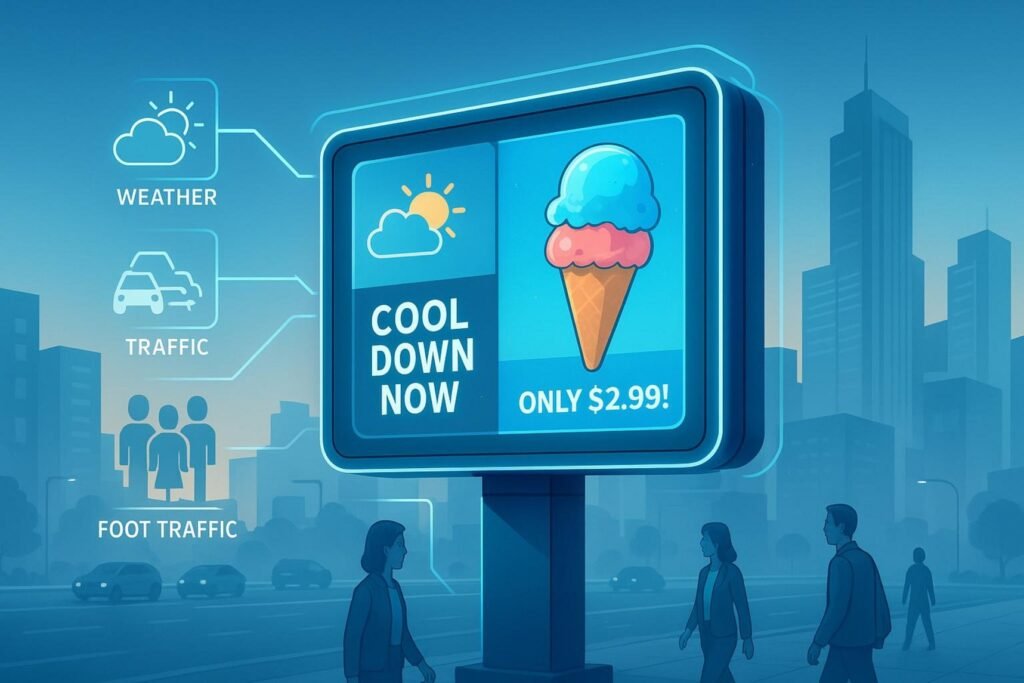
Smart billboards use data and AI to show more relevant ads. They may use real-time information like traffic, weather, or general audience data. For example, a screen might show cold drinks on a hot day or umbrellas when it rains. This kind of targeting can make ads more useful and less annoying. Privacy rules are still a key issue, especially if future tools try to identify individuals, but the direction is clear: more responsive and data-based OOH.
Unique Polish Formats and Cultural Adaptations
Alongside global trends, Poland has its own OOH habits and formats. Mobile ads on vehicles and trams were an early way to spread messages in public spaces. After 1989, many new signs appeared quickly, sometimes in a messy way, adding to “reklamoza,” but also showing a growing business culture.
Today, in addition to classic billboards, common formats include:
- Citylights: small lit panels, often at bus shelters, good for areas with lots of pedestrians.
- Cityscrolls: rotating poster systems in similar locations, allowing multiple ads in one unit.
Modern OOH in Poland is also being linked with smart city ideas. Some displays include sensors that collect or share information like air quality or traffic. A notable example from 2020 was a Polish police project that used AI computer vision and sensors on digital screens to recognize vehicles and show road safety warnings. This shows that billboards can be used for public messages too, not only commercial ads.
What Is the Role of Digital Technology in Modern Billboard Advertising?
Rise of Digital Out-of-Home (DOOH) Networks
Digital technology has strongly reshaped billboard advertising in Poland, with DOOH networks growing fast. This growth is supported by urbanization, better technology, and more trust from advertisers. DOOH helps reach people with moving content and can also reduce the impact of billboard removals because one digital screen can carry many campaigns. Major operators like AMS, Ströer Polska, and Screen Network are building large LED networks in busy city areas.
The growth is clear: the digital part of Poland’s outdoor market jumped by 32% in 2024, adding PLN 231.85 million. This shows a shift from still images to content that can react quickly and compete in crowded city spaces.
Integration of Data Analytics and Programmatic Buying
One of the biggest changes in DOOH is the use of data analytics and programmatic buying. Programmatic buying means ad space can be purchased automatically using data, including real-time bidding and audience grouping based on location and behavior. In Poland, AMS introduced programmatic DOOH in 2023 using a private deal model. By 2024, it had run programmatic DOOH campaigns for brands like Hochland and Benefit System. This helps shorten campaign launch times and connect DOOH data with other media channels.
AI also supports more advanced reporting, prediction, and performance measurement. When combined with mobile data and geofencing, advertisers can study how exposure affects behavior-for example, whether people who saw a restaurant ad later visited the location. This makes targeting sharper and ROI tracking more detailed.
Examples of Digital Campaigns in Polish Cities
Many Polish cities now use digital billboards in creative ways. A common method is time-based scheduling: screens show different content at different times. Restaurants can run breakfast messages during morning traffic and change to dinner offers later. Smart screens can also react to local conditions, showing cold drink ads on very hot days or umbrella ads when rain is detected.
Interactive features are also growing. Screens may include QR codes or promote social media actions, sometimes showing user posts live. The 2020 Polish police project is another example: AI and sensors on digital screens were used to recognize vehicles and show road safety warnings. These cases show how digital tools can make billboard ads more flexible and more connected to city life.
How Do Location and Urbanization Affect Billboard Success?
Major Urban Centers vs. Regional Markets
In Poland, results and prices for billboards depend heavily on location. Premium spots in Warsaw, Cracow, and Gdansk cost more because they offer more people, more traffic, and more visibility. Warsaw is the most expensive market, especially in business areas and near public transport hubs, while outer districts can be cheaper for smaller budgets. Cracow combines tourism and city traffic, creating strong opportunities for hotels, restaurants, and retail-though historic areas may limit placements. Gdansk and the Tri-City area (Gdynia, Sopot, Gdansk) offer a busy coastal market and often more competitive pricing than Warsaw, plus extra audience types linked to ports and industry.
Smaller cities can be a strong alternative for regional targeting. They are often 30-50% cheaper than large cities but can still produce strong impression numbers and better local fit, especially when working with local advertising firms.
Strategic Placement and Audience Targeting
Billboards work well because you can’t easily avoid them the way you can skip online ads. Placement is what decides how much value you get. Spots near shopping centers, major crossroads, and highway exits often cost 2-3 times more because they are easier to see and reach more people. The setting also shapes how well the message lands. An ad for sportswear near a stadium, or a retail sale message in a shopping area, matches the place and feels more relevant.
Planning starts with your goal:
- Brand awareness: choose high-traffic areas with long viewing time for wide reach.
- Direct response: choose locations near buying decision points and add clear calls to action (QR codes, website, promo codes).
Good results come from matching location, audience habits, and campaign goals.
Urbanization’s Impact on Visibility and Effectiveness
As more people live and work in cities, billboards naturally reach more viewers. DOOH also fits well with smart city projects, where screens can show changing content and even mix ads with real-time information. This makes them feel like part of city life.
At the same time, urban growth can create problems. After 1989, too many outdoor ads led to “reklamoza,” which caused public complaints and stronger regulation. Cities like Kraków and Sopot removed thousands of illegal or non-compliant ads and added density limits. Advertisers now need to plan more carefully and follow rules so ads fit the city instead of making streets look worse.
How Much Does Billboard Advertising Cost in Poland?
Primary Factors Influencing Billboard Prices
Billboard pricing in Poland depends on a few main factors. Location is usually the biggest one. Premium places in Warsaw, Cracow, and Gdansk cost more, especially near shopping areas, large crossings, and highway exits. These top spots can cost two to three times more than less busy locations. Billboard size also matters: the standard 12m² format (5.04 × 2.38 meters) is common and often more affordable, while larger formats cost more and smaller ones can suit local budgets.
Campaign length affects monthly pricing too. Longer bookings (often three to six months) can reduce the monthly cost. Seasonal demand also changes prices: holidays and summer periods can be more expensive because more advertisers compete for the best spaces. Finally, digital screens usually cost more than static boards because of the technology and extra options.
Differences in Cost: Digital vs. Traditional Billboards
Static billboards remain popular because they are cost-friendly and reliable. They use vinyl prints made to handle Poland’s weather and keep the message visible for long periods. Production usually takes 7-10 business days, including design and printing.
Digital billboards (LED screens) give more flexibility but usually cost more. Digital campaigns are often 40-60% more expensive than static ones. That higher price covers benefits like rotating multiple ads, higher impression potential, and quick updates. For example, ads can change based on time of day, showing breakfast deals in the morning and dinner offers later. For campaigns focused on results and testing, DOOH can bring stronger returns because it can be adjusted quickly.
Typical Budget Ranges for Campaigns
Monthly outdoor advertising in Poland can start from a few hundred PLN, especially in regional markets. Costs can rise quickly for top city-center locations or for backlit and digital screens. Budget planning should include both the media cost and extra expenses.
- Design: usually 500 to 2,000 PLN, depending on how complex it is and how many revisions are needed.
- Other possible costs: permits, installation, and maintenance.
Many professional billboard companies bundle these services into one package, which helps avoid surprise costs during the campaign. Working with experienced partners can also help businesses pick locations and formats that match their budget.
What Are the Main Challenges and Trends Facing Billboard Advertising?
Adapting to Digital Disruption
The digital era brings big opportunities, but also pressure to keep up. Moving from one fixed poster to moving content means new creative work, new systems, and new ways to manage campaigns. Advertisers now need to think about animation, short video, and quick message changes. Tools like programmatic buying and AI can improve targeting and efficiency, but they also require new skills and investment.
Billboards also compete with online and social media ads, which offer very detailed targeting and quick measurement. Billboards still offer constant visibility and can’t be blocked, but the industry needs to keep improving to show why OOH matters in a crowded media mix.
Measuring Campaign Performance and ROI
Measuring billboard results is easier than before, but it can still be hard. Old methods like traffic counts are now supported by newer tools. Some digital screens use cameras and sensors to estimate engagement, like how long people look at a screen. Mobile data and geofencing can also show whether people who saw an ad later visited a store or location.
Common performance inputs include:
- vehicle and pedestrian traffic counts
- viewing angle and estimated viewing time
- peak traffic times
- QR code scans and website traffic changes
- mobile location patterns near billboard sites
- brand surveys before and after campaigns
The hard part is combining all these signals into one clear ROI view that covers both short-term actions (sales, visits, promo code use) and long-term brand impact (recall, awareness, market share changes).
Balancing Aesthetics, Regulation, and Commercial Goals
Another ongoing issue is balancing business goals with how cities look and what the law allows. After 1989, outdoor advertising grew quickly and often without enough control, leading to “reklamoza,” especially in historic areas. Public complaints led to stronger rules, including the Landscape Act of 2015 and local resolutions in cities like Kraków and Sopot. These actions removed thousands of non-compliant ads.
Rules can limit where ads go, how big they are, and what materials can be used. Environmental pressure is also rising. Static billboards create waste from vinyl and other materials, while digital screens reduce print waste but use a lot of power. Navigating these requirements is where experienced agencies like BE Media add value. Discussion in Poland now often focuses on how to keep OOH useful for business while also supporting city appearance and sustainability goals, including EU rules like the Green Claims Directive.
How Can Advertisers Maximize Campaign Effectiveness in the Digital Era?
Creative Development and Production Best Practices
Strong creative work is a big factor in billboard success. A billboard has only a short moment to communicate, so the design needs to be simple and clear. Professional designers often help because they understand viewing distance, traffic speed, and how the environment affects readability. Large visuals, clear fonts, and short text usually work better than busy layouts with long messages.
For static billboards, vinyl quality matters so the ad lasts and stays readable in Poland’s weather. For digital screens, the creative plan should include motion, short video, and content made for LED resolution. The goal is to be eye-catching without becoming messy or distracting, while still matching the wider campaign plan.
Leveraging Data for Targeted Campaigns
Digital tools make it possible to run billboard campaigns based on data, not guesses. Programmatic buying supports automated purchasing and targeting based on location, behavior, and timing. Data like traffic flow, weather, and local events can trigger the most relevant message at the right time-for example, promoting a product only when the temperature passes a set level, or targeting commuters during rush hour.
It also helps to connect billboards with tracking tools:
- QR codes that send people to trackable landing pages
- mobile location data to study store visits after exposure
- campaign reporting on impressions and engagement patterns
By reviewing results regularly, advertisers can improve future placements, refine targeting, and measure return more clearly.
Collaboration with Professional Partners
Working with experienced partners can make billboard advertising much easier, especially with digital formats and local rules. Large operators and specialist agencies often offer full support, including location selection, creative guidance, and campaign management. They also know local patterns like seasonal demand, competitor activity, and which areas perform best.
Partners can also handle permit requirements and support legal compliance, reducing delays and penalties. Many providers can combine DOOH, LED screens, large format placements, ambient, and indoor ads, helping brands build a consistent presence across different places. This kind of support helps campaigns run smoothly and stay focused on business goals in a changing market.
What Does the Future Hold for Billboards in Poland?
Predicted Technological Innovations
Billboards in Poland will likely keep moving closer to digital-first advertising, with more advanced targeting and better measurement tools. More immersive formats are also expected, including ads connected to augmented reality (AR). For example, people might scan a billboard with a phone to see a virtual product overlay or an animation.
Outdoor displays will also likely connect more with smart city systems. Screens with sensors could share information like air quality or traffic updates along with advertising. This would make billboards more useful in everyday city life, not just for selling products.
Sustainability Trends in Outdoor Advertising
Sustainability is becoming a bigger topic in Polish outdoor advertising. The industry is moving toward greener materials and more energy-saving lighting, including newer LED technology. Digital signage can reduce printing and installation waste because content can change remotely without new physical posters.
Still, large digital screens use a lot of power, and Poland’s energy mix still relies heavily on coal. Future progress will likely focus on lowering this impact through better screen efficiency and options like solar power. Companies that prioritize greener design choices, such as Ströer Polska with eco-friendly and people-focused projects, may improve both their environmental impact and brand reputation. The EU Green Claims Directive will also push the market to back up environmental claims with real proof.
Evolving Role of Billboards in Integrated Marketing
Billboards in Poland are likely to play an even bigger role in mixed marketing campaigns. Research often shows stronger results when outdoor and online ads support each other. Billboards can act as strong “anchors” that drive online searches, app downloads, and store visits through clear calls to action and interactive tools. They also provide constant visibility that online ads cannot always match.
With the OOH market expected to keep growing through 2029, billboards are positioned to keep expanding by adapting and connecting to other channels. They may also be used more often for community messages and public art, making them part of city culture as well as commerce. For businesses that want to use billboard advertising in Poland, professional advice can help with market rules, location choices, and campaign planning so these large city messages keep reaching people for years to come.