
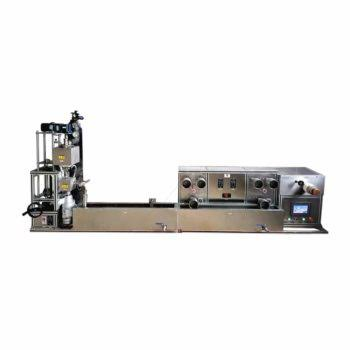
Polymer fiber research has advanced dramatically over the past few decades, and at the center of that progress is one key piece of equipment: the melt spinning machine. If your laboratory is developing new fiber materials or testing polymer formulations, here are five compelling reasons why a lab-scale melt spinning machine should be at the top of your equipment list.
1. Test New Polymers Without Large Batch Commitments
One of the biggest challenges in polymer research is that industrial-scale spinning equipment requires large volumes of material to operate efficiently. A lab-scale melt spinning machine, on the other hand, can process small amounts of polymer — sometimes just a few grams — which is ideal when working with novel, experimental, or expensive compounds.
The FYI Tester DW7090A, for example, is specifically designed for small-batch and research applications, making it the preferred choice for universities and R&D institutions.
2. Precise Temperature Control Ensures Reproducible Results
Fiber quality is highly sensitive to processing temperature. A good melt spinning machine must maintain consistent temperatures throughout the melt zone. The DW7090A achieves this with a three-stage copper heating ring system and a high-precision temperature sensor with ±0.5°C accuracy, with maximum heating capacity up to 400°C.
This level of control means your experimental results are reliable, reproducible, and publication-ready.
3. Broad Polymer Compatibility
A versatile melt spinning machine should be able to handle a wide range of polymers. The DW7090A supports any polymer with a melting point below 350°C, including:
- Polyester (PET)
- Polyamide (Nylon 6, Nylon 66)
- Polypropylene (PP)
- Pitch-based materials for carbon fiber precursors
- Other experimental thermoplastic polymers
This versatility makes it one of the most flexible tools available for fiber material science.
4. Easy to Operate with PLC Touch Screen
Many laboratory instruments require specialized training or complex calibration procedures. The DW7090A simplifies operation with a PLC touch screen control panel, enabling even new users to manage the spinning process confidently. The transparent organic glass door provides real-time visual observation of the spinning process — an invaluable feature for training and troubleshooting.
5. Scalable and Expandable Design
Research needs evolve. The extensible architecture of the DW7090A means you can add modules such as a melt pump, mixing functionality, or a multi-hole spinneret die (up to 32 holes) as your research demands grow. Larger melting chambers up to 5 liters are also available upon request.