
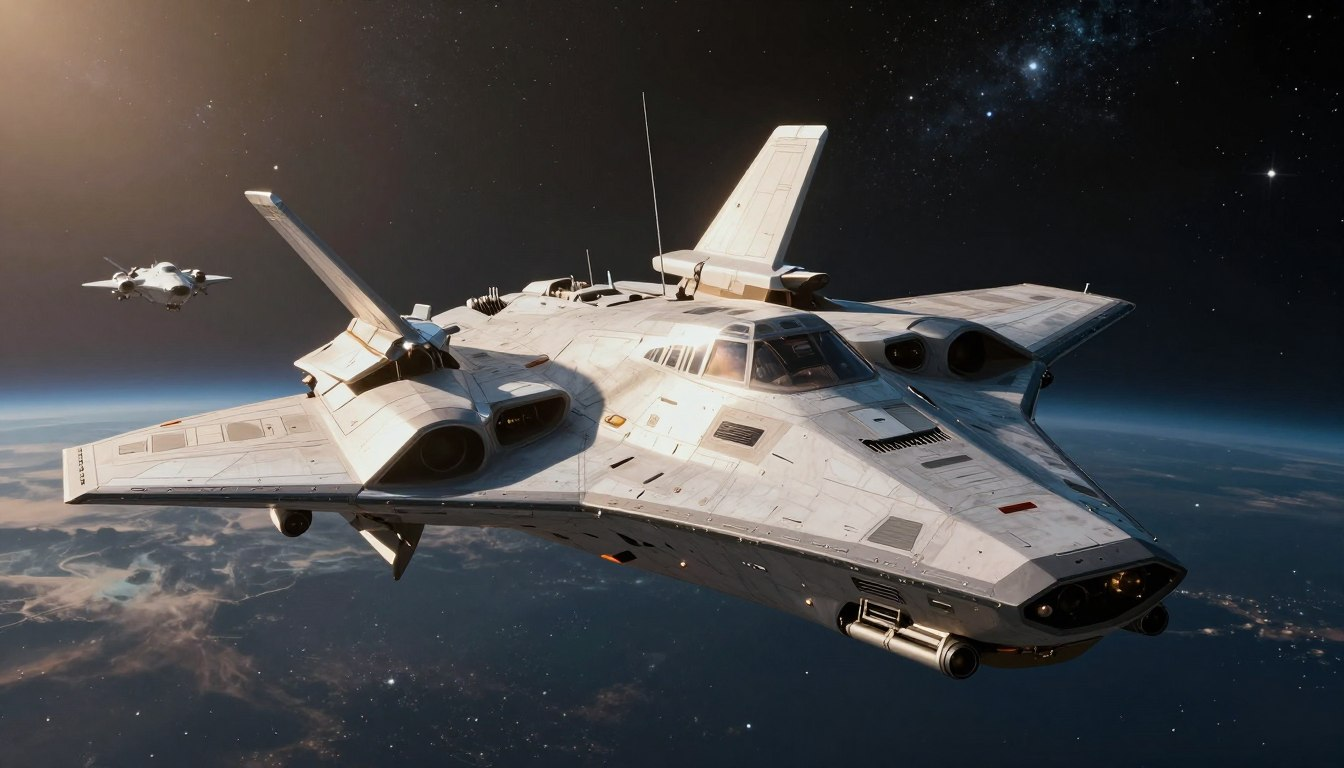
I’m excited to share the latest on the space force orbital warship carrier. It’s a big step for our national defense. These advanced platforms are a huge leap forward for our security.
Keeping a presence in low Earth orbit is now a must. These assets are key to protecting our interests in a competitive world.
I aim to explain how these tools boost space force operations. They help keep us safe from the ground to the stars. It’s amazing to see how tech meets tomorrow’s challenges.
The Emergence of the Space Force Orbital Warship Carrier
I’ve been following the military’s shift to using the space force orbital warship carrier. For years, we relied on static satellites for communication and gathering intel. These satellites were vital but couldn’t keep up with today’s fast threats.
The move to active, moving platforms is a big step up for our security. With orbital combat capabilities, we can now act fast against threats. This change is more than just tech; it’s about staying ahead in a busy, contested space.
The space force orbital warship carrier is key to our new defense plan. It lets us quickly move to protect important areas from threats. Looking at this, it’s clear we need to be able to defend space to keep things stable.
The table below shows how new platforms differ from old satellites. It shows why the military is focusing on these advanced orbital combat capabilities for our future.
| Feature | Legacy Satellite | Orbital Warship Carrier |
| Mobility | Fixed/Limited | High Maneuverability |
| Response Time | Delayed | Real-Time |
| Primary Role | Passive Monitoring | Active Defense |
| Threat Mitigation | None | Proactive Engagement |
The space force orbital warship carrier is a vital step in our defense. By adopting these new technologies, we’re ready for the challenges of space today. I believe this forward-thinking approach will shape our future security.
Core Mission Objectives for Orbital Platforms
Understanding the core mission of these platforms is key to seeing the future of military orbital defense. A space force orbital warship carrier stays watchful above our planet. This keeps our space-based assets safe from harm.
These platforms protect important things like communication satellites and navigation systems. This military orbital defense stops others from messing with our global connections. It’s a big step in keeping space stable.
The life of a space force orbital warship carrier focuses on keeping peace. They watch the skies and get ready to act fast. This helps avoid conflicts between countries.
These goals match the U.S.’s long-term security plans. It’s interesting how these missions are both ready to act and defend. These platforms are the cornerstone of our national security strategy in space, making it a place of peace and stability.
Technological Innovations Powering Modern Spacecraft
Today, I want to talk about the amazing tech that keeps our spacecraft safe. The space warfare technology has come a long way. It helps us guard our space assets better than ever before.
Integration of Laser-Based Interception Systems
One cool thing about these carriers is their laser arrays. These lasers can hit targets almost instantly. This is key in space where things move fast.
These lasers can fire many times without needing ammo. This makes it easier for our spacecraft to keep defending. I think this change to laser tech is a big deal for defense.
Kinetic Energy Projectiles for Orbital Deterrence
Lasers are good for quick shots, but kinetic energy projectiles are for keeping enemies away. They use speed to knock out threats. This way, they can stop enemies without making a mess.
Using these systems needs smart software that understands space orbits. Together, they make a strong defense that keeps enemies away. This mix is what makes our orbital combat capabilities so strong today.
These techs work together to keep our space assets safe. I’m sure these advancements will keep improving. They will help us stay safe in space for a long time.
Strategic Implications for United States Space Dominance
Looking ahead, the use of orbital assets is key for our defense. Keeping a constant presence in space is vital for protecting our interests. This shift helps us execute a strong space dominance strategy to keep our nation safe.
This strategy is not just about reacting to threats. It’s about being proactive to stop aggression before it starts. With military orbital defense, we protect our critical networks from disruption. This change is essential for understanding modern security.
The table below shows how space-based assets compare to traditional defenses. It explains why we need to move towards space-based assets to stay ahead.
| Feature | Traditional Defense | Orbital Strategy |
| Response Time | Delayed | Immediate |
| Coverage Area | Regional | Global |
| Deterrence Level | Reactive | Proactive |
| Asset Security | Vulnerable | Hardened |
The aim of our space dominance strategy is to ensure stability. By investing in military orbital defense, we show the world our infrastructure is secure. I believe these advancements will shape the future of American national security.
Operational Challenges in the Vacuum of Space
Running a ship in space is not just about power; it’s about constant space force innovation. It’s amazing how engineers tackle the harshness of space when creating these vessels. Each space warfare technology must withstand conditions that would ruin regular military gear on Earth.
Keeping things cool is a big worry for me when looking at these systems. In space, heat can’t escape like it does on Earth. So, engineers use special radiator arrays to cool down electronics during intense tasks.
Shielding against radiation is another big challenge for long-term success. Without Earth’s atmosphere, sensitive parts face constant attacks from cosmic particles. This pushes the need for space force innovation to find materials that are both light and strong against cosmic rays.
“Space is a harsh mistress that forgives no errors, and the vacuum of orbit is the ultimate test of our engineering resolve.”
Orbital maneuvering also comes with its own set of problems. Moving a big warship needs careful fuel use and detailed plans to avoid space junk. Getting good at this space warfare technology is key to keeping a strong military presence in space.
The Role of Autonomous Systems and Artificial Intelligence
The fast growth of space force operations is thanks to artificial intelligence. It’s amazing how these technologies let our space platforms make decisions on their own. This is key for staying ahead in space.
Thanks to space force innovation, we now have platforms that can handle complex tasks by themselves. They do routine jobs with great accuracy. This lets humans focus on big-picture strategies, not small details.
One big plus of this tech is how fast it can spot threats. These systems can react much quicker than humans. This is a huge advantage for space force operations, keeping our assets safe even when we can’t communicate.
I think the future of unmanned military platforms is all about combining human control with machine smarts. This space force innovation helps us project power safely. As we go on, these systems will be the heart of our space defense.
Global Reactions and the Future of Space Treaties
The fast growth of advanced space weaponry is changing how countries see space security. As these systems get better, the world is worried about space’s future. We need new ways to talk and work together because technology is moving so fast.
The rise of future space armament makes us rethink the Outer Space Treaty of 1967. Many countries want new rules to keep space peaceful. Talking openly is key to avoiding conflicts in space.
Being open is the foundation of trust in this new space era. When countries share their plans, they lower the chance of mistakes. I hope leaders focus on keeping space safe for everyone, not just for security.
“The ultimate goal of space policy should be to preserve the heavens as a sanctuary for all humanity, preventing the extension of terrestrial conflicts into the stars.”
— Anonymous Diplomatic Analyst
Now, different countries have different ideas on how to control these new tools. The table below shows the main views on advanced space weaponry and future space armament.
| Nation/Group | Primary Stance | Policy Priority |
| United States | Defensive Deterrence | Protecting Critical Infrastructure |
| European Union | Multilateral Regulation | Establishing Binding Norms |
| Emerging Space Powers | Strategic Autonomy | Ensuring Equal Access |
Finding the right balance between defense and global peace is key. I’m hopeful we can find a way to protect our interests and space exploration for all through talking and working together.
Conclusion
Orbital platforms are a big step for the United States in protecting its interests in space. They are key to a strong space dominance strategy. This strategy keeps our nation safe as technology changes fast.
The creation of these carriers is a major shift for future space defense. My look into these systems shows a focus on innovation. This keeps our military ready for new threats. We’re entering a new era where space is a main area for defense.
Think about how these advancements change our view of global stability. Keeping up with these changes helps us grasp the new face of war. Share your thoughts on how these orbital assets will shape power balances in the future.
FAQ
What exactly is the primary mission of a space force orbital warship carrier?
The main goal is to keep our nation safe in space. These carriers stay in low Earth orbit, ready to defend our interests. They’re not just passive satellites; they’re active in space operations.They keep our communication, navigation, and surveillance safe from threats in space.
How does advanced space weaponry like lasers function on these platforms?
The use of lasers on these carriers is amazing. They can disable enemy sensors or electronics with great precision. This is done using laser-based systems.They also use kinetic energy projectiles. This way, the military can fight in space without the risks of chemical explosives.
Why is military orbital defense becoming a top priority now?
Space is no longer a safe place. More countries can now attack our satellites. So, having a strong defense in space is key.Keeping control of space helps prevent wars from spreading into our atmosphere.
What role does artificial intelligence play in space force innovation?
AI is vital for space force advancements. It helps these carriers react fast to threats. This is because space is so vast and reactions must be quick.AI keeps our space defenses ahead of any enemy.
What are the biggest operational challenges when maintaining future space armament?
The biggest challenges are dealing with extreme temperatures and cosmic rays. These factors can damage even the most advanced technology.Overcoming these issues requires constant engineering breakthroughs.
How does the United States balance space dominance with international treaties?
The U.S. aims for space dominance but also follows international laws. We work within the Outer Space Treaty to ensure peaceful use of space.Being open about our space plans helps keep the world stable.
Can these carriers protect commercial assets as well as military ones?
Yes, they protect everything important in space, including commercial satellites. They act as a shield for our economy, which relies on space.This way, our global economy stays safe and uninterrupted.