
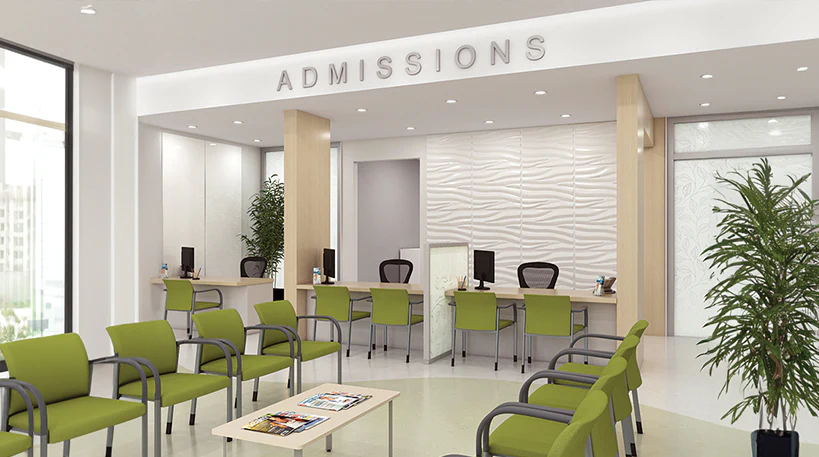
Healthcare environments are undergoing a structural shift—from purely clinical spaces to holistic, patient-centered ecosystems. In this transformation, seating is no longer a secondary furnishing element. It has become a critical component that directly influences patient comfort, operational efficiency, hygiene control, and long-term cost management.
For B2B decision-makers, interior designers, and senior living operators, the future lies in solutions that combine sustainability, durability, and emotional comfort without compromising medical-grade performance.
The Shift Toward Sustainable Healthcare Furniture Systems
Sustainability in healthcare seating is no longer defined only by recyclable materials. It now includes lifecycle performance, repairability, and long-term structural integrity under constant use.
Modern care facilities require seating that can withstand continuous disinfection, heavy occupancy, and frequent relocation without degradation. This shift is driving demand for engineered materials such as reinforced aluminum frames, antimicrobial upholstery, and low-emission foams.
Manufacturers like Yumeya Furniture are at the forefront of this evolution, developing seating systems designed for extended service life while reducing environmental impact through material efficiency and production optimization.
Sustainable seating is no longer a design trend—it is a procurement standard.
Durability as a Core Clinical Requirement
In healthcare and aged care environments, durability is directly tied to safety and operational cost control. Poor-quality seating can lead to frequent replacements, higher maintenance costs, and potential safety hazards for elderly users.
The future of healthcare seating focuses on engineered resilience. This includes:
- High-load structural frames capable of supporting long-term daily use
- Scratch-resistant and stain-resistant surfaces for infection control compliance
- Modular components that allow partial repairs instead of full replacement
Facilities are increasingly evaluating furniture not just by upfront cost, but by total lifecycle value. Durable seating systems significantly reduce downtime in common areas, ensuring uninterrupted patient and resident comfort.
Ergonomics and Aging Population Needs
As global populations age, seating design must adapt to changing mobility and physical requirements. Ergonomic precision is no longer optional—it is essential.
Key considerations include:
- Optimized seat height for easy sitting and standing
- Lumbar support tailored for long-duration comfort
- Armrests designed to assist mobility and balance
- Pressure-relief cushioning to prevent discomfort and pressure injuries
In senior living and rehabilitation spaces, well-designed seating directly contributes to independence and dignity. This aligns with the broader design philosophy of making environments feel like home, where healthcare interiors resemble familiar, comforting residential spaces rather than institutional settings.
Infection Control and Material Innovation
Post-pandemic healthcare design has permanently elevated hygiene expectations. Seating materials must now support rigorous cleaning protocols without losing structural or aesthetic quality.
Advanced upholstery technologies are shaping the future, including:
- Antimicrobial coatings that reduce surface contamination risks
- Seamless upholstery designs that eliminate bacterial trapping points
- Moisture-resistant surfaces compatible with hospital-grade disinfectants
These innovations allow facilities to maintain strict infection control standards without sacrificing warmth or visual appeal. The balance between sterility and comfort is becoming a defining factor in modern healthcare interiors.
Aesthetic Warmth in Clinical Environments
The psychological impact of interior design in healthcare settings is increasingly supported by research. Harsh, institutional environments can elevate stress levels among patients and residents, while softer, residential-inspired interiors improve emotional well-being.
Seating plays a central role in this transformation. Warm tones, wood-inspired textures, and home-like silhouettes help reduce institutional perception.
Designers are now intentionally blending functionality with hospitality-inspired aesthetics, ensuring that common areas feel welcoming while maintaining medical compliance. This dual-purpose design approach strengthens both patient satisfaction and staff engagement.
Lifecycle Efficiency and Procurement Strategy
Healthcare operators are moving toward value-based procurement models. Instead of replacing furniture every few years, institutions are prioritizing long-life seating systems that offer predictable performance over time.
Lifecycle efficiency depends on:
- Long warranty cycles supported by manufacturers
- Standardized replacement parts for easy maintenance
- Resistance to wear in high-traffic zones such as dining halls and waiting areas
This approach reduces long-term capital expenditure and supports sustainability targets, especially in large-scale senior living developments.
Conclusion
The future of healthcare seating is defined by convergence—where sustainability, durability, ergonomics, and emotional design intersect. Facilities are no longer selecting furniture based solely on aesthetics or initial cost. Instead, they are investing in long-term systems that support patient dignity, operational efficiency, and environmental responsibility.
As the industry continues to evolve, manufacturers like Yumeya Furniture are shaping a new standard—where seating is not just functional equipment, but an integral part of healing-centered, sustainable environments.