
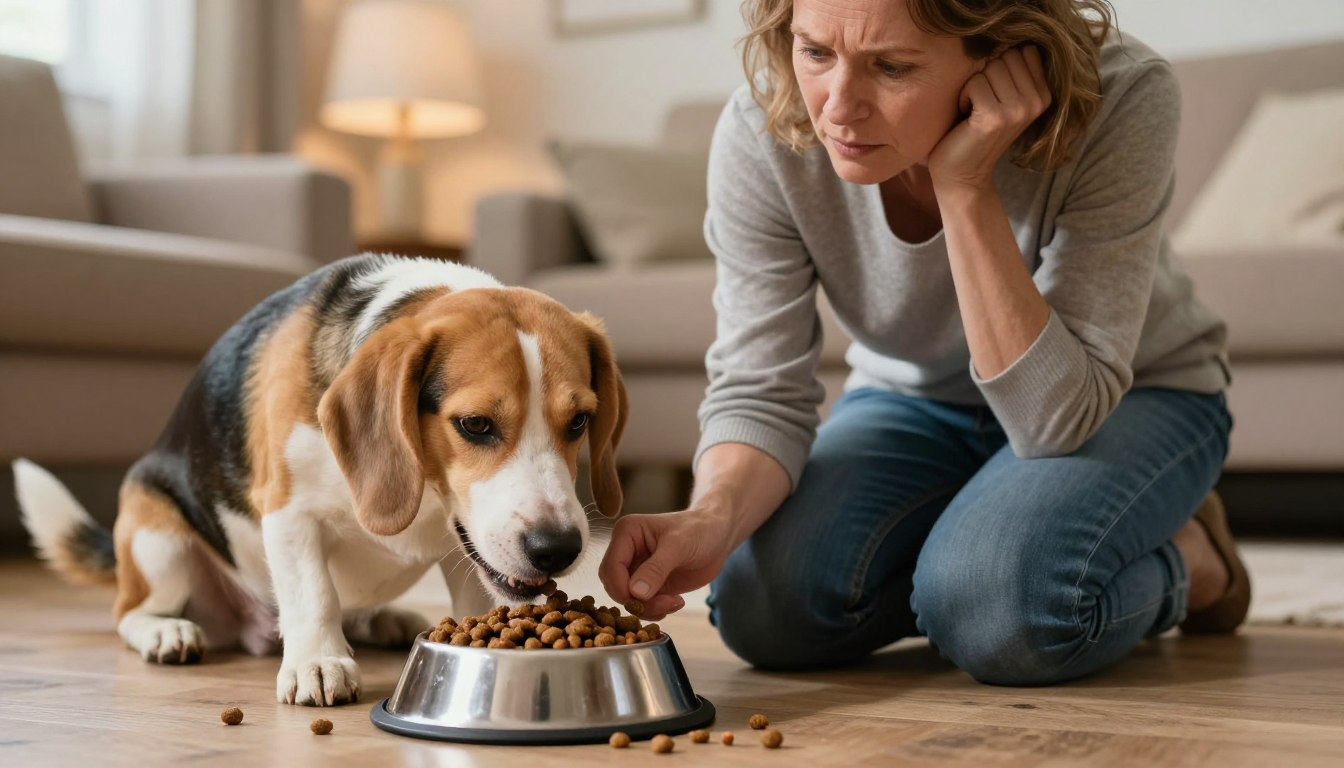
Many pet owners get worried when their dogs suddenly stop eating their regular food. It’s baffling when a dog won’t eat kibble but will gobble up a treat from your hand.
This problem can have many causes, from simple pickiness to serious health issues. Understanding the root cause is key to getting your dog’s appetite back on track.
In this guide, we’ll explore medical, environmental, and behavioral reasons for this issue. By spotting these patterns, you can help your pet get back to their best.
Key Takeaways
- Sudden appetite changes often indicate underlying health issues that require veterinary attention.
- Environmental stress or anxiety can significantly impact a pet’s desire for standard meals.
- Behavioral habits, such as learned pickiness, frequently cause pets to hold out for tastier snacks.
- Consistent feeding schedules help establish healthy routines and monitor intake levels.
- Consulting a professional ensures you address specific nutritional needs safely.
Understanding the Behavioral Shift in Canine Eating Habits
Why does my dog ignore his dinner but wait eagerly for treats? This is a common problem that makes us worry about our pets’ health and our feeding methods. When your dog not eating food, it’s normal to worry about his health.
The Difference Between Hunger and Preference
It’s important to tell if your dog is really hungry or just prefers tastier snacks. A hungry dog will eat what you give him if he’s healthy. But a picky dog eater might hold out for better rewards.
Our reactions can make our dogs picky. If we give them treats when they don’t eat their kibble, we’re teaching them to be picky. This can make them choosey eaters.
When Picky Eating Becomes a News-Worthy Concern
Some dogs are naturally picky, but sometimes it’s a sign of a bigger problem. If your dog skips meals for more than 24 hours or seems tired, see a vet. A dog not eating food might hide health issues.
Finding out why your dog is picky is key to fixing the problem. Watch if the behavior is just sometimes or all the time. The table below helps tell if it’s just a preference or a health issue.
| Behavioral Sign | Likely Cause | Recommended Action |
| Eats treats but ignores kibble | Learned preference | Limit extra rewards |
| Refuses all food for 24+ hours | Potential illness | Consult a veterinarian |
| Picks at food but remains active | Minor digestive upset | Monitor for 12 hours |
| Sudden change in appetite | Systemic health issue | Immediate medical check |
Why Is My Dog Not Eating His Food But Will Eat Treats
It’s puzzling when a dog turns down kibble but can’t resist treats. Many pet owners wonder, “Why is my dog not eating his food but will eat treats?” when their dog becomes picky.
The Biological Allure of High-Value Rewards
Dogs are naturally drawn to foods high in calories. This is because treats have more fat and protein than regular kibble. So, a tasty treat is much more appealing than a usual meal.
Your dog is following an instinct to choose the most rewarding food. When they get a treat, their brain gets a dopamine boost. This makes them want that treat even more.
The Role of Palatability in Commercial Dog Food
The preference for treats over kibble often comes down to how they’re made. Treats have added flavors and textures that dogs find irresistible.
Kibble, on the other hand, is made for long-term health, not for immediate taste. Even though it’s nutritious, it can’t match the smell and feel of a special treat.
Behavioral Conditioning and the Treat-Seeking Cycle
If your dog only eats treats, it might be because they’ve learned to wait for better food. Every time they get a treat instead of their meal, they learn it’s worth it.
“Behavior is shaped by its consequences, and dogs are masters at learning which actions lead to the most desirable outcomes.”
This behavior can be hard to break. It takes patience and consistency to teach your dog that their regular food is the best choice.
Medical Red Flags That Require Immediate Veterinary Attention
When your dog is not eating food, it’s easy to think they’re just being picky. But, it’s important to check their health first. Sometimes, a hidden health issue is the real reason for their change in eating habits.
Identifying Underlying Dental Pain and Oral Issues
One common reason for a dog refusing to eat is dental pain. Broken teeth, abscesses, or severe gingivitis can make chewing painful. They might show excitement to eat but then pull away when it hurts.
Look for signs of redness, swelling, or bad breath in their mouth. If they prefer soft treats over hard kibble, dental pain is likely. This needs a vet’s check-up.
Gastrointestinal Distress and Nausea Indicators
Nausea is a big reason for dog appetite problems. An upset stomach makes them avoid food to prevent more pain. Watch for signs like excessive drooling, lip licking, or swallowing a lot.
Vomiting or diarrhea are clear signs your pet needs help. Even without these signs, a lethargic or hunched dog might have abdominal pain. Please don’t ignore these signs, as they can lead to dehydration quickly.
Systemic Illnesses That Suppress Appetite
More serious conditions can also make a dog refusing to eat. Kidney, liver, or metabolic problems can make them feel unwell. When the body is fighting an internal battle, they often lose their appetite.
If your pet hasn’t eaten in over 24 hours, get vet care. Persistent dog appetite problems are not something to handle at home. A blood panel or physical exam can help figure out what’s wrong.
Environmental and Psychological Triggers for Food Refusal
Pet parents know that pets are very sensitive to their home’s energy. When a dog refusing to eat happens, it’s not just about the food. Their behavior shows what’s going on in their environment.
Stressors in the Home Environment
Big changes in your home can really upset a sensitive pet. Moving to a new house or loud renovations can make them very uneasy. Even small changes, like rearranging furniture or having lots of guests, can cause feeding problems.
Changes in Routine or Household Dynamics
Dogs like things to be the same every day. When a new family member comes or a caregiver’s schedule changes, they feel insecure. This can make them not want to eat, as they’re too busy watching the changes.
Getting a new pet can also make a dog stop eating. They might feel their place or territory is being threatened. Being patient during these times helps them feel secure again.
Anxiety-Induced Appetite Suppression
Anxiety can make a dog not want to eat. When they’re anxious, their body focuses on survival, not digestion. This is why some dogs stop eating when they’re stressed or in a chaotic environment.
If you think stress is the problem, try making mealtime calm and quiet. Reduce distractions and keep the routine gentle. This can help lower their anxiety and get them back to eating normally.
The Impact of Human Interaction on Feeding Patterns
How we interact with our dogs affects their eating habits. Giving them treats to show love can harm their health. Changing our daily routines can help them eat better.
Accidental Reinforcement of Selective Eating
When dogs don’t want their kibble, we often give them treats. This accidental reinforcement teaches them to wait for better food. If your dog only eats treats, they see regular food as optional.
To break this cycle, be consistent. Remove the bowl after 15 minutes if they don’t eat. This shows them mealtime is a set time, not a buffet.
The Dangers of Table Scraps and Human Food
Sharing human food might seem like bonding, but it’s harmful. Human food is tastier and has more calories than dog food. Once dogs taste it, they might not like their regular food as much.
“The most common cause of a dog’s refusal to eat their own food is the frequent availability of high-value human snacks that disrupt their natural appetite.”
Table scraps can also upset their diet and cause health issues. It’s important to keep human food separate from their regular meals.
Establishing Healthy Boundaries During Mealtime
Setting clear rules is key. Keeping the kitchen closed during meals stops begging. A predictable routine helps your dog feel secure and hungry at the right times.
| Habit Type | Impact on Appetite | Recommended Action |
| Frequent Table Scraps | High (Negative) | Eliminate entirely |
| Scheduled Feeding | Low (Positive) | Maintain strict times |
| Free-Feeding | Moderate (Negative) | Use portion control |
| Treat Training | Low (Neutral) | Limit daily intake |
Your dog needs your guidance for a balanced life. Sticking to these boundaries keeps them healthy and happy with their regular food.
Strategies for Transitioning Back to Balanced Nutrition
Helping a picky dog eater get back to normal eating needs patience and a plan. First, make sure there’s no health issue. Then, focus on getting your pet to eat from their main bowl again. Being consistent is key.
Implementing the Tough Love Feeding Method
The “tough love” method is a well-known way to fix dog feeding issues. You give your dog their meal for 15 to 20 minutes. If they don’t eat, you take the bowl away without making a big deal.
This teaches your dog that food is only available at certain times. It’s important to stay calm during this time. Your dog might try to wait for you to give in. But, their hunger will win out in the end.
Enhancing Kibble Appeal Without Creating Bad Habits
At times, a dog just needs a little push to eat their dry food. You can make their bowl more appealing without always feeding them by hand or giving them human food. The trick is to keep these extras simple and healthy.
Using Warm Water or Low-Sodium Broth
Adding a bit of warm water to dry kibble can make it smell better. This trick often makes the food more appealing to a dog with a sensitive nose. If you use broth, make sure it’s low-sodium and free of onions or garlic, which are bad for dogs.
Incorporating Healthy Toppers Sparingly
You can also add small, healthy toppings to make the bowl more interesting. A spoonful of plain, cooked pumpkin or a few blueberries can add variety without upsetting their diet. Remember to use these sparingly so your dog doesn’t ignore their main kibble for the extras.
Recent Veterinary Guidelines on Canine Nutritional Health
When you see dog appetite problems lasting, it’s wise to check the latest vet research. Keeping up with current guidelines helps you choose the best for your pet’s health. Always trust vet advice over online stories.
Consulting Professionals Before Changing Diets
Before changing your dog’s food, talk to your vet first. They can tell if it’s just a preference or a health issue. A vet can make sure any diet change is safe and right for your dog’s needs.
Monitoring Weight and Body Condition Scores
Watching your dog’s health is as key as their diet. Vets use a Body Condition Score (BCS) to check if your dog is the right weight. You can learn to do these checks at home to spot any weight changes.
When to Switch to Specialized Veterinary Diets
For dogs with ongoing health problems, regular food might not be enough. If your vet finds a health reason for your dog’s dog appetite problems, they might suggest a special diet. These diets are made for conditions like kidney disease or food allergies. Always follow your vet’s transition plan to help your dog get used to the new food.
Conclusion
Seeing your dog turn away from food can be upsetting. You want the best for them, but it’s hard to break the cycle of treats over balanced meals.
Patience is key in this situation. Watch your dog closely to see if they just prefer snacks or if there’s a health issue. Making small changes in your routine can make a big difference for their health.
Talking to your vet can help clear up any health concerns. They know what’s best for your dog based on their breed and age. Follow their advice to get back to a regular feeding schedule.
Being calm and consistent helps your dog feel secure at mealtime. By setting clear rules and choosing high-quality food, you help them live a healthier life. Your hard work ensures they stay happy and healthy for years.
FAQ
Why is my dog not eating his food but will eat treats?
Dogs often prefer treats over regular food because of their high value. Treats like Zuke’s Mini Trees or Blue Buffalo Wilderness Trail Treats have more fat and salt. This makes them more appealing than kibble.If your dog only eats treats, they might be waiting for the “good stuff.” This creates a cycle where they learn to refuse meals for tastier alternatives.
Is my dog a picky dog eater or is there a medical reason for the refusal?
It’s important to tell if your dog is picky or has a health issue. If they’re active and loves treats but won’t eat kibble, they might just be picky. But, if they’re tired or won’t eat at all, it could be a health problem.Health issues like dental pain or nausea could be the reason. A vet visit is needed to find out.
How can I break the treat-seeking cycle and fix these dog feeding issues?
Use the tough love feeding method. Put their bowl down for 15 minutes and then take it away, no matter what. Don’t give them snacks or table scraps between meals.This teaches them that their regular food, like Hill’s Science Diet, is what they should eat. Most dogs won’t starve themselves and will start eating their meals again once they realize there are no more treats.
What are the environmental triggers that might lead to a dog not eating food?
Dogs are very sensitive to their environment. Changes like moving or a new baby can make them lose interest in food. These are psychological issues.To help, create a calm and consistent routine. This makes them feel secure and helps them eat again.
Can I add toppers to make their regular kibble more appealing?
Yes, but be careful not to encourage picky eating. Add a splash of warm water or a low-sodium topper like Brutus Broth to make kibble smell better. This improves their food preference without changing the nutrition too much.The goal is to make their regular diet more appealing, not to wait for human food.
When should I consult a professional about my dog’s appetite?
Call your vet if your dog won’t eat for more than 24 hours. It’s urgent if they lose weight or don’t even want treats. A vet can check for health issues and suggest a special diet if needed.