
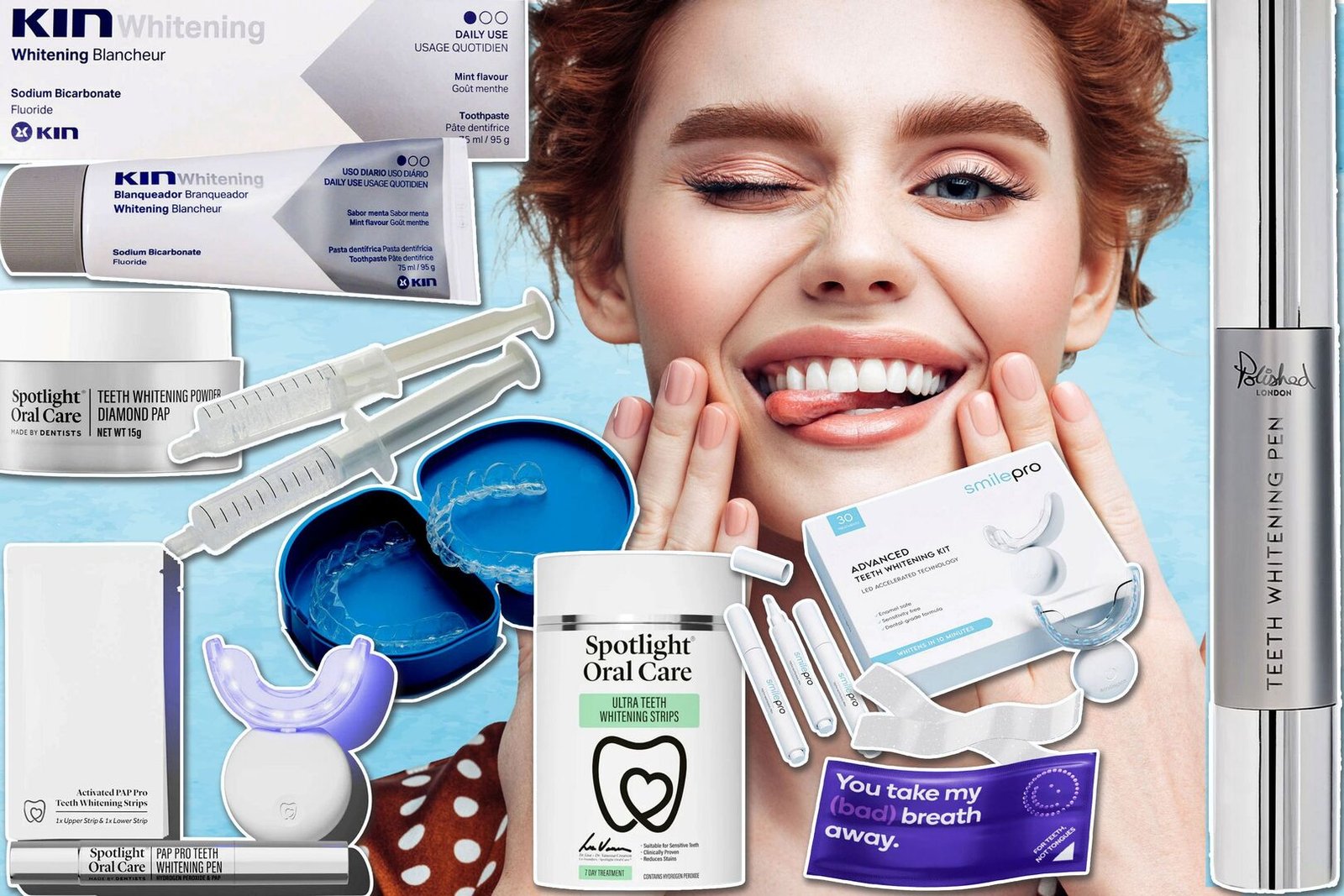
At-home teeth whitening kits sold legally in the UK must contain 0.1% hydrogen peroxide or less, which limits how much they can lift a shade. Kits that promise dramatic change usually breach UK rules or rely on abrasives. A dentist-supervised tray system remains the safer route to genuine whitening.
What UK law actually says
According to the General Dental Council, tooth whitening is the practice of dentistry. Only registered dental professionals can legally provide whitening that uses or releases more than 0.1% hydrogen peroxide. Anyone else doing so — a salon, a beauty bar, a mobile technician — is committing a criminal offence under the Dentists Act 1984.
That 0.1% ceiling applies to what’s sold direct to consumers. A dentist can prescribe and supervise products up to 6% hydrogen peroxide (or the equivalent in carbamide peroxide, which breaks down to about a third of its labelled strength) under the EU Cosmetic Products Regulation, retained in UK law.
This is what’s legal off the shelf. This is not a green light to chase imported “professional strength” kits sold through marketplaces — those usually sit at 12% to 35% peroxide and breach the supply rules outright.
The categories of kit you’ll see online
The market splits into four loose groups. Each carries a different risk profile.
| Category | Typical active ingredient | Legal in UK retail? | Realistic result |
| LED tray + low-peroxide gel | ≤0.1% hydrogen peroxide | Yes | Mild surface lift over 2–4 weeks |
| Whitening strips (UK-compliant) | ≤0.1% hydrogen peroxide | Yes | Mild surface lift over 2–3 weeks |
| Charcoal or “natural” pastes | Activated charcoal, baking soda | Yes, but abrasive | Surface stain only; enamel wear risk |
| Imported high-strength kits | 10–35% peroxide | No — illegal supply | Faster change, high burn/sensitivity risk |
The first two categories are what most UK pharmacies actually stock. The third is everywhere on social media. The fourth shows up on cross-border marketplaces and is the source of most horror stories.
Where home kits go wrong
The Oral Health Foundation has tracked rising complications from DIY whitening for years. According to the Oral Health Foundation, home users routinely report chemical burns to the gums, blistering of the lip, and lasting hypersensitivity — typically traced back to ill-fitting trays, high-peroxide imports, or applying product over untreated decay.
Three failure modes account for most cases:
- Tray fit. A boil-and-bite tray rarely sits as tightly as an impression-made one. Gel leaks onto gum tissue and causes chemical irritation.
- Concentration creep. Buyers chase faster results, then double up on application time or stack products. Both raise sensitivity sharply.
- Underlying problems. Cavities, cracked enamel, exposed root surfaces and gum recession all let peroxide reach the nerve. Whitening over these does damage, not aesthetics.
According to the British Dental Association, the Association continues to warn that illegal tooth whitening in non-dental settings is a public health issue, with cases prosecuted by the GDC most years.
Ingredients to watch for
A legal UK kit ought to declare its active ingredient and concentration on the pack. If the box hides this, treat it as a red flag.
| Ingredient | What it does | Verdict |
| Hydrogen peroxide (≤0.1%) | Mild oxidising agent that breaks down chromogens | Acceptable for retail |
| Carbamide peroxide (≤0.3%) | Releases hydrogen peroxide more slowly | Acceptable for retail |
| PAP (phthalimidoperoxycaproic acid) | Peroxide-free oxidiser used in newer kits | Lower sensitivity, modest results, evidence base still maturing |
| Sodium chlorite + citric acid | Produces chlorine dioxide; can soften enamel at low pH | Avoid |
| Activated charcoal | Abrasive scrub for surface stains | Use sparingly; not a whitener |
PAP-based kits have gained traction because they sit outside the peroxide rule and produce less sensitivity. Reviews in the dental literature suggest they’re gentler but slower, and don’t match supervised peroxide whitening for shade change.
Charcoal is an abrasive surface scrub. Charcoal is not a whitener — it removes the day’s tea film, then keeps grinding away at enamel if used nightly.
A safer at-home routine
If you’ve decided to try a high-street kit, sequencing matters more than the kit itself.
- Book a check-up first. Treat any decay or gum inflammation before whitening anything.
- Use a sensitivity toothpaste containing potassium nitrate or stannous fluoride for two weeks before starting.
- Follow the kit’s full time — not double, not “just five more minutes”.
- Skip dark food and drink for an hour after application; the enamel pellicle is rebuilding and stain-prone.
- Stop and seek advice if gums whiten, burn or peel.
For perspective on what supervised treatment costs against the kit aisle, this breakdown of professional teeth whitening price sets out current UK ranges for in-chair and take-home tray systems.
When to call a dentist
Some cases are simply outside the scope of any kit. According to the NHS, only a regulated dental professional should carry out tooth whitening, and certain causes of discolouration won’t respond to surface treatment at all.
Book a consultation if any of the following apply:
- You have crowns, bridges, veneers or composite bonding (they don’t whiten).
- One tooth is markedly darker than its neighbours (likely internal cause).
- You’ve had previous root canal treatment on a visible tooth.
- Sensitivity flares with cold air or sweet drinks.
- You’ve already tried a kit and seen no shift.
A practice-based assessment can also confirm whether the discolouration is extrinsic (on the surface, treatable) or intrinsic (within the tooth, needing different care). A local clinic such as a dentist in Fulham can run that assessment quickly.
FAQs
Are at-home teeth whitening kits legal in the UK? Yes, provided they release no more than 0.1% hydrogen peroxide. Anything stronger may only be supplied under the supervision of a registered dental professional.
Can high-street whitening kits damage enamel? At legal UK concentrations, enamel damage is rare. Risk rises sharply with imported high-peroxide kits, with charcoal pastes used daily, and with low-pH chlorite formulas.
How long do at-home kits take to work? Plan for two to four weeks of nightly use to see a one- to two-shade lift. Supervised in-chair whitening typically achieves more in a single appointment.
Are whitening strips safer than gels? At the same active concentration, the two behave alike. The real safety differentiator is tray fit and contact with the gums, not the format.
When should I see a dentist instead? If you have restorations on front teeth, single-tooth darkening, post-root-canal discolouration, or persistent sensitivity, an in-person assessment is the correct next step.