
Introduction
Getting dust, an eyelash, grit, pollen, make-up, or a tiny insect in your eye can feel much worse than it looks. The eye is sensitive, so even a tiny particle can cause watering, stinging, redness, blinking, and panic. Many minor cases can be handled safely at home, but only when you stay calm and avoid rough actions.
This guide explains how to get something out of your eye safely without making the irritation worse. It is written for everyday problems such as dust, lashes, or small particles. However, if something is sharp, stuck, chemical-related, or causing vision changes, you should seek urgent medical help instead of trying to remove it yourself.
How to Get Something Out of Your Eye Safely
The first thing to remember is simple: do not rub your eye. Rubbing may feel natural, but it can push the particle deeper or scratch the clear surface of the eye. Before doing anything, wash your hands properly with soap and water. Then sit in a bright place and try to check the eye gently in a mirror.
If you want to know how to get something out of your eye, start by blinking several times. Your tears are the eye’s natural cleaning system, and they may wash the particle away. If blinking does not work, rinse your eye with clean lukewarm water or sterile saline. Keep the water flow gentle, not strong or painful.
What You Should Never Do When Something Is in Your Eye
Never use tweezers, cotton buds, fingernails, tissues, or sharp objects near your eye. These can scratch the eye, spread germs, or turn a small irritation into a bigger injury. Even if you can see the particle, it is safer to rinse rather than poke or scrape at the eye.
You should also avoid using random eye drops, make-up, or contact lenses while your eye is irritated. If the object looks stuck, is painful, or came from metal, glass, wood, gardening, or DIY work, do not remove it at home. In these cases, the safest choice is professional medical care.
How to Rinse Your Eye Properly at Home
Rinsing is one of the safest methods when learning how to get something out of your eye. Use clean lukewarm water, sterile saline, or a proper eye wash solution. Tilt your head so the affected eye is lower, then allow the water to flow gently across the eye and away from the other eye.
You can use a clean cup, an eye bath, or a gentle shower stream. Hold the eyelid open carefully and let water run from your forehead over the affected eye. Avoid hot water, harsh pressure, or dirty containers. If rinsing makes the pain worse, stop and get medical advice quickly.
How to Remove an Eyelash, Dust or Small Particle

An eyelash, dust speck, or tiny bit of grit may come out naturally with blinking and tears. Look in a mirror and move your eye slowly up, down, left, and right. If the particle is under the lower eyelid, gently pull the lid down and allow water or tears to flush it out.
If the particle feels trapped under the upper eyelid, blink several times or gently pull the upper lid down over the lower lid. The lower lashes may help sweep the particle away. When thinking about how to get something out of your eye, patience is safer than force, especially with such a delicate part of the body.
What to Do If You Wear Contact Lenses
If you wear contact lenses, wash your hands and remove the lens carefully if you can do so without pain. A contact lens can trap dust, make-up, or grit against the eye, which may increase the scratchy feeling. Once removed, do not put the same lens back into an irritated eye.
Wear glasses until the redness, watering, or discomfort has fully settled. If the lens is torn or dirty, throw it away rather than reusing it. If your eye still feels painful after removing the lens and rinsing, contact an optician, pharmacist, NHS 111, or another medical professional for safe advice.
When Something Feels Stuck but You Cannot See It
Sometimes the object has already washed out, but your eye still feels gritty. This can happen because the surface of the eye may be slightly scratched. A scratch can cause watering, redness, light sensitivity, and a feeling that something is still there, even when the eye looks clear.
If you cannot see anything but the feeling remains, do not keep rubbing, lifting the eyelid, or poking the eye. Rest your eye and avoid contact lenses or make-up. Knowing how to get something out of your eye also means knowing when to stop and let a professional check it properly.
When to Get Urgent Medical Help
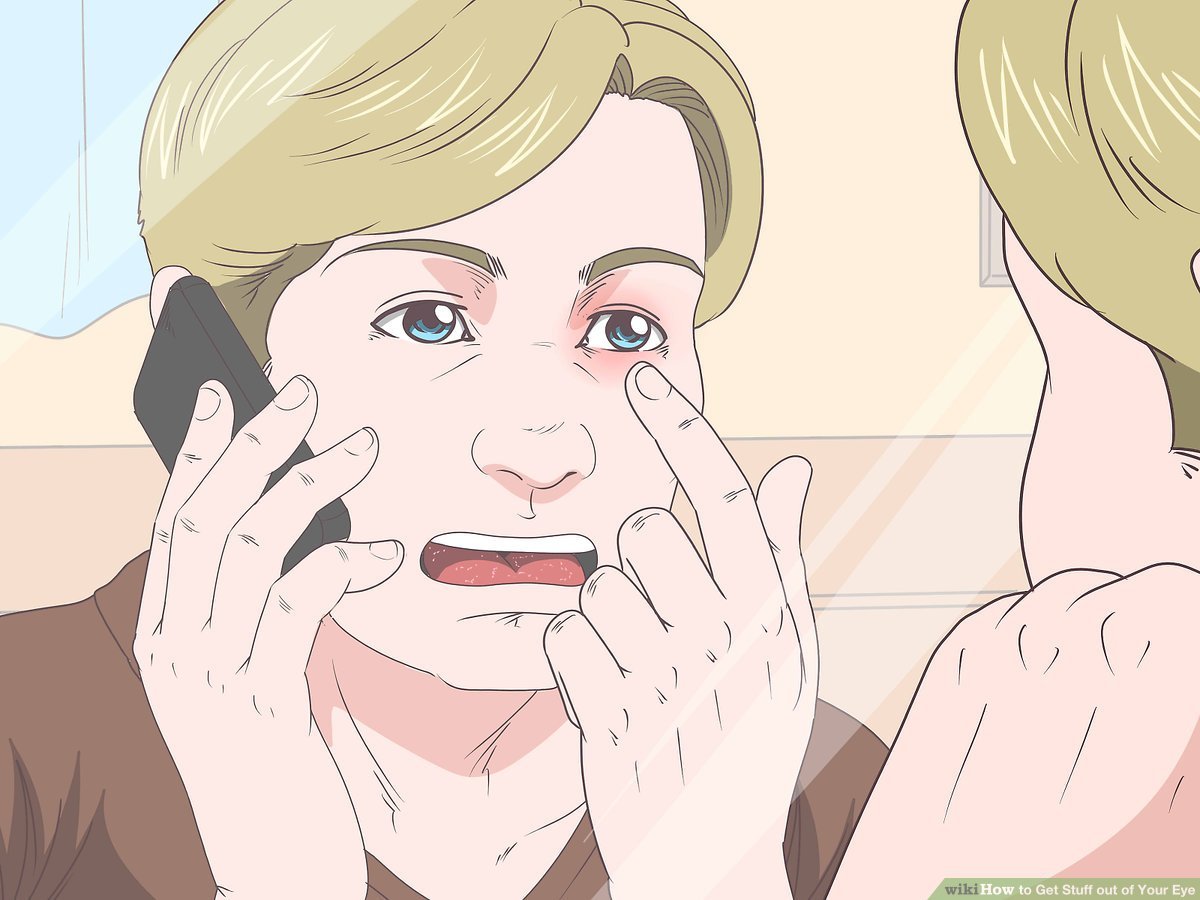
Get urgent medical help if your vision becomes blurry, the pain is severe, or the eye is bleeding, swollen, or very sensitive to light. You should also seek help if the object is sharp, embedded, or linked to chemicals, metal, glass, wood, drilling, sanding, gardening, or sports injuries.
Chemical splashes are especially serious. Rinse the eye immediately with clean water, but still get urgent medical advice. Do not cover the eye with pressure, and do not try to pull out anything stuck in it. Your eyesight is too important to risk with guesswork or rough home treatment.
How to Prevent Things Getting in Your Eye Again
Prevention is often easier than treatment. Wear safety goggles when drilling, sanding, gardening, painting, cleaning with chemicals, cycling, or working in dusty areas. Sunglasses can also help protect your eyes from wind, pollen, and flying grit when you are outdoors in the UK weather.
Good hygiene can also reduce eye irritation. Wash your hands before touching your face, remove make-up carefully, and keep contact lenses clean. If you suffer from hay fever, try not to rub itchy eyes. These small habits can reduce the chances of needing to search for how to get something out of your eye again.
Conclusion
Learning how to get something out of your eye safely is mainly about calm action. Do not rub, do not scrape, and do not use sharp tools. Wash your hands, blink, and rinse gently with clean water or sterile saline. For small particles like dust or eyelashes, this may be enough to solve the problem.
However, not every eye problem is safe to manage at home. If there is severe pain, vision change, chemical exposure, bleeding, or an embedded object, get urgent help. Your eyes are delicate, and quick professional support can prevent a minor accident from becoming a serious injury.
You May Also Read:Why is my dog panting so much while doing nothing?