
Introduction
If you have ever opened an American recipe and paused at the words all purpose flour, you are not alone. Many UK home bakers wonder whether they need a special imported ingredient or if plain flour from the local supermarket will do the same job. That small question often leads to confusion, especially for beginners who simply want reliable results from everyday recipes.
Learning what is all purpose flour can make baking far easier and more enjoyable. Once you understand how it works, you can swap ingredients with confidence, improve texture, and avoid wasted mixes. From fluffy pancakes to crisp biscuits and homemade bread, this versatile flour has earned its place as one of the most useful staples in any kitchen cupboard.
What Is All Purpose Flour
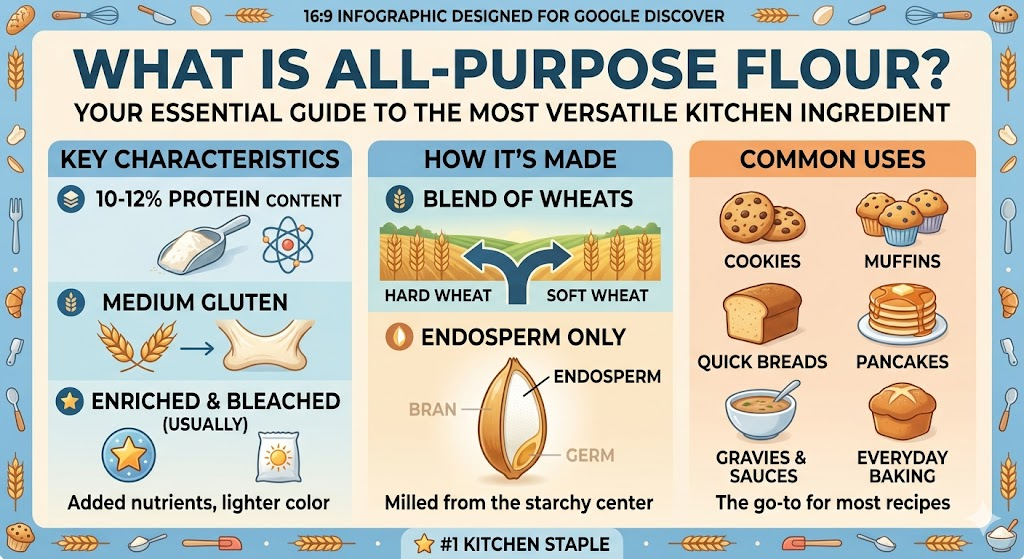
What is all purpose flour? It is a refined wheat flour created to perform well in a wide range of recipes rather than one specific task. It usually contains a moderate amount of protein, which helps it develop enough gluten for structure while still keeping cakes, cookies, and pastries pleasantly tender. That balance is the reason so many recipes depend on it.
The phrase all purpose simply means it can handle many kitchen jobs. Instead of buying separate flour for bread, sauces, biscuits, and pancakes, one bag can often do everything reasonably well. It may not always be the perfect specialist choice, but it is often the smartest and most practical choice for everyday home baking.
How Is All Purpose Flour Made
All purpose flour begins with wheat grains that are cleaned, milled, and sifted into a fine powder. During this process, the bran and germ are usually removed, leaving the soft inner part of the grain known as the endosperm. This gives the flour its pale colour, smooth texture, and longer shelf life compared with wholemeal flour.
Manufacturers often blend hard wheat and soft wheat to create a balanced product. Hard wheat brings strength and elasticity, while soft wheat helps produce lighter textures. Some flour is bleached to age it quickly and brighten its appearance, while unbleached flour matures naturally over time. Both versions can be useful depending on the recipe and personal preference.
Is It the Same as Plain Flour in the UK
For most practical baking in Britain, plain flour is the closest equivalent to all purpose flour. If an American recipe asks for all purpose flour, plain flour is usually the easiest and safest substitute. In cakes, muffins, biscuits, pancakes, and sauces, the difference is often so small that most home cooks will never notice it.
That said, there can be minor variations between brands. Some plain flours may have slightly lower or higher protein levels, which can affect chewiness or softness. However, these changes are normally subtle rather than dramatic. For everyday use, UK plain flour works extremely well and saves the trouble of searching for speciality imported products.
What Is All Purpose Flour Used For
One reason people frequently ask what is all purpose flour is because it appears in so many recipes. It is excellent for cookies, traybakes, brownies, muffins, pie crusts, and pancakes. It gives enough structure for baked goods to hold their shape, yet remains soft enough to avoid heavy or overly dense results.
Its usefulness is not limited to sweet baking. You can also use it to coat chicken or fish before frying, thicken gravies, or create a roux for creamy sauces and soups. In many kitchens, it becomes the flour used several times a week because it can adapt to breakfast, lunch, dinner, and dessert with ease.
All Purpose Flour Compared With Other Flours
Self raising flour is different because it already contains raising agents such as baking powder. If you use self raising flour in a recipe designed for all purpose flour, the result may rise too much or develop an unexpected texture. That is why checking the recipe type matters before making a simple swap.
Bread flour contains more protein, which means stronger gluten development and a chewier bite. This makes it ideal for loaves, pizza dough, and rolls. Cake flour sits at the opposite end, offering a softer, finer crumb for delicate sponge cakes. All purpose flour stands in the middle, making it the most flexible all-round option.
Best Substitutes for All Purpose Flour
If you run out of it, plain flour is the easiest replacement in the UK and will work in most recipes without major adjustments. It is widely available, affordable, and familiar to most bakers. For anyone wondering what is all purpose flour in British terms, plain flour remains the most practical answer.
If you need more chewiness for bread or pizza, strong white flour can be a better option. For softer cakes, mixing plain flour with a little cornflour can help create a lighter crumb. Gluten free flour blends are also widely sold now, giving those with dietary needs more choice than ever before.
Baking Tips for Better Results
Always measure flour carefully because too much can ruin texture faster than almost any other mistake. Scooping directly from the bag can pack flour tightly and add more than the recipe intended. Using scales is the most accurate method, especially in the UK where many recipes already list ingredients in grams.
Another useful habit is to mix only until ingredients are combined. Overmixing develops excess gluten, which can make cakes tough and pancakes rubbery. Store flour in an airtight container in a cool, dry cupboard, away from moisture and strong smells. Good storage keeps it fresher, cleaner, and ready whenever inspiration strikes.
Can You Make It at Home
You can create a homemade version by blending plain flour with a little strong white flour when you need extra strength. This can be helpful if you are preparing pizza dough or bread and only have standard cupboard ingredients available. It is a simple trick that many home bakers use when shops are closed.
While homemade blends may not perfectly match branded flour products, they can still produce excellent results. Baking is often more forgiving than people expect, and small ingredient adjustments are part of learning the craft. With a little practice, you can adapt recipes confidently and still enjoy delicious homemade food.
Why Understanding Flour Matters
Knowing your flour helps you become a better baker because texture often begins with the right ingredient choice. A heavy cake, dry muffin, or flat cookie can sometimes be traced back to flour type rather than oven temperature or mixing time. Understanding those basics turns guesswork into confidence in the kitchen.
It also saves money and cupboard space. Instead of buying every flour you see online, you can keep a sensible selection and choose wisely when needed. Once you understand what is all purpose flour, you realise it is less about branding and more about knowing how flour behaves in different recipes.
Conclusion
So, what is all purpose flour? It is a balanced, versatile flour designed to perform well across many baking and cooking tasks. It may not be the most specialised option for every recipe, but it is often the most convenient and dependable choice for busy home cooks who want consistent results.
For UK readers, plain flour is generally the nearest equivalent and works beautifully in most recipes. Whether you are baking weekend cookies, thickening a sauce, or preparing fresh pizza dough, understanding flour gives you more control and better results. A simple ingredient becomes far more powerful once you know how to use it well.
FAQs
What is all purpose flour in the UK
In the UK, plain flour is usually the closest match to all purpose flour and can be used in most recipes with excellent results.
Can I use plain flour instead of all purpose flour
Yes, plain flour is the standard substitute in Britain and works well for cakes, biscuits, sauces, pancakes, and many other recipes.
Is all purpose flour the same as self raising flour
No, self raising flour contains raising agents, while all purpose flour does not, so they are not directly the same.
Can I use all purpose flour for bread
Yes, although bread flour may give a chewier texture, all purpose flour can still make tasty and reliable homemade bread.
How should I store flour after opening
Store flour in an airtight container in a cool, dry place away from moisture, sunlight, and strong kitchen odours.
You May Also Read: Easy Elf on the Shelf Ideas for Busy Parents