
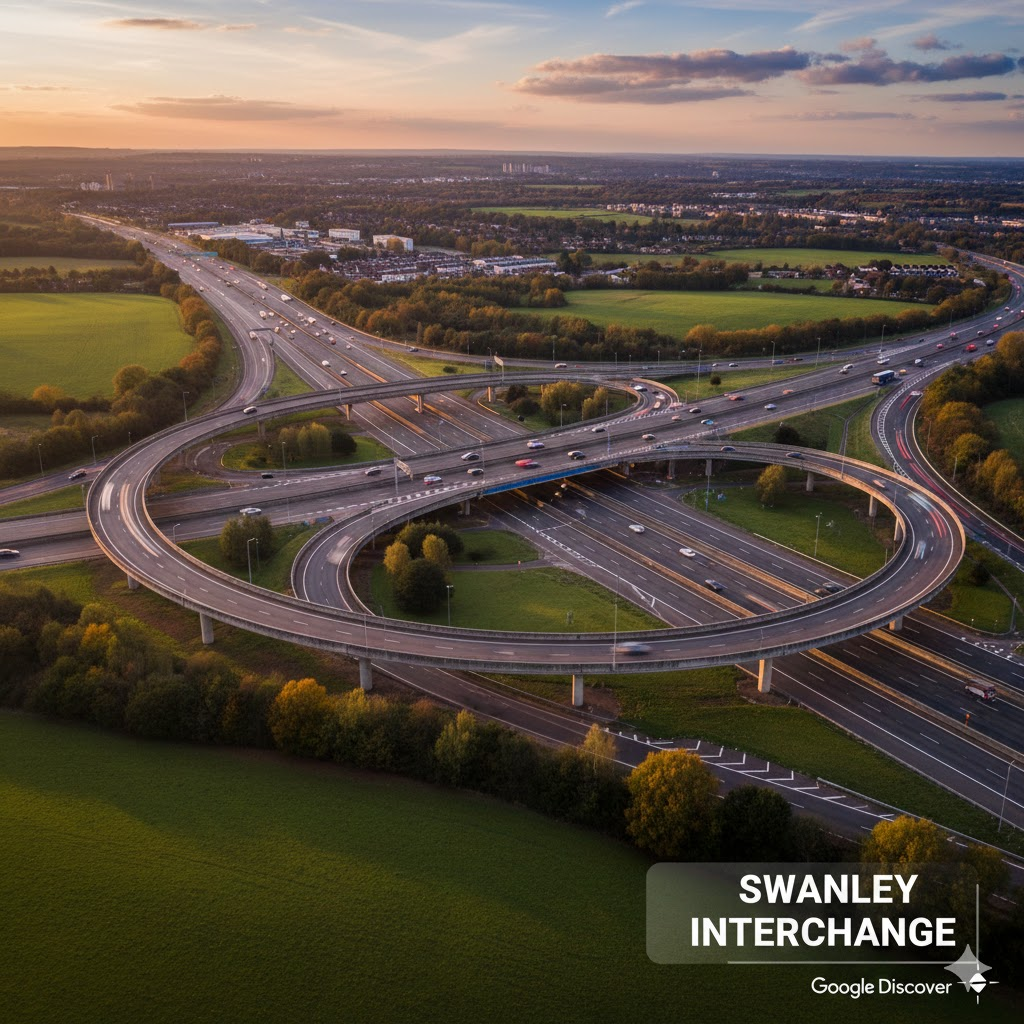
Swanley Interchange is one of the most significant motorway junctions in Kent, serving as the connection point between the M25 at Junction 3 and the M20 at Junction 1. This interchange is crucial for commuters travelling to London, drivers heading to the Kent ports, and freight vehicles moving through the South East. Its strategic position ensures it handles thousands of vehicles daily, making it a key hub in the UK road network.
Over the years, Swanley Interchange has gained attention for its complex layout, heavy traffic flow, and occasional accidents. Understanding the interchange is essential for both local drivers and long-distance travellers. With a mix of slip roads, roundabouts, and multiple junctions, navigating this interchange efficiently requires awareness and planning. This guide provides detailed information about traffic, accidents, roadworks, and local features to help drivers travel safely.
What is Swanley Interchange?
Swanley Interchange, located in the town of Swanley in Kent, is a major junction connecting three vital roads: the M25, M20, and A20. Built in 1976 and 1977 alongside the M20, the interchange was designed to facilitate smooth traffic flow between London, the South East, and the Kent ports. Its significance extends beyond daily commuters, as it is a critical part of the motorway network for both passenger and commercial vehicles.
The layout of Swanley Interchange includes a combination of slip roads, a central roundabout, and clear signage to manage traffic flow. The M25 J3 provides drivers with access around London, while the M20 J1 serves routes towards West Kingsdown and other parts of Kent. Familiarity with the interchange’s design helps reduce delays and improve safety for drivers navigating this busy junction.
Swanley Interchange Traffic Overview
Traffic at Swanley Interchange can be heavy, particularly during peak commuting hours. Morning and evening rush hours often see congestion, especially on slip roads connecting the M25 to the M20. Drivers need to plan ahead and stay aware of traffic conditions to avoid delays, as even minor incidents can quickly create bottlenecks. Real-time monitoring is essential for smooth journeys.
Local authorities provide regular updates on Swanley Interchange traffic through online maps, traffic cameras, and mobile apps. Being informed about current congestion and alternative routes can help drivers save time. Additionally, planning travel around peak periods or avoiding certain lanes can reduce stress and improve overall travel efficiency on this busy motorway junction.
Swanley Interchange Accidents
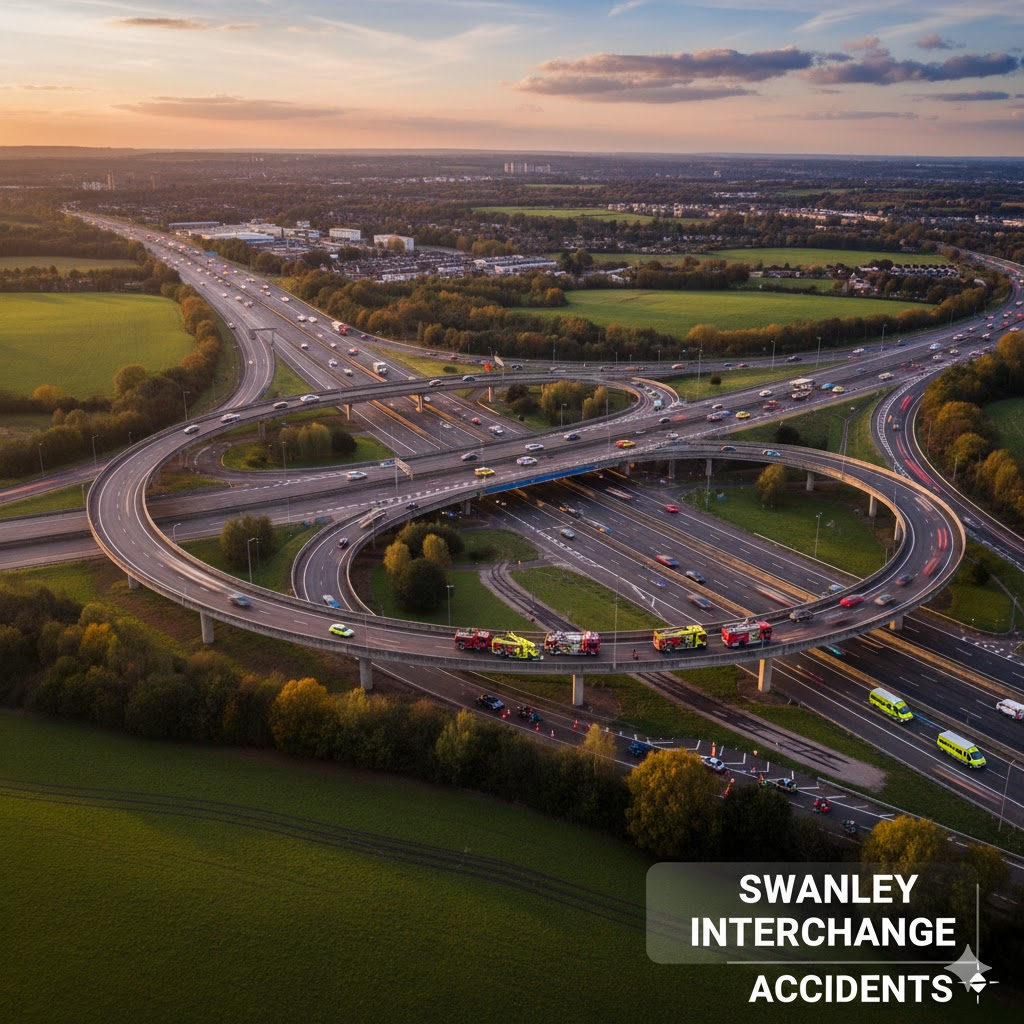
Swanley Interchange has a history of accidents, often caused by heavy traffic, lane changes, and adverse weather conditions. Collisions commonly occur on slip roads or near the central roundabout, impacting thousands of drivers. Awareness of accident-prone areas and safe driving practices can significantly reduce the risk of incidents at the interchange.
Accidents at Swanley Interchange often result in traffic delays and diversions. Minor collisions can still create long queues, while major incidents can cause significant disruption for hours. Drivers are advised to monitor local traffic news, avoid congested areas when possible, and follow road safety guidelines to minimise the impact of accidents on their journey through the interchange.
Swanley Interchange Roadworks
Roadworks are a frequent occurrence at Swanley Interchange due to maintenance, bridge strengthening, and infrastructure upgrades. These works can affect traffic flow and cause delays, particularly during peak travel times. Staying informed about roadworks helps drivers plan their journey efficiently and avoid unexpected disruptions.
Planned projects aim to improve safety and increase capacity at Swanley Interchange. Upgrades such as resurfacing, lane adjustments, and improved signage are designed to reduce congestion and enhance traffic management. Checking local authority updates on Swanley Interchange roadworks ensures drivers remain aware of closures and can choose alternate routes when necessary.
Swanley Interchange Roundabout and Local Features
The central roundabout at Swanley Interchange is a key feature, connecting multiple slip roads and major motorways. Its design allows traffic to merge smoothly, but unfamiliar drivers may find it challenging without clear signage. Knowing the correct lanes for exits is essential to avoid sudden lane changes and delays.
Local landmarks and industrial areas near Swanley Interchange also influence traffic patterns. Occasional protests or events at the junction can temporarily disrupt movement, making it important for drivers to stay alert. Being aware of these local factors ensures safer travel and better navigation through the interchange, especially during busy periods.
Tips for Drivers Using Swanley Interchange
Drivers using Swanley Interchange should familiarise themselves with its layout and plan their routes in advance. Choosing the correct lanes early, following signage, and monitoring traffic updates reduces stress and prevents accidents. Regular commuters often develop strategies to avoid congested lanes and make travel more efficient.
Public transport options near Swanley Interchange, such as train services to London and Kent towns, offer alternatives for travellers looking to bypass busy periods. Staying informed about traffic news, accidents, and roadworks ensures safe and timely journeys. Being prepared allows drivers to navigate this crucial motorway junction with confidence.
Conclusion
Swanley Interchange is a vital part of the UK motorway network, connecting the M25 J3 with the M20 J1. From traffic management and accidents to roadworks and the central roundabout, understanding this interchange is essential for all drivers. Staying informed and following travel tips ensures safer, more efficient journeys through this busy Kent junction.