
Introduction
Ski jumping is one of the most fascinating winter sports, often leaving spectators amazed at how athletes seem to float through the air for several seconds. Many people naturally ask how is it possible for ski jumpers to stay in the air so long and how do they train for that? The answer lies in a combination of physics, precision technique, and years of disciplined athletic preparation that turns human movement into controlled flight.
To truly understand the sport, it is important to realise that ski jumpers are not flying in the traditional sense. Instead, they are carefully managing speed, body position, and airflow to extend their airtime. The question how is it possible for ski jumpers to stay in the air so long and how do they train for that? can only be answered by exploring both the scientific principles and the extreme level of training behind every jump.
Physics behind ski jumping
The science of ski jumping is rooted in aerodynamics and motion. When an athlete leaves the ramp, gravity immediately pulls them downward, but forward momentum keeps them moving through the air. This balance between forces creates a gliding effect rather than a simple fall. This is a key reason behind how is it possible for ski jumpers to stay in the air so long and how do they train for that?
Air resistance also plays a major role in extending flight time. Ski jumpers position their bodies to reduce drag while maximising lift, allowing them to remain airborne longer than expected. The carefully designed trajectory of the jump ensures that their path follows a smooth curve, making it appear as though they are floating rather than descending quickly.
Lift and the V-style technique
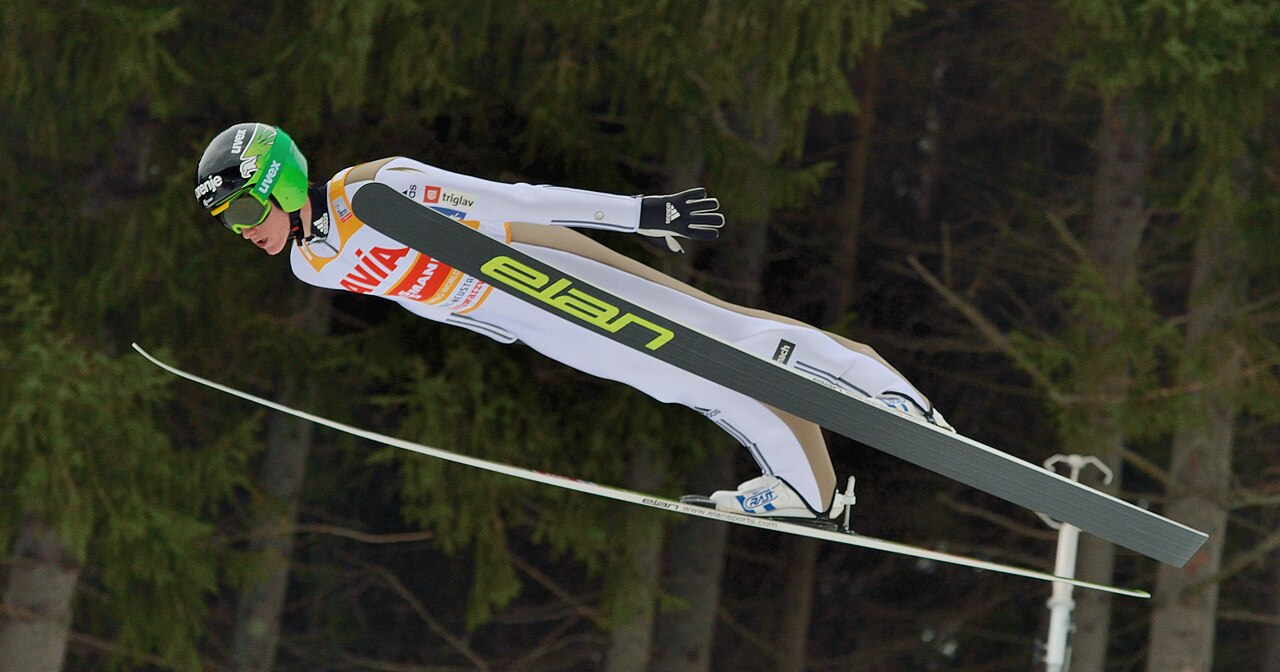
One of the most important breakthroughs in ski jumping is the V-style technique, where athletes position their skis in a wide V shape. This increases surface area and creates greater lift, similar to an aircraft wing. It is a crucial part of understanding how is it possible for ski jumpers to stay in the air so long and how do they train for that?
The skier’s body also works as part of an aerodynamic system. Leaning forward, keeping arms tight, and maintaining balance helps reduce air resistance. Even small adjustments can significantly change distance and stability. This refined positioning is what allows athletes to maximise their time in the air while maintaining control.
Speed and the role of the jump ramp
Speed is one of the most important factors in ski jumping performance. Athletes can reach extremely high speeds before take-off, converting that energy into distance once they leave the ramp. This is a key reason behind how is it possible for ski jumpers to stay in the air so long and how do they train for that?
The design of the ski jump ramp is also essential. It is carefully engineered to guide athletes into flight smoothly rather than abruptly launching them. The curved in-run and take-off point allow skiers to transition seamlessly into the air, helping extend their glide and improve overall performance.
Body positioning and mid-air control
Once airborne, ski jumpers must maintain precise control over their bodies to ensure maximum distance and stability. Every movement is intentional, from ski angle to torso alignment. This level of control plays a major role in answering how is it possible for ski jumpers to stay in the air so long and how do they train for that?
Athletes constantly make small adjustments mid-flight to respond to wind conditions and balance shifts. Their ability to stay stable in unpredictable air currents comes from years of practice. Without this fine-tuned control, even the best jump could result in a shorter distance or unstable landing.
Training methods of ski jumpers
Training for ski jumping is highly specialised and combines strength, coordination, and technical skill. Athletes focus heavily on explosive leg power for take-off, as well as strong core muscles for maintaining stability in the air. This training is essential for understanding how is it possible for ski jumpers to stay in the air so long and how do they train for that?
Modern training also includes advanced tools such as trampolines, wind tunnels, and virtual simulation systems. These allow athletes to practise flight positions safely and repeatedly. Video analysis is also widely used to correct posture and improve technique, ensuring consistent performance during competition.
Safety, myths, and evolution of ski jumping
Many people assume ski jumpers are truly flying, but in reality, they are expertly controlling a long and efficient glide. The landing slope is designed to match their trajectory, reducing impact and improving safety. This helps explain how is it possible for ski jumpers to stay in the air so long and how do they train for that?
Over the years, ski jumping has evolved significantly. The introduction of the V-style technique revolutionised the sport, allowing athletes to achieve longer distances than ever before. Improvements in equipment, training methods, and hill design have all contributed to safer and more impressive performances.
Conclusion
Ski jumping is a unique combination of science, athletic skill, and precision engineering. It is not about flying in the traditional sense, but about controlling aerodynamics, speed, and body position to extend time in the air. Understanding how is it possible for ski jumpers to stay in the air so long and how do they train for that? reveals just how much discipline and science go into every jump.
Ultimately, ski jumpers achieve what looks like flight through carefully mastered techniques and advanced training systems. Their ability to remain airborne is the result of physics working in harmony with human skill, making it one of the most extraordinary sports in the Olympic Games.
FAQs
Why do ski jumpers stay in the air so long?
Ski jumpers stay in the air due to a combination of speed, aerodynamics, and body positioning. Their movements reduce air resistance while increasing lift, allowing them to glide over long distances before landing.
Do ski jumpers actually fly?
No, ski jumpers do not fly in the scientific sense. They are performing a controlled glide, where gravity, lift, and speed work together to extend airtime.
What is the V-style technique?
The V-style technique involves positioning skis in a V shape to increase surface area and generate more lift. This helps athletes stay in the air longer and achieve greater distances.
How do ski jumpers train for competition?
Training includes strength exercises, trampoline practice, wind tunnel sessions, and video analysis. These methods help athletes refine technique and improve air control.
Is ski jumping dangerous?
While ski jumping may look extreme, it is carefully designed for safety. Landing slopes, protective gear, and advanced training reduce the risk of serious injury.
You May Also Read: When Something Feels Stuck but You Cannot See It