
Introduction
Walk into any supermarket and you may notice how one ingredient can wear different names depending on the country, the recipe book, or the website you are reading. That is exactly why so many people ask whether bicarbonate of soda and baking soda are the same thing. It sounds like a trick question, yet it matters greatly when you want cakes to rise properly or cleaning jobs to work as expected around the home.
The simple answer is yes, but there is more to understand if you want confidence in the kitchen. Many people also confuse this product with baking powder, which creates even more uncertainty. In this guide, you will learn the truth behind the names, how the ingredient works, where it is used, and how to avoid common mistakes that can spoil your recipe or waste your time.
What Is Bicarbonate of Soda
Bicarbonate of soda is the common UK name for sodium bicarbonate, a fine white powder with many practical uses. It is most famous for baking, where it acts as a raising agent and helps mixtures become lighter and softer. However, its talents go far beyond cakes and biscuits, making it one of the most versatile products you can keep in your cupboard.
In everyday life, bicarbonate of soda is also used for cleaning, deodorising, and freshening household spaces. It can help remove unpleasant smells from fridges, shoes, carpets, and bins, while also assisting with gentle scrubbing tasks. Because it is inexpensive, easy to store, and widely available, many households consider it a small product with surprisingly big value.
What Is Baking Soda
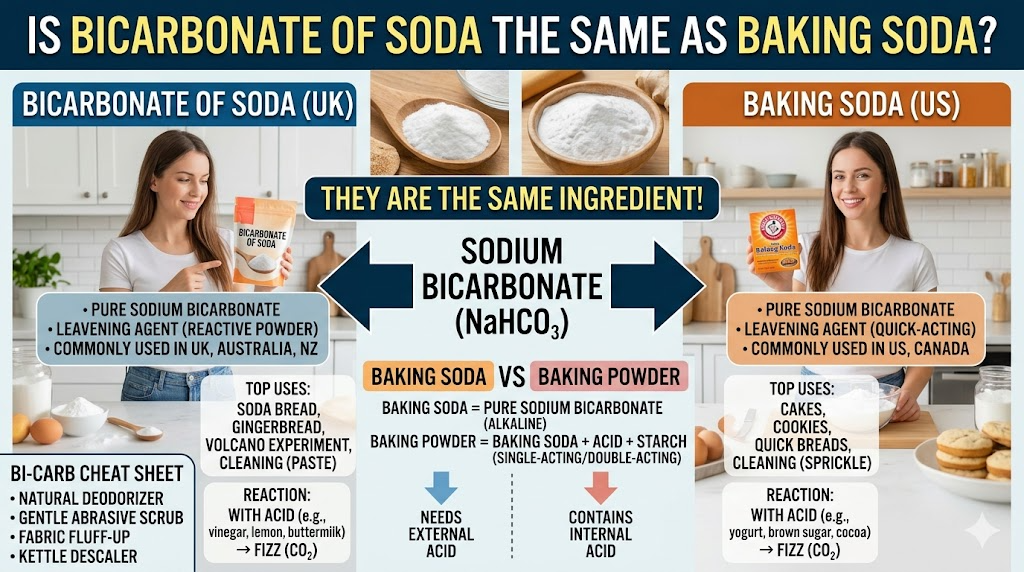
Baking soda is simply the name most commonly used in the United States for the exact same substance. If you open an American cookbook or follow an online recipe from the US, you will almost always see the words baking soda rather than bicarbonate of soda. This difference in wording often creates confusion for people trying recipes from abroad.
The important point is that the powder inside the packet remains the same. There is no secret formula, no stronger version, and no hidden extra ingredient. It is still sodium bicarbonate, and it performs the same role when used in baking or household tasks. Once you know this, international recipes become much easier to follow without second guessing every ingredient list.
Is Bicarbonate of Soda the Same as Baking Soda
Yes, bicarbonate of soda and baking soda are the same product. If you have searched this question before starting a recipe, you can relax. They are two names for sodium bicarbonate, and they can be used in exactly the same way. The only real difference is the region where the term is commonly used, not the ingredient itself.
This naming variation happens with many food items around the world. Just as some countries say aubergine while others say eggplant, baking soda and bicarbonate of soda reflect local language habits. Understanding this small detail saves money, avoids duplicate purchases, and helps you use recipes from different countries with far more confidence and success.
The Difference Between Bicarbonate of Soda and Baking Powder
Although bicarbonate of soda and baking soda are identical, baking powder is a separate product entirely. Baking powder contains sodium bicarbonate, but it also includes acidic components and often a starch. This means it can create a raising reaction without needing extra acidic ingredients in the recipe, making it useful for many cakes and quick bakes.
Bicarbonate of soda works differently because it usually needs an acid such as yoghurt, lemon juice, vinegar, or buttermilk to activate fully. If you swap baking powder and bicarbonate of soda without adjusting the recipe, the result may be flat, dense, or oddly flavoured. Knowing this distinction is one of the most useful lessons any home baker can learn.
How It Works in Baking
Imagine tiny bubbles waking up inside your batter. That is essentially what happens when bicarbonate of soda meets acid and moisture. A chemical reaction begins, releasing carbon dioxide gas. Those bubbles expand during baking and create lift, softness, and a lighter texture. Without that reaction, many baked goods would feel heavy and disappointing.
This is why recipes for pancakes, muffins, gingerbread, and some biscuits often rely on it. The ingredient works quickly, so mixtures should usually be baked soon after combining. If left sitting for too long, some of the gas can escape before it reaches the oven. Good timing, accurate measuring, and proper mixing all help deliver the best possible result.
Can You Substitute It in Recipes
If a recipe asks for baking soda and you only have bicarbonate of soda, you are perfectly fine to continue. The reverse is also true. Because the ingredient is the same, the quantity does not need changing when the two names are swapped. This is one of the easiest substitutions in baking, provided you are dealing with the same product.
However, replacing baking powder with bicarbonate of soda requires more care. You may need to add an acidic ingredient and rethink measurements to achieve a balanced rise and flavour. If unsure, it is usually safer to follow a trusted conversion guide or choose a recipe that matches the ingredients you already have at home.
Household Uses Beyond Baking
Many people buy bicarbonate of soda for baking and then discover it is equally useful elsewhere. It can help neutralise smells in fridges, freshen trainers, and reduce odours in bins. Some people sprinkle it on carpets before vacuuming, while others mix it with water to create a mild cleaning paste for sinks and kitchen surfaces.
Its popularity comes from being simple and practical. Rather than filling cupboards with countless specialist products, one humble box can support several everyday jobs. While it is not a miracle cleaner for everything, it is often a helpful first step for freshening and light cleaning. That versatility explains why it remains a household favourite year after year.
Common Mistakes to Avoid
One of the most common mistakes is using too much. More does not mean better when it comes to raising agents. Excess bicarbonate of soda can leave a bitter or soapy taste that ruins the final bake. Measuring carefully with proper spoons is a small habit that makes a huge difference to flavour and texture.
Another mistake is storing it badly. If left open in a damp cupboard, the powder may lose effectiveness over time. Keep it sealed in an airtight container and away from moisture whenever possible. It is also wise to check the expiry date or test older stock before important baking, especially when you need reliable results for guests or celebrations.
How to Store It Properly
Good storage protects both freshness and performance. Keep bicarbonate of soda in a cool, dry place, ideally inside its original sealed packaging or a well closed jar. Moisture is the main enemy, as it can start reactions early or reduce the powder’s power before you ever use it in a recipe.
It is also helpful to label containers clearly, especially if you keep baking powder nearby. Many kitchen mishaps begin with grabbing the wrong white powder in a hurry. A tidy cupboard, clear labels, and sensible storage can save ingredients, prevent confusion, and make baking feel smoother every single time you step into the kitchen.
Conclusion
So, is bicarbonate of soda the same as baking soda? Yes, absolutely. They are two names for the same ingredient, sodium bicarbonate, and the difference comes from regional language rather than chemistry. Once you understand that, recipe shopping becomes easier and online cooking guides feel far less confusing than they did before.
The more important distinction is between bicarbonate of soda and baking powder, because those products behave differently in recipes. Keep both available, learn when each one works best, and you will enjoy better cakes, fluffier bakes, and smarter household solutions. Sometimes the smallest kitchen discoveries bring the biggest confidence boost.
FAQs
Is bicarbonate of soda the same as baking soda in the UK
Yes, in the UK the common term is bicarbonate of soda, while many American recipes call it baking soda. They are the same ingredient.
Can I use bicarbonate of soda instead of baking soda
Yes, you can use it directly because both names refer to sodium bicarbonate.
What is the difference between bicarbonate of soda and baking powder
Baking powder contains extra ingredients that help it rise without added acid, while bicarbonate of soda usually needs acid in the recipe.
Is bicarbonate of soda useful for cleaning
Yes, it is widely used for deodorising and gentle household cleaning tasks.
How long does bicarbonate of soda last after opening
It can last a long time if stored correctly in a dry airtight container, though freshness should be checked before baking.
You May Also Read: Easy Elf on the Shelf Ideas for Busy Parents