
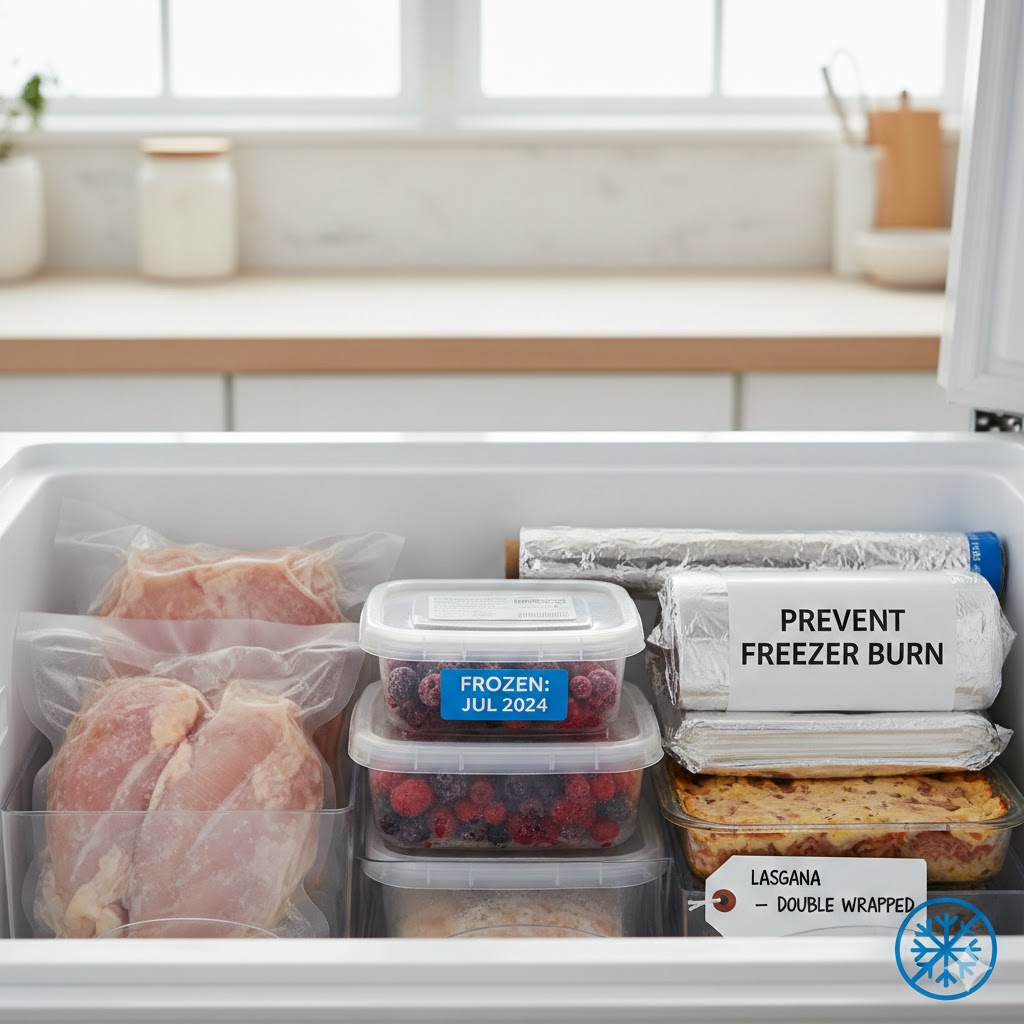
Freezer burn can transform fresh, delicious food into dry, unappetising meals. Understanding how to prevent freezer burn is essential for anyone looking to preserve the quality, taste, and texture of frozen food. Freezer burn occurs when food loses moisture and becomes exposed to air, causing ice crystals and dry patches to form. By using practical storage techniques and following simple freezing habits, it is possible to extend the shelf life of your groceries and avoid unnecessary waste.
Many people assume that simply placing food in the freezer is enough to keep it fresh, but the reality is that improper freezing can lead to significant quality loss. Learning how to prevent freezer burn involves understanding how temperature, wrapping methods, and storage practices affect frozen foods. Whether you are storing meat, bread, vegetables, or ice cream, using the right approach ensures your meals remain enjoyable for weeks or even months.
Understanding Freezer Burn
Freezer burn happens when moisture escapes from food during freezing, forming ice crystals on the surface. This is most likely to occur when food is not wrapped tightly or when air can circulate freely around it. The result is dry, tough patches that affect the appearance, flavour, and texture of meals. Knowing how to prevent freezer burn is the first step in maintaining your food’s original quality and taste.
Certain foods are more susceptible to freezer burn than others. Meat, fish, poultry, and baked goods tend to lose moisture quickly if not stored properly, while delicate items like fruits and ice cream can easily develop ice crystals. Understanding the types of food at risk helps determine which freezing methods are most effective. Learning how to prevent freezer burn allows you to plan storage carefully and protect your ingredients from quality loss.
Use Vacuum Sealers
Vacuum sealing is one of the most effective ways to prevent freezer burn. By removing air from the packaging, vacuum sealers minimise ice crystal formation and moisture loss, keeping meat, fish, and prepared meals fresh for longer. This method also helps retain the flavour and texture of foods that might otherwise become dry or tough over time.
In addition to preventing freezer burn, vacuum sealing makes portioning and organising food easier. You can freeze single servings or family-sized portions while maintaining optimal freshness. Understanding how to prevent freezer burn with vacuum sealing is a practical step for anyone serious about long-term food storage and ensuring that meals remain safe and enjoyable.
Airtight Wrapping Techniques
Airtight wrapping is another essential method to protect food from freezer burn. Using heavy-duty freezer bags, plastic wrap, or aluminium foil creates a barrier that prevents air exposure, which is the primary cause of ice crystals and moisture loss. Wrapping food in multiple layers adds an extra level of protection and keeps frozen items at their best.
Different foods require different wrapping approaches to maximise protection. Meat and fish benefit from a combination of plastic wrap and foil, while bread and baked goods should be sliced and stored in freezer-safe bags. Learning how to prevent freezer burn with airtight wrapping ensures that all types of food maintain their texture, flavour, and nutritional value during storage.
Remove Air from Freezer Bags
Even with freezer bags, trapped air can still cause freezer burn. A practical solution is the water immersion method, where the bag is partially submerged in water to push air out before sealing. This simple technique reduces ice crystal formation and protects the food’s texture and taste, particularly for delicate items like berries or fish.
Minimising air exposure is key to long-lasting frozen food. Learning how to prevent freezer burn by carefully removing air ensures that meals stay fresh and reduces waste. This method complements vacuum sealing and airtight wrapping, providing additional protection for items that might otherwise degrade quickly in the freezer.
Use Proper Freezing Containers
Using containers designed specifically for freezing is an effective way to prevent freezer burn. Airtight lids, sturdy materials, and space for food expansion all contribute to maintaining freshness. Liquids such as soups or sauces need extra room to expand without spilling, while solid foods should be packed tightly to reduce air pockets.
Proper containers also simplify freezer organisation and make it easier to rotate stock. Learning how to prevent freezer burn with the right containers ensures that all frozen items remain protected and accessible. With the correct storage, your freezer can keep meals in excellent condition for months, avoiding texture loss and off-flavours.
Cool Food Completely Before Freezing
Placing warm or hot food directly into the freezer increases the risk of freezer burn because it can raise the surrounding temperature and cause thawing and refreezing cycles. Allowing food to cool completely before freezing is a simple but essential step that preserves quality. It also prevents condensation inside packaging, which can contribute to ice crystal formation.
Cooling food properly benefits not just the item being frozen, but also the surrounding contents in the freezer. Understanding how to prevent freezer burn by allowing food to cool first creates a stable environment for all stored items and ensures your meals retain their original taste, texture, and appearance for longer periods.
Maintain a Consistent Freezer Temperature
Maintaining a consistent freezer temperature of 0°F (-18°C) or lower is critical for preventing freezer burn. Frequent opening of the freezer door or overfilling the compartment can cause temperature fluctuations, leading to moisture loss and ice crystal formation. Monitoring the freezer temperature with a thermometer helps maintain the ideal environment for long-term storage.
A stable freezer temperature is especially important for meat, poultry, fish, and dairy products. Learning how to prevent freezer burn by keeping your freezer consistently cold ensures that frozen foods retain both flavour and nutritional value. Consistency is key to preserving quality and avoiding unnecessary waste.
Label, Date, and Rotate Food
Keeping your freezer organised helps prevent freezer burn and ensures that items are used before they deteriorate. Label and date each item, and rotate stock using a first-in, first-out method. This habit reduces the chance of storing food for too long, which can lead to ice crystal formation and dry, unappetising meals.
Tracking freezing dates also allows you to plan meals efficiently and avoid wasting ingredients. Learning how to prevent freezer burn with proper labelling and rotation is a practical approach to maintaining freshness and enjoying high-quality frozen meals consistently.
Quick Tips for Specific Foods
Certain foods require special care to prevent freezer burn. Ice cream should be covered with plastic wrap before sealing the lid, meat should be wrapped in layers of plastic and foil, bread should be sliced and stored in airtight bags, and vegetables should be blanched to preserve texture. Tailoring your approach ensures the best protection for each type of food.
These tips complement general freezing practices and provide extra protection against freezer burn. Learning how to prevent freezer burn with specific techniques for different foods ensures that all items in your freezer remain fresh, tasty, and enjoyable, no matter how long they are stored.
Conclusion
Understanding how to prevent freezer burn is essential for maintaining the quality of frozen food. By using vacuum sealing, airtight wrapping, proper containers, consistent freezer temperatures, and careful rotation, you can significantly reduce ice crystal formation and moisture loss. Combining these methods with cooling and specific food techniques ensures meals stay fresh, flavoursome, and enjoyable while minimising food waste.