
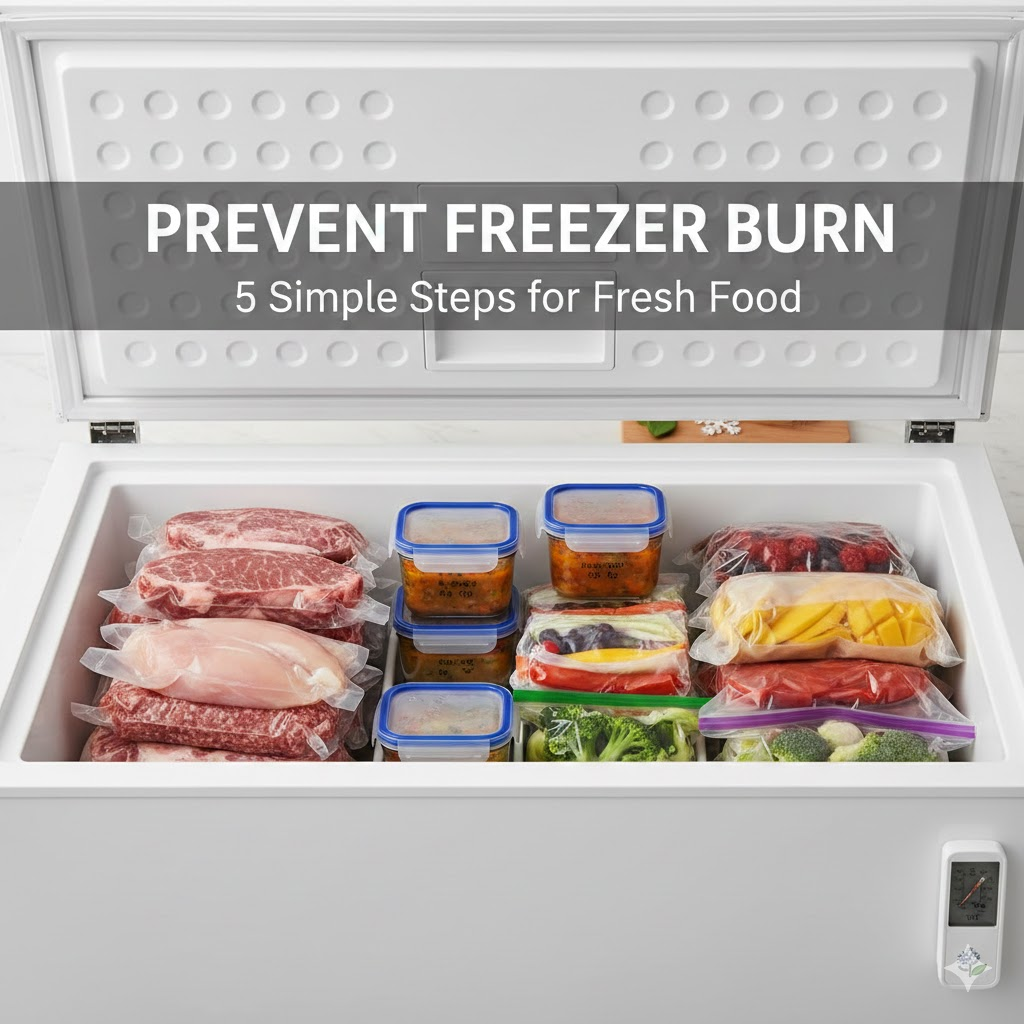
Understanding How to Prevent Freezer Burn
Freezer burn occurs when frozen food is exposed to air, causing dehydration and affecting texture and flavour. Understanding how to prevent freezer burn is the first step to keeping your food fresh for longer. By controlling air exposure and maintaining correct freezer temperatures, you can avoid the dry, tough patches that reduce food quality.
Learning how to prevent freezer burn is essential for both home cooks and busy families. Simple changes in storage methods, such as vacuum sealing or double wrapping, significantly reduce the risk. Knowing the science behind freezer burn empowers you to make small adjustments that preserve taste, texture, and nutrition effectively.
Choosing the Right Packaging
Proper packaging is vital in learning how to prevent freezer burn. Air-tight containers, vacuum-sealed bags, and thick freezer-safe wrapping create a barrier against moisture loss. Combining plastic wrap with aluminium foil or freezer paper ensures that food is protected from the harsh freezer environment, which is the most common cause of freezer burn.
How to prevent freezer burn also involves choosing packaging based on the type of food. Meat, fish, and baked goods may need different protection levels than vegetables or pre-cooked meals. Selecting the right materials reduces air pockets and prevents frost from forming, maintaining the original flavour and texture of your food items.
Freezer Temperature Management
Maintaining the correct freezer temperature is another key part of how to prevent freezer burn. Freezers should be kept at 0°F (-18°C) or below. Consistently low temperatures slow down ice crystal formation and prevent food dehydration. Avoid frequent opening of the freezer door, as temperature fluctuations accelerate freezer burn.
Knowing how to prevent freezer burn also means monitoring your freezer’s temperature regularly. Using a freezer thermometer can help ensure that your settings remain stable. A consistent freezing environment helps preserve food quality, prolong shelf life, and ensures that meals remain safe and enjoyable for longer periods.
Proper Food Storage Practices
How to prevent freezer burn involves more than wrapping and temperature control; storage practices matter too. Keep food in small, manageable portions to ensure quicker freezing and reduced air exposure. Label items with dates so older foods are used first, reducing the likelihood of long-term freezer damage.
Rotating stock and avoiding overfilling the freezer are practical ways to enhance how to prevent freezer burn. Leaving space between items allows cold air to circulate efficiently. Proper organisation prevents unnecessary thawing and refreezing, which is a major contributor to freezer burn, while keeping all frozen items accessible and fresh.
Handling and Thawing Frozen Food
Even after freezing, understanding how to prevent freezer burn continues during handling. Thaw food in the fridge rather than at room temperature to avoid uneven temperatures that can worsen freezer burn. Handle items gently to maintain packaging integrity and prevent exposure to air.
How to prevent freezer burn also means cooking frozen food soon after thawing. Avoid refreezing food that has partially thawed, as this accelerates dehydration and texture changes. By adopting careful handling practices, you can maintain the original flavour, colour, and freshness of frozen foods, even after long storage periods.
Conclusion
In conclusion, learning how to prevent freezer burn is essential for anyone who wants to keep food fresh, tasty, and nutritious. By combining proper packaging, consistent temperature management, thoughtful storage practices, and careful handling, freezer burn can be effectively minimised. Implementing these steps ensures that your frozen foods remain high-quality and enjoyable.
FAQs
What is freezer burn?
Freezer burn is dehydration caused by air exposure in frozen foods. It affects texture, taste, and appearance but is safe to eat.
How do vacuum sealers help prevent freezer burn?
Vacuum sealing removes air, creating a protective barrier that greatly reduces freezer burn.
Can freezer burn be reversed?
No, freezer burn cannot be reversed, but trimming affected areas before cooking improves taste and texture.
What foods are most prone to freezer burn?
Meat, fish, and baked goods are most susceptible due to high moisture content and air exposure.
How long can frozen food last without freezer burn?
Properly packaged and stored food can remain fresh for 2–4 months without freezer burn.